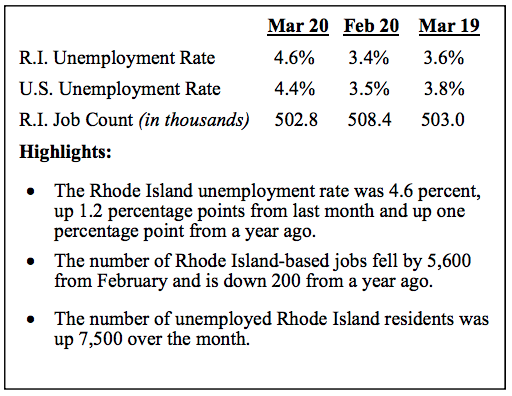
PROVIDENCE – The Rhode Island seasonally adjusted unemployment rate was 4.6% in March, a 1 percentage point increase year over year, according to the R.I. Department of Labor and Training on Thursday.
The national unemployment rate was 4.4% at that time, an increase from 3.8% in March 2019.
Selling Luxury Real Estate Requires More Than Exposure
By Emilio DiSpirito IV License Partner | Private Office Advisor Engel & Völkers Oceanside www.DiSpiritoteam.com…
Learn More
The number of unemployed in the state increased 6,200 year over year to 26,300 at that time.
Unemployment figures have since risen dramatically. On Wednesday, unemployment insurance claims in the state since March 9 totaled 159,001. The DLT said that March monthly figures reflect the week of March 8-March 14, prior to many schools, restaurants and other businesses shutting down due to the COVID-19 pandemic.
The number of employed Rhode Islanders in March totaled 540,300, a 6,000-person increase year over year.
Nonfarm payrolls declined 200 year over year to 502,800 jobs, the first year-over-year loss since 2010, according to the DLT.
The state’s labor force in March was 566,600, a 12,200-individual increase year over year.
Nonfarm employment by sector in March:
- Health care and social assistance: 82,900, an 800-worker increase year over year
- Professional and business services: 67,000, a 1,200-worker decline year over year
- Government: 65,600, a 400-worker increase year over year
- Accommodation and food services: 51,000, a 900-worker decline year over year
- Retail trade: 48,700, a 300-worker increase year over year
- Manufacturing: 39,400, a 400-worker decline year over year. Production workers earned $19.89 per hour in March, a 22-cent increase from one year prior. Manufacturing employees averaged 36 hours per week in the month, a decline of 1.6 hours year over year.
- Financial activities: 35,900, a 800-worker increase year over year
- Educational services: 26,900, a 400-worker increase year over year
- Construction: 20,300, a 200-worker increase year over year
- Wholesale trade: 16,800, a 200-worker increase year over year
- Transportation and utilities: 13,100, a 900-worker increase year over year
- Arts, entertainment and recreation: 7,300, a 200-worker decline year over year
- Information: 5,500, a 400-worker decline year over year
- Mining and logging: 200, unchanged from one year prior
- Other services: 22,200, a 1,100-worker decline year over year