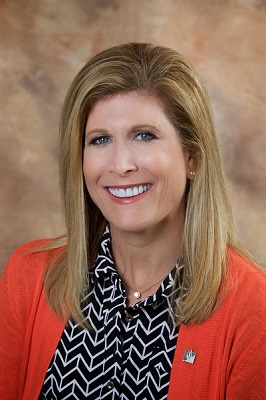
Wendy Kagan is executive vice president and director of employee and community engagement for BankNewport. She was recently named one of the 2020 “Leading Women in Banking” by Banking New England.
Kagan has a background in marketing and merchandising in the apparel industry, a bachelor’s degree from the University of Michigan and a master’s degree from Northeastern University.
Seifert Systems Invests in Energy Efficiency to Strengthen Operations
For manufacturers, energy is more than just another operating expense. It plays a critical role…
Learn More
PBN: You previously worked in marketing for the apparel industry. How is your marketing work now in the banking world similar to, and different from, your former career?
KAGAN: The apparel industry is very different from banking in that the product development is based on style trends and sales trends two to three seasons ahead of hitting the market. The finance industry tends to be more reactive. It has been quite some time since I have worked in the apparel industry, but predictive analytics, artificial intelligence and social media have completely changed marketing strategies for both industries.
PBN: What have been the biggest human resources challenges in your role, and in the finance industry generally, since the start of the pandemic?
KAGAN: The biggest challenge has been balancing the needs of our customers and the business with employee wellness and safety, part of which is the complete shift to a work-from-home status. Because we are an essential business, we technically never closed our branches, but we had to adjust our operations and move to a drive-up, digital and appointment-only model for the first few months.
To reopen and keep open our doors to customers, we are diligent about following all the required health protocol measures. Our branch staff has been phenomenal in their response to serving our customers. Human Resources has had to be in lockstep with the business units and leadership in frequent and transparent communication with employees. Since I oversee the marketing as well, we have also worked extremely hard to coordinate our internal and external messaging.
PBN: Has the bank’s outreach and engagement with its clients and the wider community changed as a result of COVID-19? If so, how?
KAGAN: As an organization, we place a high value on “relationship banking” and taking time to get to know our customers so that we can work together to achieve their financial goals for the short term and long term. COVID-19 made this approach even more valuable as we shifted our model to continue to provide necessary services to our clients while keeping them – and our employees – safe.
Our lending team worked around the clock to fulfill loan requests through the Paycheck Protection Program, as well as an Emergency Micro Loan Program in partnership with R.I. Commerce Corp., the Rhode Island Hospitality Association, and the Local Initiatives Support Corp. Through these programs, BankNewport awarded a total of $131 million in loans to approximately 2,000 small businesses in Rhode Island.
COVID also moved us to adapt our community efforts. It’s been inspiring to learn of the many ways Rhode Island’s nonprofit community has been resilient in operating and serving their clients during the unprecedented COVID environment and what challenges they may face in recovery, and they need our support now more than ever.
To continue our support of community-based organizations that provide basic needs, food insecurity and emergency direct assistance taking precedent at this time, the Bank’s Community Fund Committee redirected its grant funds to extend immediate financial support with grants totaling $250,000 to the Rhode Island Foundation and United Way of Rhode Island COVID-19 Response Fund, and a $100,000 grant to the Rhode Island Community Food Bank. In addition, more than $79,000 in sponsorship funds earmarked for nonprofit fundraising events were released to help meet their immediate needs.
Through COVID, BNWise, BankNewport’s financial education program, seamlessly shifted to a virtual format, allowing us to grow our existing relationships, and even establish new ones, including with seniors and middle and high school students.
PBN: What long-term effects do you think the pandemic will have on HR and marketing in finance?
KAGAN: From an HR perspective, I believe the greatest impact will be on the way we work and where we conduct our workday. People are mixed on how they feel about working from home versus missing the office environment, so it’s not clear yet if we’ll have a total shift back to the office. Either way, how we work will be forever altered.
The biggest long-term effect on marketing is the current and ongoing digital adoption.
While we are thrilled that our customers still very much desire to visit our branches for financial expertise, many consumers are taking advantage of all the ways they can bank with us.
PBN: You were recently recognized as one of New England’s 2020 “Leading Women in Banking.” Do you see lack of female representation as a problem in the banking industry? What more could the industry do, particularly in terms of HR and benefits since that is your area of expertise, to help grow the number and advancement of women in the industry?
KAGAN: I don’t believe that the banking industry overall is lacking female representation, but there are definitely pockets in commercial lending and senior management where I would like to see more females in those roles. I do think we are seeing more women in leadership roles, which is important for diversity of perspective and leadership styles.
Banking has traditionally been more of a conservative industry when it comes to flexible work schedules and having to be visible in order to advance. It is nice to see this aspect changing to allow for more flexibility and COVID has definitely accelerated the acceptance of flexible work arrangements.
Family leave is still challenging for both males and females in the workplace, and the current school situation and the advent of distance learning has made it even more apparent.
Nancy Lavin is a staff writer for the PBN. Contact her at Lavin@PBN.com.