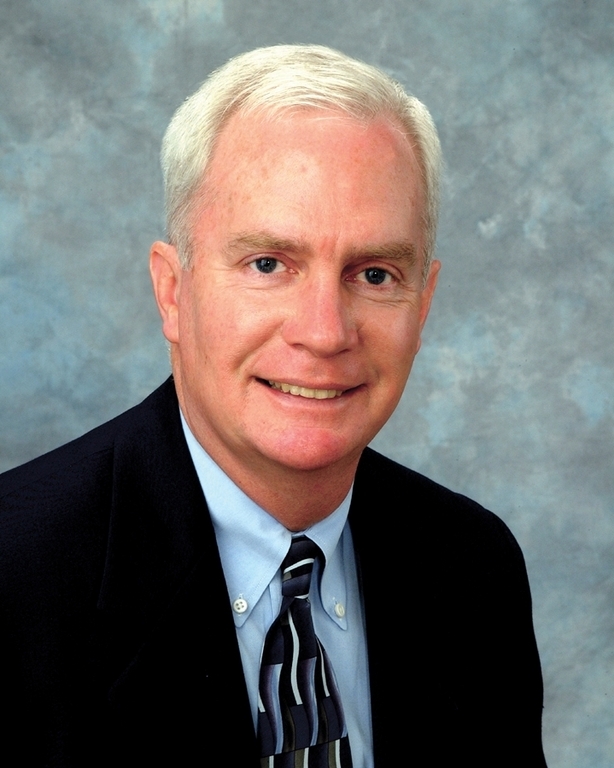
Patrick Spratt has been chief financial officer at KVH Industries Inc. since 2002, following a 25-year career at the pioneering computer company Digital Equipment Corp. and other tech firms. Spratt talked with Providence Business News recently about Middletown-based KVH’s outlook amid the downturn and what exactly a fiber optic gyro does.
PBN: You surprised Wall Street analysts by posting a small profit for the second quarter when they expected a loss. How did you manage that?
Seifert Systems Invests in Energy Efficiency to Strengthen Operations
For manufacturers, energy is more than just another operating expense. It plays a critical role…
Learn More
SPRATT: Many people looking at KVH are very focused on our well-established markets and product lines like our mobile satellite TV systems for RVs and boats for an indicator of how the company is faring. What many observers aren’t taking into consideration is that, while these markets remain very important to us even as they have slowed due to economic pressures, we’ve devoted significant time and resources to expanding the scope of our business into new strategic areas that are tremendously exciting and showing good strength even in this rough economy.
For example, our fiber optic gyro (FOG) business is going great. Second-quarter sales increased more than 50 percent compared to our record first quarter, bookings remain strong, and we’ve achieved a tremendous ramp in production to meet this demand. These factors helped to generate more revenue and margin in the quarter than originally expected. Couple that with the excellent results in our growing satellite communications airtime business, our other businesses performing as expected, and our internal tight operating expense controls and we managed to score a bit of an upside surprise in this weak economic environment.
PBN: More generally, how is KVH dealing with the difficult economy?
SPRATT: Cash, cash, cash! While we place strong emphasis on maintaining our financial strength and foundation, we also have the cash resources to invest wisely and aggressively in our new strategic growth drivers, such as the rollout of our global mini-VSAT Broadband communications network, the development of a new satellite TV antenna for use on commercial jets, and the capacity expansion and new product development for our FOG business.
One of the reasons we can be more aggressive now while other companies are retrenching is because we prepared the company to weather economic storms like we’re in now. We are committed to maintaining stability and consistency in our work force and operations, a philosophy that positions us well to get through this downturn and be ready for the recovery and success in the long run. Plus, we have a diversified business model that encompasses consumer markets, commercial applications, the defense business, and now commercial aviation so that a downturn in one area is often compensated for by strength in another.
Right now, we assume that our consumer markets will continue to be weak and are building our business plans and forecasts with that assumption in mind. Then any positive turn will be a benefit, and we’ll be able to react quickly to take advantage of any upswing.
PBN: You mentioned earlier that you’ve been booking millions in orders for fiber-optic gyros in recent months. What exactly is a fiber optic gyro? What is it used for?
SPRATT: We often joke that FOGs are something along the lines of black magic. In truth, they’re remarkable products that are increasingly in demand for a wide variety of commercial applications ranging from camera stabilization and unmanned autonomous vehicles to defense applications like torpedo guidance and weapon stabilization on vehicles currently in Iraq and Afghanistan.
In a nutshell, a fiber optic gyro measures how something is turning or rotating. We fire a laser through a strand of our optical fiber, which is made of glass and only as thick as a human hair. The fiber is wound into a tight coil anywhere from 100 to several hundred meters in length and packed into a housing no bigger than a deck of cards. The light is split so it travels through the fiber coil in opposite directions before reaching an optical detector. Now, if the FOG is completely motionless, the beams of light will exit the coil and reach the detector at exactly the same time.
However, if the gyro rotates in one direction or the other, one of the beams of light has a shorter distance to travel so that the two beams will be out of phase when they reach the optical detector. We are able to measure that phase difference and calculate how far the gyro rotated and in what direction. Put three of ours FOGs together in the X, Y, and Z axes and you’re measuring how something is moving in three dimensions. Our Web design team has put together a very clear Flash presentation for anyone who is interested in seeing this illustrated. Because the laser is obviously moving at the speed of light, we’re generating huge amounts of data every second that is then available as digital output for computers, navigation systems, mapping software, robotics, and more.
Here’s an example of how our FOGs are used. One of our major applications right now is helping to stabilize remote weapon stations, which are gun turrets mounted on top of a Humvee while the gunner remains protected inside the vehicle, rather than being exposed outside. The gunner is looking at video screens connected to cameras on the gun and using a joystick to line up the crosshairs on a target. When the gun fires or the vehicle is driving, three KVH FOGs measure that movement and inform the gun turret’s motors how to adjust to stay on target. At the same time, they’re also allowing the computer to remove any jitter from the video itself so the gunner is looking at a rock-steady picture at all times. The result is that U.S. and allied soldiers don’t have to be outside the vehicle and exposed to danger and their aim is far more precise, helping increase their effectiveness while minimizing the risk that they hit something they weren’t aiming at.
PBN: How is the rollout of your new VSAT broadband satellite network going?
SPRATT: The rollout and expansion of our mini-VSAT Broadband network is going great, in spite of the economy. We’re on schedule and the recent activations of our broadband Internet and voice service in Asian waters and around Australia and New Zealand bring us even closer to our goal of offering global coverage for vessels and airplanes. This is a major achievement that positions us to get in the door with many more commercial accounts around the globe. While we aren’t building or launching our own satellites, we are investing in satellite hubs, network infrastructure, and leasing bandwidth on satellites around the globe. While this effort does come with some risk and cost, we believe it is well worth it because of the potential reward.
For years, KVH was a primarily a hardware company. Now, however, the mini-VSAT Broadband network is a game-changer for KVH that gets us big time into the airtime services business, where we’ll enjoy a cumulative effect on airtime service revenues as the base of active accounts grows. This is a very important strategic opportunity that we believe will continue to fuel our growth during these tough times and accelerate as the economy recovers.
In fact, on a competitive basis, we may actually be doing better in this weak economy than we might have done if the economy were stronger because we have the wherewithal to continue investing in the network and new advances when many of our competitors cannot.
PBN: Military products have been adding to your revenue in recent quarters. At the same time, the Obama administration is talking about cutting back on how much the federal government spends on defense procurement. Are you concerned about the impact that could have on you, or are your products positioned to avoid cuts?
SPRATT: Obviously, we can’t predict or control what happens with U.S. defense spending – though I think it’s safe to assume that it will always be significant! Our confidence comes from the fact that our technology and products, including not only our FOGs but also tactical navigation products and our satellite communications systems, are supporting defense and homeland security applications that are crucial to the needs of today and tomorrow. Our equipment and services enable soldiers to be better protected, more accurate and efficient, always in contact with each other, and better able to complete their missions and return home safely.
I believe that those needs will continue to fuel demand for the types of products and services that we sell. We work closely not only with the U.S. military and defense contractors but also with allied services around the globe, all of which must always be prepared, whether in times of peace or in preparation for the next conflict. We’re also gratified to have received strong backing from Rhode Island’s congressional delegation, as Sens. Reed and Whitehouse and Reps. Kennedy and Langevin have shown strong support for KVH in their efforts to ensure that U.S. soldiers and sailors have the equipment they need to get the job done quickly and safely.
That combination of battle-proven equipment, a worldwide business model, and strong support here at home gives me great confidence that KVH will continue to be a major player around the globe for many years to come. •