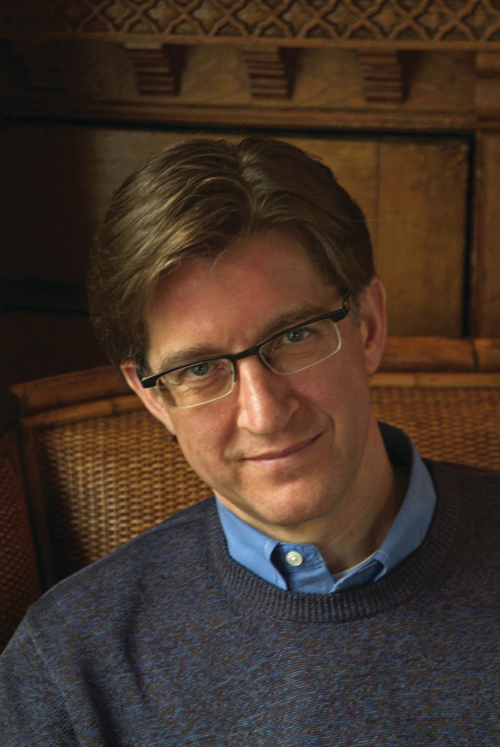
Ken Cusson is in charge of restaurant operations at such places as The Mooring Seafood Kitchen & Bar, 22 Bowen’s Wine Bar & Grille, Castle Hill Inn & Resort and The Smokehouse Café, all in Newport and owned by the Newport Harbor Corporation (NHC). The employee-owned company, which also owns and operates restaurants in other parts of the state, announced last month that it had acquired Hemenway’s Seafood Grill & Oyster Bar in downtown Providence. Cusson spoke with Providence Business News about possible changes at Hemenway’s and how the restaurant business varies greatly in Providence versus Newport.
PBN: How has the restaurant business changed since you started in Providence in 1993?
CUSSON: When I first started working at The Capital Grille, when you looked out our windows, there was a large pile of rocks, there was no convention center, there was no mall, there was no Westin Providence. … There were huge projects going on to relocate the rivers. …
All of those things spawned, I would say, the overpopulation of restaurants. … Basically, the independents are able to make a decent living, but because the pie has been cut into so many pieces, as one new place opens, you see another one close. The ones that really do well are the classic restaurants that have always focused on a great product and great service and have some longevity and history, such as Capriccio, Café Nuovo, Al Forno.
Hemenway’s [Seafood Grill & Oyster Bar] was opened in 1985, it was one of the first major build-outs in Rhode Island. Everybody thought Ned Grace [founder of The Capital Grille and Hemenway’s] was crazy for what he put into that space. No one had ever spent over $1 million on a restaurant. That was a very special moment in Rhode Island’s history, and Ned had a lot of vision and foresight.
Seifert Systems Invests in Energy Efficiency to Strengthen Operations
For manufacturers, energy is more than just another operating expense. It plays a critical role…
Learn More
PBN: When NHC announced July 21 that it bought Hemenway’s, the company said it intends to keep every employee and to bring in more fresh, local produce. Can you tell us about that?
We already do a lot with the farmers in Rhode Island. We’re working with the local farmers of the Farm Fresh Rhode Island organization, which has put together a distribution system [Market Mobile] where we actually are ordering from farms all over the state that are now delivering to our restaurants, which is a huge improvement. … We try to deal with farms that are organic.
It is difficult to do that, especially in Rhode Island because you can’t get the types of vegetables that you need all year. Probably 90 percent of the beef that people eat in Rhode Island comes from the Midwest. So, it’s very difficult to make these wholesale statements [about buying local], but as much as we can and wherever we can, we are moving in that direction.
PBN: Is there any difference in the restaurant business between Providence and Newport?
CUSSON: It is very different. You have far less seasonality in Providence. Your down months in Providence traditionally are January and February … and again in July and August, when most people head to the coast. That’s when Newport really starts to draw more people from Providence and it’s a noticeable difference.
In Newport, you have much the opposite. You have from Memorial Day, and we’ve kind of stretched it to Columbus Day, and if you don’t make your money in that time, you have to do more than just support yourself for those months. You need to be able to put away enough cash to take you through the rest of the fourth quarter and the first quarter before you start to ramp up again in April and May.
Newport is a much more challenging business model. In terms of staffing, at the end of the season, you have to let a lot of people go. That’s one of the beauties of the Providence synergy within our company. We can start to move people back and forth between Providence and Newport and be able to employ people year-round. In Newport, we go from about 350 employees to more than 1,000 in a four-week period. It ramps up very quickly, so that’s a lot of people to find and then to get them trained and be able to deliver the kind of service and product we’re proud of. … That’s a huge task. So they [Providence and Newport] are very different.
PBN: Tell us about working for an employee-owned company.
CUSSON: Being an employee-owned company, we truly are able to motivate people. … At the end of the year, we declare a certain amount of profits … that gets divided up among all the shareholders. We have bartenders who have been with us for more than 20 years and have six-figure retirement plans. It’s a pretty powerful recruiting tool. It really brings people together and nurtures a very positive work environment. … It’s been very successful for us, it’s helped us to grow and to retain great people at all levels. •INTERVIEW
Ken Cusson
POSITION: Director of restaurant and catering operations for the Newport Harbor Corp. (NHC). He is also in charge of Blackstone Caterers, a subsidiary of NHC.
BACKGROUND: He previously owned the former Gatehouse Restaurant on the Seekonk River in Providence, now The Waterman Grille owned by NHC, and Mill’s Tavern in Providence. Before that, he worked at The Capital Grille in Providence from 1993 to 1999.
EDUCATION: Attended the University of Connecticut.
FIRST JOB: Delivering newspapers, mowing lawns and shoveling snow as a teenager in Waterford, Conn.
RESIDENCE: East Greenwich
AGE: 51