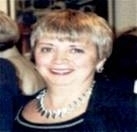
 / " title=""We wanted to put networks together that could bring total solutions to the end-user," said Carol Ann Hurley, president of E.B.S. Econotel. /"/>
/
Carol Ann Hurley is co-owner and president of E.B.S. Econotel Business Systems Inc., a telecommunications company based in Rumford. Hurley talked with Providence Business News recently about how her business has managed to thrive despite the recession with the introduction of a new product.
PBN: What do you do at E.B.S. Econotel? How has your business changed in recent years?
HURLEY: We are a telecommunications company here in Rhode Island – we are the alternative to AT&T – we sell telephone systems and IT systems. Three years ago, we picked up the ShoreTel product, and that’s why our profit margins are doing so well now. It’s the leading Voice over IP [Internet Protocol] telephone product. It took us a long time, at great expense, to train all our people on it, and we did that three years ago. That’s why now we’re doing so well. If we wanted to pick it up now we couldn’t [because of the economy].
Beyond Cash Donations: How New Forms of Giving Are Transforming Not-for-Profit Accounting
Evolving Funding Landscape for Not-for-Profits Not-for-profit organizations are being asked to do more with less,…
Learn More
In terms of customers, we started local, then went regional, national, international – so they’re all over.
PBN: How did you get into this business originally?
HURLEY: Well, actually, my husband took me out to lunch – this was 24 years ago – he started the company with $1,000, and asked me to go into business with him. He worked for AT&T. I said, “Well, what do you want me to do?” He said, “I want you to run it.” And that’s how it happened. I didn’t have a background in it, so what I had to do was get certified on telephone equipment – at that time it was Inter-Tel – and I went out to Inter-Tel and got certified on different types of telephone systems. We did secondary-market equipment – that was really big for, say, Blue Cross and the hospitals, because we would sell them the package for like 50 percent of the cost. And then as time changed, we changed the product line.
Right off the bat, Econotel was a success. My accountant said, “I’ve got good news and I’ve got bad news. What do you want first?” And we said, “Er, well, give us the good news.” He said, “Well, the good news is you’ve made a big profit this year. The bad news is you owe the government $50,000 in taxes. Do you have it?” And I had it because, you know, I saw this money coming in and I knew it wasn’t mine!
PBN: You’ve had double-digit sales growth since the middle of last year, which is quite an impressive feat with the way the economy has been. How have you managed that?
HURLEY: I would first start with our customer base. I took a good look at our customer base and made a decision for the company that we would contact each and every customer and make an appointment and go out to see them. And while they were out seeing that customer, seeing if we could upgrade any of their equipment, they would do a T-sale – they would go to the right, make a cold call, go to the left, make a cold call. We wanted to take care of our customers first; then we got leads from them.
Then the stimulus package came in, in February – 413 pages. And we broke it apart per industry, itemized it and started marketing with letters and e-mails to [organizations that could benefit]. We wanted to was to put networks together that could bring total solutions to the end-user. So we got consultants that could help our customers answer those grants.
PBN: Have you helped people in the past with getting grants, or did you just see the stimulus package coming down the pike and say, hey, let’s get on board?
HURLEY: Being in business, I’m familiar with grants because I wrote my own grants from the [R.I.] Department of Labor & Training to train my own employees. So I was familiar with grants – I couldn’t write these grants, though, so I had to get someone who was skilled to do them and had a record of doing them. And then once they get the money, they can get their equipment from us. They’re writing them and sending them in – one school, Harmony Hill, recently got an E-Rate grant.
PBN: There’s also a story I wanted to ask you about – the Clinton administration sent you to Ireland in the 1990s. How did that come about?
HURLEY: The trip was great. It came about when President Bill Clinton’s administration got in touch with the SBA [Small Business Administration] director here in Providence, Mark Hayward, and asked for someone to represent the United States in telecommunications, and I was asked to go. I went over with other people, and we networked over there and made long-term friends. I actually went to talk to them about video-conference [criminal] equipment – they were really looking for that. We did sell video-conference arraignment for New Hampshire to the whole state.
There’s a funny story – I’m not sure if I should tell it for print. We were all sitting in a room there, and I got up to talk to them and I used one of my motivational speeches, which is the word “strive” – when you start a new project you have to “S,” start small; then you have to “T,” think tall; then you have to “R,” reach over all the walls, because you’ll have them; “I,” you have to invest everything you have; “V,” you have to visualize the outcome; and “E,” you have to expect the ride of your life.
And when I said “ride,” every guy in that room looked at one another and snickered. But there was a nice woman that was driving me around, and I said, “What’s going on in there?” And she said, “Oh, the word ‘ride’ means” – a four-letter word.
But it was great, because that story got picked up by a Boston newspaper, and from that I got another multimillion-dollar contract. So that’s how important networking is – you never know.