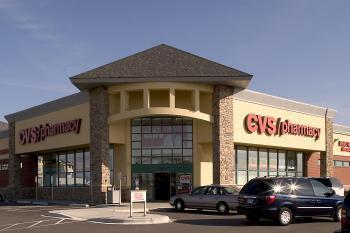
BOSTON – A major national union today unveiled a report that criticizes CVS Caremark Corp., the nation’s largest retail pharmacy chain, for allegedly overcharging customers in Massachusetts.
The report – the latest in a series produced as part of a project called “Cure CVS,” which is run by Change to Win, a labor union coalition, and consumer advocacy groups – found that inspectors in the Mass. Office of Consumer Affairs and Business Regulation cited CVS/pharmacy stores for overcharging customers 711 times in 2008, up from 425 overcharges the year before.
Seifert Systems Invests in Energy Efficiency to Strengthen Operations
For manufacturers, energy is more than just another operating expense. It plays a critical role…
Learn More
The Office of Consumer Affairs and Business Regulation told The Boston Globe the report is accurate. But CVS says it has been targeted by the group since 2007 because of the company’s refusal to allow its employees to join a union without holding a secret ballot election first.
“We make every effort to ensure that the prices posted in our stores are accurate,” Mike DeAngelis, a spokesman for CVS/pharmacy, said in a statement that characterized the Cure CVS reports as “misleading attacks.”
The report also says the number of alleged overcharges discovered per inspection at CVS was significantly higher than at its chief competitors. Officials found 3.4 overcharges per inspection at CVS in 2008, compared with 2.1 overcharges per inspection at Rite Aid and 0.7 per inspection at Walgreens.
However, CVS did reduce the number of pricing accuracy violations in Massachusetts to 2,094 in 2008, down from 2,560 in 2007, The Globe reported today.
The report also says CVS was the most penalized food retailer in Massachusetts in 2008. The result was more than $150,000 in fines levied on CVS during the year.
An analysis last August by The Globe uncovered similar problems. It showed that CVS accounted for more than 20 percent of the fines assessed by the Bay State’s consumer affairs department between January 2007 and August 2008.
In response, DeAngelis said CVS/pharmacy always honors the lower price when there is a discrepancy between the posted price and the scanner price. He also said all CVS locations in Massachusetts have electronic kiosks where customers can double-check prices for themselves.
“Discrepancies between a price scanned at our register and the price posted on store shelves may occur when sale signs are not removed in a timely manner,” DeAngelis said. “Also, in order to comply with Massachusetts’ item pricing law, price labels must be manually changed on each product every time there is a change in the price.”
“While both pricing processes are labor-intensive and not immune from error – a typical CVS/pharmacy has more than 100,000 items on its shelves – we strive to achieve 100 percent accuracy and move quickly to rectify any unintentional discrepancy,” he continued. “In fact, we build additional hours into our store employees’ schedules to help ensure compliance with Massachusetts’ item pricing law.”
Additional information is available at CureCVSNow.org, CVSCaremark.com, and ChangeToWin.org.
This article has been updated with comments from CVS/pharmacy.