DARTMOUTH – Twin River saw its gambling revenue increase over the past year, defying the trend at most of the region’s casinos and slot parlors, including Newport Grand, based on the latest update from the Center for Policy Analysis at the University of Massachusetts Dartmouth.
In 2008, Connecticut’s “Foxwoods Resort [Casino] and Mohegan Sun suffered from their second consecutive year-to-year decline in gross gaming revenues, although there was continued strength in table games revenues and non-gaming revenues during the first half of the year,” wrote Clyde W. Barrow, the report’s author and the director of the CFPA. Meanwhile, slot parlor Newport Grand “reported its fourth consecutive year-to-year decline in net terminal income.
“On the other hand, the region’s two racinos” – Twin River in Lincoln and Hollywood Slots Hotel & Raceway in Bangor, Maine – “reported year-to-year increases in net terminal income or gross gaming revenues,” Barrow said.
He credited Twin River’s increase to the gambling parlor’s longer hours, including around-the-clock weekends; its addition of virtual table games; and higher gasoline prices last summer “that kept Rhode Island and Massachusetts residents closer to home.” He added, however, that as gas prices subsided in the final quarter of 2008, the facility’s gambling revenue also “flattened out.”
The Maine parlor, he said, saw a brief surge over the summer after it moved to “its new upscale permanent facility,” from its previous temporary location, more than doubling its number of slot machines to 1,000 from the previous 475.
Barrow cautioned that the “the New England casino gaming market should be assessed within the larger context of two recent developments: the onset of what is now the longest and deepest recession in U.S. history since the Great Depression; and the emergence of an increasingly competitive Northeastern gaming market that encompasses both the New England and the Mid-Atlantic states.”
Until last year, many analysts had viewed the casino industry as recession-proof, he noted. But gaming revenue last year fell compared with 2007 “in most casino jurisdictions, including Las Vegas and Atlantic City,” indicating that gambling “is now subject to the same macroeconomic factors as any other consumer retail or service industry.” The nation’s current high level of unemployment, he added, clearly suggests “that an end to the recession … is unlikely before the second half of 2009,” while consumer spending could lag well into next year.
While the New England market “is being buffeted by the current recession … this is a temporary setback that is reversible once the economy enters a new growth phase,” Barrow wrote.
“However, the New England gaming market is also being reshaped at the margins by its integration into a larger Northeastern gaming market,” that includes Maine New Jersey, New York, Pennsylvania and West Virginia, as well as Maryland, where voters recently approved the legalization of slot-machine gambling. That leaves Massachusetts, New Hampshire and Vermont as the only members of the 11-state Northeastern region “with no presence in the casino/racino gaming industry.”
This new climate of competition not only “is restructuring that market geographically,” but also is “leading to an overall increase in the size of the gaming market, new capital investment in new facilities and the improvement of existing facilities,” the CFPA chief wrote.
Mohegan Sun is still pursuing an expansion that will add more luxury hotel space, new entertainment and amenities; Massachusetts, New Hampshire and Maine all are considering proposals to allow additional gaming facilities; and Rhode Island legislators are to consider a constitutional amendment that would allow Newport Grand and Twin River “to evolve into casinos,” he said.
For Twin River and its current owner – BLB Investors LLC, a joint venture of Kerzner International Ltd., Starwood Capital Group and the Waterford Group – both the nation’s economic recovery and the state’s possible change in policy may come too late.
Last March, BLB subsidiary UTGR Inc. missed a payment on debt from its expansion and renovation of the facility, formerly known as Lincoln Park. The company operated for much of last year under a forbearance agreement that delayed action on $577 million in outstanding loans, Barrow noted. That agreement – with chief lender Merrill Lynch Capital Corp. – was extended several times, but would have expired on Jan. 31, “had certain milestones been reached,” Merrill Lynch spokesman Bill Haldin said. Instead, it expired on Jan. 5.
“Paradoxically, Twin River continued to report year-to-year increases in net terminal income into the month of September, but it was evidently not enough to cover their payments on an estimated $565 million remaining on their outstanding loans at the end of 2008,” Barrow wrote. And by year’s end, the state had repeatedly rejected overtures from BLB seeking to renegotiate its revenue-sharing agreement.
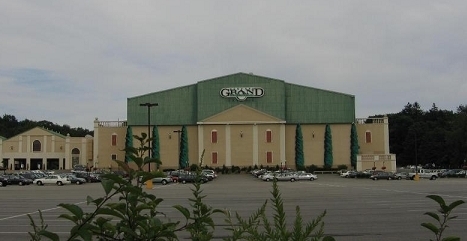
At Newport Grand, meanwhile, a multi-million-dollar renovation completed last summer transformed “its former jai-alai fronton into 22,000 square feet of non-smoking gaming space [that includes] an additional 500 video lottery terminals (VLTs), six virtual blackjack tables, two new food and beverage outlets [and] enhanced security.” Yet, the CFPA report noted, that expansion “failed to reverse the continuing slide” in the venue’s net terminal income, which fell for the fourth consecutive year.
The report is based on data from a patron-origin study conducted by the CFPA in January, which the center used to update its previous analysis of casino financial data from 2008. It also includes “selected findings from the center’s ‘2006 New England Gaming Behavior Survey,’ released in January 2007.”
For more information about the University of Massachusetts Dartmouth’s Center for Policy Analysis and its New England Gaming Research Project – including the 61-page “New England Casino Gaming: Update, 2009” – visit www.umassd.edu/cfpa.
Beyond Cash Donations: How New Forms of Giving Are Transforming Not-for-Profit Accounting
Evolving Funding Landscape for Not-for-Profits Not-for-profit organizations are being asked to do more with less,…
Learn More