Branch Village in North Smithfield could look very different five years from now, if the vision that town officials, property owners, business owners and residents have for it takes hold.
Sparse, hodge-podge development along the Great Road and St. Paul Street intersection could be transformed into a more cohesive and higher-density, mixed-use, walkable village with landscaped sidewalks and new lighting features.
But some major infrastructure improvements must be made before that happens. The area needs a central sewer system and possibly road restructuring to solve traffic and parking issues.
Members of the Branch Village Revitalization Task Force, which convened in January, are hoping that in October, town residents will approve a $20 million sewer bond, said John Flaherty, chair of the task force and member of the North Smithfield planning board.
That would solve the sewer issue.
The next step would be finding funds for the other public improvement projects, such as the sidewalks, parking and roads.
There are at least two options that Flaherty thinks could work. One is to tap into the $10 million that Rhode Island Housing will invest in sustainable development projects with an affordable element during the next few years.
The initiative is called KeepSpace Communities. Rhode Island Housing has issued a request for proposals and is accepting entries through Nov. 16.
Another option would be to take on a tax increment financing (or TIF) program similar to the ones West Warwick and East Providence are using for development projects there, said Flaherty, who also works for the sustainable-development group GrowSmart Rhode Island, though he keeps his involvement in the task force separate.
Before funding issues are worked out, however, the task force will be presenting a mixed-use zoning ordinance for the area, in hopes that it will be approved as well.
There is reason to believe it might. North Smithfield identified Branch Village as a potential growth center when the town updated its comprehensive plan last year, Flaherty said.
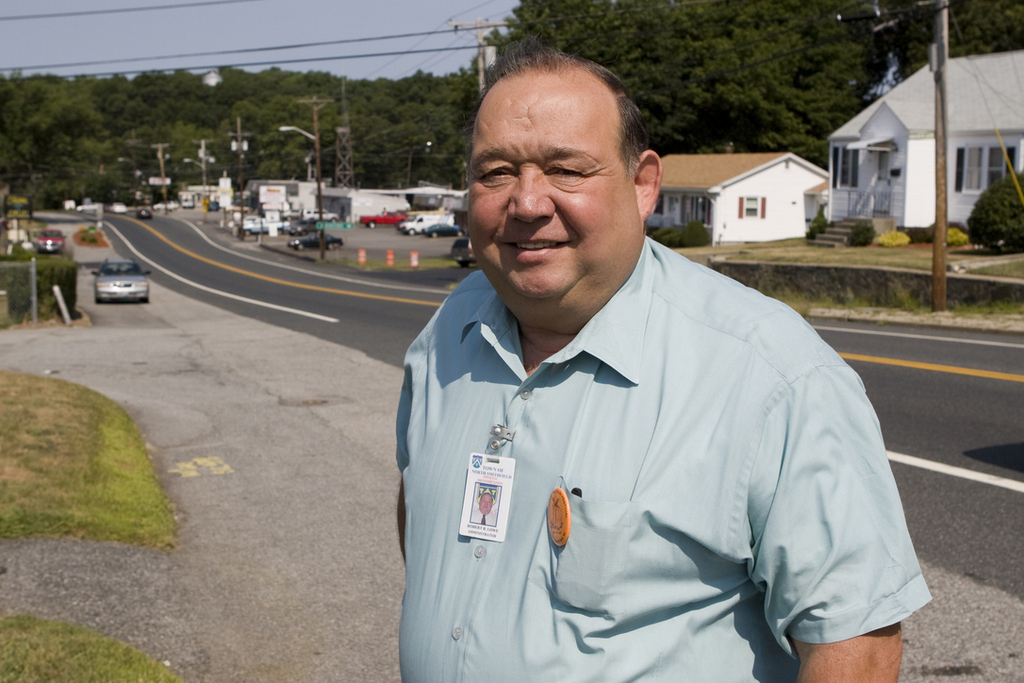
In addition, the town is in dire need of increasing its tax base, said Bob Lowe, town administrator and initiator of the task force.
“We’re presently building a school for $30 million, which in the next few years, taxes have to start paying for,” he said. “We thought, why not be proactive rather than wait for some private company to come in? Why not jump-start the process to attract potential revenue?”
Also, by developing some guidelines for developers as to what the town wants to be see in Branch Village the task force could expedite the permit approval process, Lowe said.
“We’re trying to encourage them to come, and start right away,” he said.
But the task force is still in the process of solidifying a vision and building a consensus in the community as to what that vision will be, though it includes the mixed-use elements and structural improvements discussed.
The task force hired the Horsley Witten Group, based in Sandwich, Mass., to coordinate a study of the area and compile suggestions for how to implement a plan when the study is completed Sept. 1.
Perhaps the most unique element of the task force is the level of involvement of its members in contributing to the vision, both with ideas and with dollars, Lowe said.
Though the state contributed about a third of the funds needed for the $32,000 study, Lowe said, the property owners and business owners contributed close to a quarter of the funds.
“That is really the unique thing that doesn’t happen very often,” he said. “They were willing to partner with us.”
Smed Blair, vice president of real estate and development at Brickle Realty Group and member of the task force, said his company got involved because it is the largest land owner in the district.
Sam-Man Realty, a real estate holding company operated by Brickle, owns 170 acres of the 300-acre village. It also manages a 475,000-square-foot former wool combing and scouring mill, now home to the supply chain management company Banneker Industries Inc. and three smaller companies.
“We’re obviously looking to increase our investment and make more money on that land,” Blair said, adding that he’s been working on various development projects for eight years but has run into problems in getting city water and sewer to some of the outlying areas.
What’s intriguing about the task force’s mixed-use vision is that it would “allow us a lot more flexibility and broaden our market,” Blair said.
The area, as of now, is zoned for light manufacturing.
In addition, Blair said he thinks turning the area into a mixed-use village with additional housing could make it an attractive home for Providence and Woonsocket commuters because of its easy access to Route 146.
The traffic count for cars coming through the village is about 20,000 cars per day, he said. And people already living in the village have few amenities besides a general store, a pizza restaurant, a breakfast restaurant and a gas station.
Most have to drive at least 10 miles to do major grocery shopping, he said. If the development attracted a grocery store, it would probably also attract more shopping and restaurants, thus making the area even more attractive to new residents.
“The tax base would increase,” Blair said. “And the village would begin to have an identity instead of being a drive-through.”