It is one of Rhode Island’s special places – a scenic spot along the ocean, of course – where dozens of weddings are performed every year. It’s a place where art students can find beautiful blossoms to capture on canvas … where a family can picnic while enjoying a Shakespeare comedy performed live on the lawn … where children can learn about nature by going on an “owl prowl” to catch a glimpse of the elusive nocturnal creatures.
And no, it’s not in Newport or on Block Island, it’s not in South County or Watch Hill, but in Bristol, a working-class, seaside town best known for hosting since 1785 what is now the nation’s oldest continuous July Fourth parade.
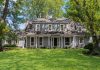
While the Independence Day parade garners a lot of attention, often overlooked is the serene elegance of Blithewold, a 33-acre estate with an English-style manor house and, according to the Garden Conservancy, one of the best preserved gardens in New England.
Those in charge of Blithewold recently hired a team of national experts to prepare the first-ever master plan to guide the future of the heritage-tourism site. The estate, whose name means “happy woodland” in Old English, has been open to the public since the 1970s and is listed on the National Register of Historic Places. Approximately 35,000 people visit every year.
The master plan will provide “a complete vision for the property,” said Executive Director Karen Binder, and answer such questions as: What can be done to enhance visitor services? Should the gift shop, which now focuses on garden items, be expanded? Should a café be established for visitors? Should the servants’ side of the house be open to the public, an idea that has proven successful at the Newport mansions? “We need one master vision, one master plan, that everyone can work toward,” Binder said.
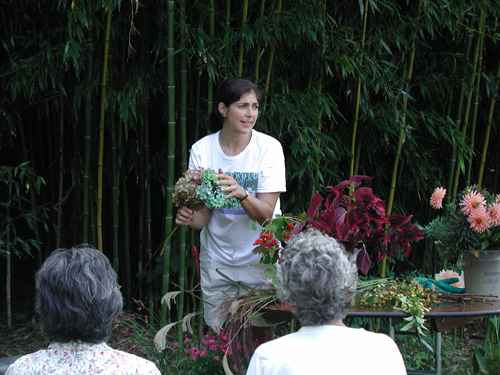
Karen Jessup is a landscape historian and historic preservationist contributing some of her time to oversee preparation of the master plan. She sees many collaborations possible at Blithewold. Gardening students from the University of Rhode Island and art students from the Rhode Island School of Design, for example, already are regular visitors, using the house and grounds as virtual classroom exhibits. Bird-watchers and botanical illustrators are two other groups that could benefit from Blithewold, Jessup suggested.
It will take 12 to 14 months to complete the plan, which will guide growth at Blithewold for the next 10 years, according to Jessup. She stressed that the estate does not need “a quick fix,” so the plan will be thoughtfully and carefully put together. “There is nothing in crisis, there is nothing desperate to fix,” she said. “We want to move to the next level of growth, of being an excellent example of historic preservation.”
Although raising revenue will be covered in the plan, it will not be the focus.
“You can raise all the money you want, but if you don’t know why you are raising it, that’s not very good,” Jessup said. The team retained to work on the plan comprises 11 agencies and individuals, including architects such as Ann Beha Architects of Boston and Olin Landscape Architects of Philadelphia, as well as horticulturists, educators and specialists in nonprofit management. It took about six months to locate and choose the master-plan team, Jessup said.
Binder and Jessup declined to say how much the plan will cost. “It is not cheap,” Jessup said. Funding for the plan comes from a variety of sources, she said, including foundation grants, federal funds and donations from individuals.
Blithewold’s annual operating budget is currently $1.2 million, according to Binder. The budget supports seven full-time staff members (including two groundskeepers for the 33-acre estate) and 10 part-time workers. The 150 or so individuals who volunteer their time, however, are the most critical factor in staffing. “Blithewold couldn’t exist without our incredible volunteers,” said Jessup, an opinion echoed by Binder.
With a larger endowment, Binder said, she would hire more staff and work on capital improvements, but she is pleased to have one at all. About 10 years ago, when Blithewold was in dire financial straits, there was no endowment fund, she said; the $3.2 million was raised in the space of about five years.
In 1998, Blithewold almost closed after years of deficit operations, and there was then talk of selling the property to a developer. But a small group of citizens who believe in historic preservation came to the rescue by raising $650,000 in a few weeks and taking over management of the estate under a 99-year lease. That group today has been incorporated as Blithewold Inc. and remains in charge.
Blithewold was established in 1896 by Augustus Van Wickle (who also gave the Van Wickle gates to Brown University, from which he graduated in 1876). The current manor house dates from 1907, built after the original mansion burned down the year before. The gardens are open year-round and remain a huge draw at Blithewold, with a collection of 3,000 trees and regular horticultural exhibits such as “Daffodil Days” in April.
Other members of the Blithewold master plan team are: Shary Page Berg; Anthony Knerr & Associates; ETM Associates LLC; Altieri Sebor Weiber LLC Consulting Engineers; Wendy Jessup and Associates (no relation to Karen Jessup); Susan Leidy of the Currier Museum of Art, Manchester, N.H.; Odeh Engineers; Nitsch Engineering; and David Langdon, cost estimator. •