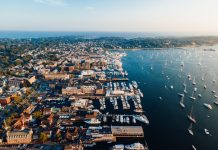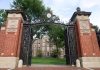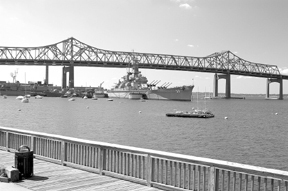
in Fall River are Bristol County landmarks.
Region’s leaders discuss jobs, housing, tourism
The
20 cities and towns of Bristol County, Mass., play a key role in the regional
economy of Southern New England, from the large manufacturers of Fall River
to the numerous tourism destinations in seaside towns. Providence Business News
recently discussed with Bristol County business and civic leaders some of the
issues facing the county’s economy. The participants were as follows: Edward M. Lambert Jr., mayor of Fall River, Dr. John J. Sbrega, president of Bristol Community College, Michael W. Metzler, president of Saint Anne’s Hospital and Stephen C. Smith, executive director, Southeastern Regional Planning and Economic Development District.
ISO 9001:2026: A Practical Opportunity to Build for What’s Next
For Rhode Island manufacturers, ISO 9001 has been much more than a certificate on the…
Learn More
Q. In the past, Bristol County – for the most part – has been an attractive
place for businesses looking for a blue-color work force in mainly the manufacturing
sector. While manufacturing remains a key to the local economy, there has been
a push to move the work force toward a stronger service-based economy. How do
you think this effort has gone?
SBREGA: This effort has been successful, in my opinion, principally
because of the market-driven pressures. The needs of the marketplace wield powerful
influences in the shift to service-based and high-tech activities. This shift
carries in its wake fundamental requirements for training and educational opportunities.
Here is where I see a seminal role for Bristol Community College. Whether for
credit or non-credit, degree-seeking and/or skill-building opportunities, employees
or aspiring entrants to the job market will find BCC accessible, affordable
and accommodating. We offer attractive opportunities for these “students” to
prepare to enter the job market (not necessarily at entry levels), to refurbish
their skills, or to prepare for new and emerging work force opportunities.
METZLER: UMass Dartmouth has been the hub, drawing all sectors together (business, nonprofit, education, local and state government) to work on economic-development initiatives to produce a greater mix of higher paid service-sector jobs. Examples are promoting the advantages of the region through the Southcoast Development Partnership, and the opening of the Advanced Technology and Manufacturing Center (ATMC). Just as important are initiatives to advance educational attainment for K through 12 such as the Southcoast Education Compact. I feel progress is being made and there are positive stories every week such as the recent announcement of a biotech firm taking significant space at the ATMC.
The health care sector continues to expand. All four hospitals in the region
have spent many millions on expansion and new technology. The key to job growth
is for the hospitals to add services and technology to make it possible for
area residents to meet their health care needs without leaving the region. At
Saint Anne’s, we have added 300 jobs in the last five years.
SMITH: There is a big difference between the northern part of the county – including Attleboro and Taunton – and the southern part of the county. Taunton and Attleboro are part of the larger Boston economy. The Fall River and New Bedford area has a much different orientation, which is connected more to the Rhode Island economy. The most dramatic thing to happen in the county in the last 15 years has been the flip-flopping of the major sectors. In 1987, the top three sectors by number of jobs were manufacturing, trade and then services. In 2001, it was service first, trade second and manufacturing third. This is a major shift.
The area has done better in education. The percent of adults with high school
degrees and the percentage of adults with college degrees have gone up. We have
improved the way we educate our work force, so we are making progress. The northern
part of the county has caught up with the rest of the state.
LAMBERT: The effort is improving. (Fall River) has an ambitious school-building
plan with three new schools already open, one about to open and the remaining
seven are in various planning stages, with many already awaiting a decision
from the Massachusetts School Building Assistance Bureau. There is now an increased
emphasis on schools and curriculum, and more students are going on to higher
education. Just this past year, Fall River students increased their SAT scores
by 31 points. The main problem is the need for retraining of our incumbent work
force. We need to find more ways of getting people into Adult Basic Education
and English as a Second Language programs. We need to work on eliminating the
waiting lists for these programs.
Some of the positives in the area include the renovation of the former Cherry
& Webb building in Fall River, which now houses the University of Massachusetts
Dartmouth Center of Professional & Continuing Education. Our local community
college, Bristol Community College, has also begun holding classes in the building.
BCC itself continues to see increased enrollment and plays an integral role
as far as educating our work force; they continue to adapt degree and certificate
programs to the area’s work force needs. Also, the Advanced Technology Manufacturing
Center on Martine Street in Fall River is a bright spot, attracting high-tech
startups and most recently, attracting a biotech company to Fall River.
Q. The real estate market has exploded in recent years in Bristol County,
an area that for decades fell behind the rest of the state. While there are
many benefits to stronger real estate prices, there are some major negatives
in terms of some of the area’s residents being priced-out of homes. Do you see
this being a hot-button issue at this time?
SMITH: Southeastern Massachusetts has had the highest percentage price
increase for property in any part of the state (in recent years), but it started
at a lower level. I think it has been a natural progression of the economy.
It’s a trend that’s happening everywhere. The positive side is that the rise
in housing prices is a result of greater demand, which means it has become a
more desirable area. I think those things are good in terms of economic growth.
The downside is that the rising prices will squeeze some people out of the market.
We do need to pay more attention to affordable housing.
SBREGA: The explosion of the real estate market in Bristol County signals
potential danger for area citizens. Current property owners face the challenge
of keeping up with escalating costs associated with being a property owner (e.g.,
increasing taxes, insurance, etc.); moreover, prospective buyers, particularly
of first homes, encounter soaring prices. With regard to this latter group,
how do we expect young couples, just starting out, to enter this real estate
market? What prospects can we hold out to them for the quality of their future
in Bristol County?
METZLER: I definitely feel real estate prices are an issue, especially
as I see what has happened in the Boston area, where there is a critical shortage
of affordable housing. The governor spoke about this recently at a press conference
I attended as a member of the Southcoast Competitiveness Council. He proposed
incentives to developers for creating housing and apartment complexes on brownfields
and state-owned property. This was all in the context of inducing companies
to locate in the state, particularly in such industries as biotech and medical
devices. This issue aside, there is certainly a concern for our citizens here
who will be left behind in any economic expansion, or have fixed incomes, and
will not be able to afford adequate housing.
LAMBERT: While home prices are increasing, wages are also following
suit. Compared to other parts of the state, Fall River has some of the lowest,
if not the lowest home prices and reasonably priced real estate, so the increases
are relative. However, if home prices and rents in the area continue to escalate,
then yes, this is definitely something that needs to be watched, as it may come
up as a future issue.
Q. Rhode Island has benefited from a strong tourism industry. Do you think
Bristol County has gotten the most out of its attractions?
METZLER: As a relative newcomer, I continue to be awed by the natural
beauty of our area. I feel Fall River and New Bedford are now more serious in
their efforts on developing their waterfronts and beautifying their cities,
not only to be attractive to tourists, but also to companies looking to locate
here. Actually, I feel this is more important than major tourist infrastructure
such as hotels. Our region is more of a stopover point or a day trip possibility
than a destination where people stay for several days.
LAMBERT: While we have been more successful in recent years at promoting
our attractions, and in attracting cruise ships to our area, we could do more
regional collaboration. We could focus more on packaging New Bedford and Fall
River together and marketing our region. Both Fall River and New Bedford have
a number of attractions in our downtown and waterfront districts and we need
to continue to make people aware of what is out there and why they should visit.
SBREGA: With its beauty, history and community spirit, Bristol County
should be a “destination region” for tourists. A determined and prolonged marketing
campaign, designed and amply financed on a region-wide basis, would, in my opinion,
make a significant contribution in attaining the goal. If we conceptualize on
a region-wide basis about all we have to offer (e.g., Battleship Cove, the Whaling
Museum, fine restaurants, recreational opportunities, etc.), then I am confident
good things will happen for Bristol County.
Q. What do you see as being the most important issue facing Bristol County?
METZLER: I feel education is the most important issue. Economic advancement
for the individual and for the region is not possible unless we can raise the
level of educational attainment. I get concerned when I hear people say we are
attractive because of our low wages. Companies responding to this point generally
bring us unskilled manufacturing or service industry jobs. If we give away our
precious industrial space to these companies, we will never have the opportunity
to bring economic advancement for our citizens. I look forward to the day when
we can promote the region for its highly skilled, well-educated work force.
LAMBERT: The most important issue facing Bristol County is a commuter
rail. Fall River and New Bedford are the last major cities in the state not
linked to the commuter rail. We need to keep pushing to make sure that this
initiative moves forward, the entire (southeastern Massachusetts) region would
benefit economically from this crucial transportation project.
SBREGA: In my view, the most important issue facing Bristol County
is economic development with special emphasis on work force development. The
existence of an educated work force is a mainspring for economic development.
For instance, corporate leaders who are looking to relocate their operational
activities are always keenly interested in the quality of an area’s potential
work force. Superior educational opportunities throughout the K-16 spectrum
help attract their attention. As president of Bristol Community College, I place
great emphasis on strengthening first, the work force of the future by preparing
our youth to enter the job market (not necessarily at entry-level positions);
the work force of the present by upgrading the skills and knowledge of current
employees; and the work force of the past by refurbishing and re-tooling the
competencies of dislocated workers.
SMITH: It’s still education and work force training. You need an educated population in order to be competitive for the jobs. Most jobs grow from within, so we need to supply the demand.
Q. Do you think the cities and towns of Bristol County have done enough
to work together on shared problems?
LAMBERT: Relations between New Bedford and Fall River are much improved
compared to what they were just a decade ago. I enjoy an excellent working relationship
with Mayor Frederick M. Kalisz Jr. of New Bedford. Besides working on issues
like the commuter rail together, we have, in the recent past, held joint summits
on a number of issues, including a SouthCoast Skills Summit, which focused on
Adult Basic Education and ESL programs. We were actually very fortunate to have
Senator Kennedy attend that particular summit as the keynote speaker.
SMITH: There is a lot of evidence that they are working together. There
is much less working together between Attleboro and New Bedford, for example.
It’s more like Fall River and New Bedford working cooperatively with groups
like UMass Dartmouth and the regional job-training consortium. I think there
is still a fair share of parochialism. I do think it is changing, but it doesn’t
change overnight.
SBREGA: We can always do more to strengthen collaborative efforts. In my opinion, the strength of regional cooperation is a key indicator of success for Bristol County. We must continue to develop this region-wide perspective.
Q. Community rail to Fall River and New Bedford has been delayed, again.
How important is the rail to the local economy?
METZLER: I do think commuter rail will eventually happen. Commuter
rail is essential for the Southcoast to participate in high-end jobs in high-tech
industries. It will cause outside companies looking to relocate to see our region
as an extension of the Greater Boston area. Commuter rail is a way to blend
work forces, educational opportunities and housing options. In health care we
have been suffering from labor shortages in nursing and technical occupations.
Commuter rail would give us access to a larger labor pool.
SBREGA: The commuter rail, I believe, is essential to further strengthen the economic development of the region. This issue has been called a matter of economic justice. Quite correctly, the rail has been portrayed as a means to relieve our highways, which are already overburdened with congested traffic (much of which is associated with travel to and from Boston). I would, however, point out the obvious, namely, the rail would run in both directions. Thus, corporate leaders currently paying exorbitant rates for property in the Greater Boston area might welcome the opportunity to relocate to Bristol County if provided with assurances about not only the commuting ease for their current employees but also the potential pool of educated workers in Bristol County.
Given the context of my earlier answers, I see this economic justice issue
of the commuter rail as inseparable from the economic development of Bristol
County. Here is an outstanding example of the regional collaboration that I
advocate. It is perplexing to me to learn of the resistance to this rail “extension”
by our immediate neighbors to the north – most of whom now enjoy this rail service.
One of the fundamental tenets in my exhortation for regional cooperation lies
in my firm belief that any success for one part of Bristol County ultimately
benefits the whole county. Does not the same principle apply – by extension
– to our neighboring areas? They, too, will reap the benefits of heightened
economic activity in Bristol County.
SMITH: Some people are expecting it to be the panacea. It will not be. The rail is designed to take people into Boston in the morning and bring them back at night. It will be important to set up the schedule to make a reserve commute very easy as well. Any benefits related to bringing tourism or attracting labor is gravy. It will make the region more accessible and more desirable for highly skilled white-collar workers, whose presence could eventually be a factor in companies staying here or moving here.
Another benefit is reducing traffic on Route 24, which is becoming a real
problem.
For the complete current issue, visit our subscription Web site, or call (401) 273-2201, ext. 227 or 234.