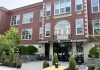
Roger Williams Medical Center is a 128-year-old community hospital, a cancer care provider, a specialist in geriatric medicine, and a place where Rhode Islanders with mental illness, substance abuse and physical problems can get comprehensive care.
It is also a criminal defendant, indicted Jan. 5 by a federal jury on 36 counts of mail fraud and one count of conspiracy for its dealings with former state Sen. John A. Celona, who has pleaded guilty to federal fraud charges and has agreed to cooperate with the government in a continuing investigation.
Your Business Has Gone Global. Has Your Insurance?
A decade ago, “doing business internationally” was mostly a large-company concern. Today, a manufacturer in…
Learn More
How long can it be both? And what if the indictment leads to a conviction or a guilty plea?
The case against Roger Williams; its president and CEO, Robert A. Urciuoli; a former vice president, and an affiliated official is still developing, and many details – including how much power the state has to step in for consumers’ protection – aren’t yet fully clear.
But after a meeting with Roger Williams trustees, lawyers, and interim president and CEO Kenneth H. Belcher last week, Gov. Donald L. Carcieri and Attorney General Patrick C. Lynch said they have one key goal: to keep the hospital viable, for patients’ and employees’ sakes.
And Roger Williams officials, Carcieri said, want the same thing.
“We have one objective – that the services being provided by that institution are at the standard that they’ve always been,” the governor said. Roger Williams also employs more than 1,400 people, he and Lynch noted, and no one wants those jobs to be lost.
The indictment covers the hospital, Urciuoli, former hospital executive Frances P. Driscoll and Peter J. Sangermano Jr., a principal of Village Retirement Communities, which operated The Village at Elmhurst, an assisted-living facility, in partnership with the hospital.
All allegedly conspired to give Celona a job that supposedly involved promoting The Village at Elmhurst, but really involved promoting Roger Williams’ legislative interests and using Celona’s influence to resolve problems the hospital had with health insurers.
The official charge is that they conspired to deprive Rhode Island citizens of Celona’s honest services, and used the mail to do so – both for their correspondence with the state Ethics Commission, and to mail $260,000 worth of checks to the senator.
Separately, prosecutors continue to investigate Celona’s dealings with Blue Cross & Blue Shield of Rhode Island and the CVS Corp. Both Lynch and U.S. Attorney Robert Clark Corrente have said the investigation is far from over. Lynch is also prosecuting Celona in state court.
Urciuoli, a 32-year veteran of Roger Williams, has been president since 1988, but was placed on paid “administrative leave” effective last Dec. 5. A week later, Belcher took over the reins. Asked if he’d dealt with Urciuoli, Belcher told reporters on Tuesday that “I have never met Bob, never talked to Bob.”
Citing his conversation with the trustees, Carcieri also stressed to reporters that Urciuoli “is no longer there” and has no role in running the hospital at this time.
However, Carcieri said the trustees had acknowledged that the hospital “felt it was obligated” to pay all of Urciuoli’s, Driscoll’s and Sangermano’s legal expenses, as well as its own. And the hospital has said that Urciuoli continues to be paid his $400,000-a-year salary.
Roger Williams board President Edward A. Hjerpe – Rhode Island and Massachusetts president for Webster Bank – refused to discuss Urciuoli’s status with reporters, and Carcieri and Lynch both resisted suggestions that they should call for Urciuoli’s firing.
But asked whether state officials had the power to stop the hospital from continuing to pay Urciuoli or covering everyone’s legal bills, Lynch said they’re working together to determine their regulatory powers, and “we will use whatever steps we deem appropriate” to protect the public interest.
As for federal officials, Belcher said the hospital has been in touch with the Centers for Medicare and Medicaid Services, and he’s not concerned about losing eligibility for federal funds at this time. Ditto with private health plans – it’s not even come up, he said.
As for banks with which Roger Williams has loans, or from whom the hospital may seek financing, no concerns have been raised there, either, Belcher said, and officials hope none will arise. Finally, asked whether anyone is talking about Roger Williams merging with another entity to protect its future, as has been considered before, Belcher replied: “It’s not been discussed since I’ve been here.”
Carcieri and Lynch said the big questions would arise with a conviction, which the governor said would raise “a whole host of issues.”
Both the hospital and Urciuoli have issued written statements decrying the indictment.
The U.S. attorney’s decision to indict, the hospital trustees wrote, “has threatened a respected 128-year-old institution that employs more than 1,400 people and provides millions of dollars of free care annually to Rhode Islanders who can’t afford to pay for care.”
Urciuoli’s lawyer, Robert G. Flanders Jr., called the indictment “a one-sided baloney sandwich, served up by John Celona.”
Urciuoli himself said he had “spent my entire career fighting to advance what I know is one of the best hospitals in the region,” and now, “to see it put at risk for no apparent reason, really saddens me.”