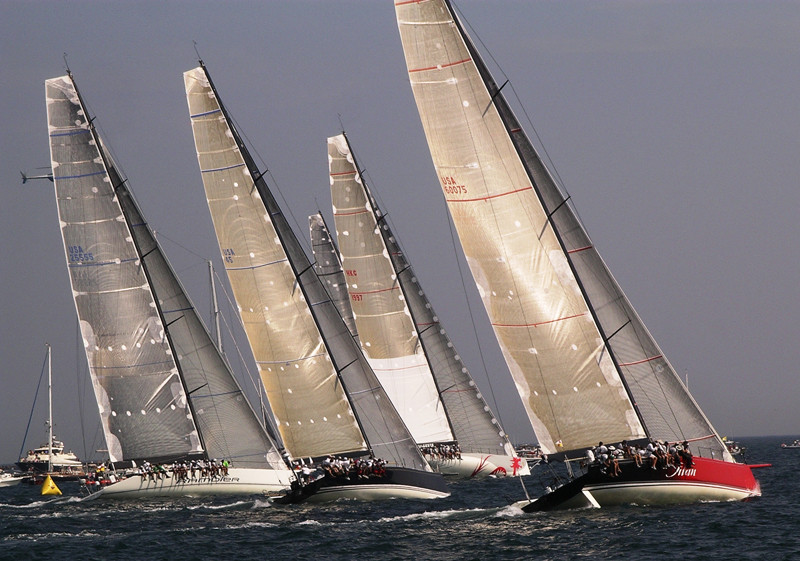
Sailing off the blue-green coast of Newport has become a little “greener,” thanks to the environmental commitment of several sailing organizations to a national program with local origins.
In what is quickly becoming a growing trend, regattas are striving to comply with the “Clean Regattas” program; in doing so, they are changing the way sailing is performed and promoted.
In the City by the Sea this year, thus far the America’s Cup World Series #6 (Through July 1), Newport-Bermuda Race (June 13-23), and The Atlantic Cup (May 11-27) have pledged to the conditions of the Clean Regattas program, sponsored by Sailors for the Sea, a nonprofit organization in Newport that educates the boating community on how to protect and restore the ocean.
The program designates 19 best-management practices and is obeyed by more than 60 regattas throughout the nation, including nearby Massachusetts and Connecticut. There is no cost for the certification. The green-certification provides independent verification that a yacht club, sailing program or regatta is environmentally responsible.
“We do well for a small organization and people really take it to heart, from composting to alternative fuels,” said Dan Pingaro, CEO and executive director at Sailors for the Sea.
The Newport-based group just became the first environmental, nonprofit partner with the America’s Cup in its 160-plus years. “That was a big achievement,” he said. “We can help them reduce their environmental footprint.”
Pinagro said the race committee encourages participants to adopt a number of practices for the health of the oceans, including reducing plastic-bottle use, following a leave-no-trace approach to dealing with trash and preventing oil spills. The measures also save money by reducing reliance on plastic bottles, fossil fuels and disposable products attracting new sponsors, donors, investors and foundations for nonprofit clubs through the positive awareness of the Clean Regattas efforts.
Earlier this year the Atlantic Cup became the first carbon-neutral sailing race in the United States during its three legs of competition; Charleston, S.C., New York Harbor and Newport. The Atlantic Cup’s carbon-neutrality initiatives were supported by Green Mountain Energy Co., a green-power retailer and a major sponsor. The partnership opened up an era where event supporters are becoming more-involved sponsors, and the additional sponsorship opportunities are a welcome addition.
The Atlantic Cup, with the help of Sailors for the Sea, took many steps to make the event a Clean Regatta. Challenges for the race included trash and recycling, biofuel or solar-power use and oil-spill prevention.
“In the coming year we will be working more with the marine industry,” Panagro said. “We also plan to work with the business community more.”
John Rousmaniere, a spokesman for the Newport Bermuda Race and a writer, historian and sailor, said, the crews’ participation is a big reason for the program’s success. “They carefully establish and enforce environmentally friendly routines. For example, since a big concern is keeping plastic out of the water, on each boat nondisposable drinking mugs are set aside, one for each sailor with her or his name on it,” he said.
For a Newport-Bermuda race that began in 1906, that’s quite a commitment; approximately 165 boats in six divisions. •