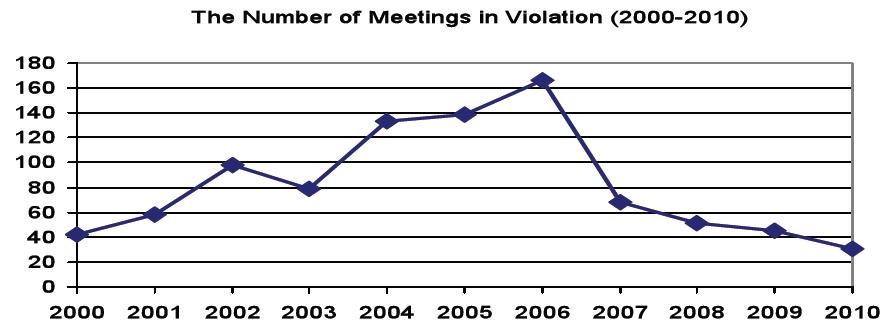
PROVIDENCE – Although the R.I. General Assembly’s total number of violations of the Open Meetings Act has declined over the years, the last two weeks of the session are still a violations sore spot.
In 2010, 28 of the 31 violations of the Open Meetings Act, or 94 percent, occurred in the last eight days of the legislative session, said Common Cause Rhode Island, the local branch of the national, nonpartisan advocacy group that says its aim is to hold elected leaders accountable to the public interest.
Beyond Cash Donations: How New Forms of Giving Are Transforming Not-for-Profit Accounting
Evolving Funding Landscape for Not-for-Profits Not-for-profit organizations are being asked to do more with less,…
Learn More
The Open Meetings Act, adopted in 1976, promotes government openness. Violations range from insufficient to no notice of committee meetings, incomplete or vague agendas, lack of public access to the meeting space, or not publicly closing the meeting in accordance to rules for executive sessions.
In a report released Tuesday, Common Cause examined the compliance of the General Assembly with the Open Meetings Act during the last decade. The legislative body is subject to the Act but immune from prosecution for violations, it noted.
From 2000 to 2006, the number of violations steadily increased, peaking at 35 percent of all committee meetings being in violation of the law.
“Despite the fact that overall violations have declined over the last four years, the end of the legislative session presents a recurring problem, and one that has worsened through the decade,” said the report, entitled “A Decade After ‘Access Denied’,” referring to the 1998 report published by then-R.I. Secretary of State James R. Langevin that found that a majority of the 1997 session meetings were in violation – either in spirit or letter – of the law.
The latest Common Cause report focused on the violations that occurred in the final days of the 2010 session, noting “these violations involved crucial pieces of legislation with lasting ramifications.”
“They included the Financial Stability Act, which shifted the balance of power between the state and municipalities in economic distress, and the legalization of the sale of dangerous fireworks weeks before the 4th of July holiday without sufficient input from public safety officials,” said the report, citing those two examples as pieces of legislation that passed without sufficient notice or scrutiny.
In one day last year, June 9, the House Finance Committee violated the Open Meetings Act on five separate occasions, which was recorded as one meeting in violation. The House Judiciary Committee – over the course of three meetings – had eight violations while handling 21 pieces of legislation.
The two committees sent 55 pieces of legislation to the floor to be voted upon, many of which had been introduced and passed through committee that same day, the report said.
For the full report, click here.