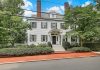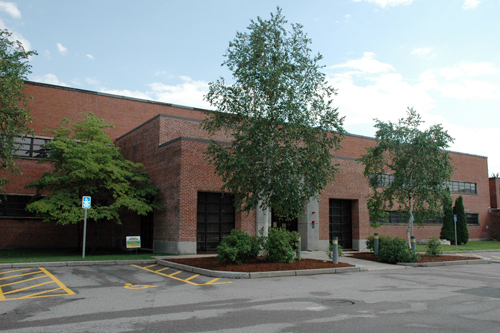
Four years ago Attleboro Mayor Kevin J. Dumas approached John J. Sbrega, president of the Fall River-based Bristol Community College, with a proposition. He wanted the school to open a small satellite campus in the former Attleboro High School.
“He offered him a chance to come take a look at it, to see if he liked it. At that time BCC had been trying to get a building in the Attleboro area for a number of years and this was really the first viable location that we had seen,” said Kathy Torpey Garganta, the dean of the Attleboro campus. For more than 30 years, the school had run a few continuing education classes in the city, “allowing people to at least start their college careers. But it didn’t have too much programming – it was just a simple satellite.”
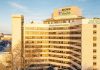
But within a year of moving into the high school in 2004, the college’s administrators realized that renovating that building to meet Americans with Disabilities Act code requirements would be tough and costly. Quickly, though, another offer – to buy a former Texas Instruments building – was put on the table, Torpey Garganta said. The building isn’t much larger, but it has elevators and ample on-site parking, both of which the former high school lacked.
Since that purchase, in 2006, the school has been working on a $4 million renovation of the 25,000-square-foot building. New Bedford-based Bufftree Building Company acted as contractor and the design was completed by E. Randy Jarvis Architects.
“Now, we expect to be completed soon, within weeks,” Torpey Garganta said recently. “And we expect to move in before September.”
The space, which had been used for manufacturing, has been split up and converted into classrooms, two computer labs, conference space, a library, and health science, chemistry and biology labs. There’s a full theater and a cafeteria. And the building’s infrastructure – including the heating, phone and electric systems – had to be entirely reworked, Torpey Garganta said. Bridgewater State College will rent some of the second floor.
Bufftree owner Scott Costa said his firm has completed a few school projects – Sacred Heart School’s Early Childhood Center in Kingston, Mass., and Global Learning Charter Public School in New Bedford, most recently – that are increasingly technology-based. “They tend to be very state of the art,” he said.
Inside the new BCC campus, classrooms have built-in “smart classroom” technology that includes an LCD projector hanging from each ceiling – in the old building they were wheeled around on carts – and Wi-Fi Internet throughout the building, Torpey Garganta said. “So faculty members doing presentations can bring in a CD, or just one of those little thumb sticks [USB flash drives] and it gets blown up to fill the whole front of the classroom,” she added.
Some of the classrooms even have SMART Board interactive whiteboards, large screens that can relay computer images and are touch-sensitive, she said.
And there are document cameras, which act like digital overhead projects. “But they’re in color and sort of three-dimensional … being able to take an object and blow it up onto the screen is very cool,” Torpey Garganta said, adding, “It’s just a terrific teaching tool.”
Aside from an attempt creating a better space for learning, the move to 11 Field Road in the Attleboro Corporate Center – the campus will be called the Attleboro Corporate Campus – also “fills an educational void” in the Attleboro area, she said.
Without the BCC satellite campus, “they are educationally landlocked,” Torpey Garganta said of prospective junior college students. “They did not have the ability to go a public school anywhere within about a half hour. When you think of the greater Attleboro-Norton-Plainville area, if you want to go to BCC [in Fall River] you have to drive 40 minutes; if you want to go to [the Community College of Rhode Island] would take a half-hour; Bridgewater is over a half-hour. So wherever you’re going, you really have to drive.”
And while CCRI has historically been the closest, Massachusetts students enrolling there aren’t able to take advantage of the lower tuition rates for in-state students, she said.
“As a community college, we service southeastern Massachusetts, and this was an area that we could never help until now,” she added. “And our growth has so far been phenomenal.”
During the first semester that BCC was in Attleboro, about 300 students were enrolled at the campus. Last year, that number jumped by more than 100 percent, to 700 enrolled students. This year, Torpey Garganta expects to continue that growth with more than 1,000 enrolled students. She said she’s hopeful that during the next decade the school will help transform the greater Attleboro business community by creating a “well-educated work force that’s able to read, write and make decisions.”
Founded during 1965, the two-year college has more than 90 programs of study and offers certificate coursework and associates degrees.
Aside from the Fall River campus, there’s a New Bedford campus. In total, BCC has about 7,300 students and, since about 2000, there’s been an aggressive move to expand both the physical campuses and the student base. A satellite campus in New Bedford opened in 2001. “So we really are trying to create a broad span to take care of a range of people in southeastern Massachusetts,” Torpey Garganta said. •