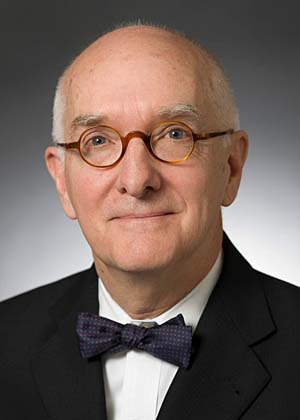
David Becker has been named director of the St. Joseph’s School of Nursing. Becker served for more than 20 years as a military nurse in the U.S. Navy, and has another 15 years of experience as a nurse educator and administrator for community colleges. He most recently served as the dean of health sciences at Roxbury Community College.
PBN: Do you feel there is much difference between a hospital-based nursing school and ones that aren’t?
BECKER: All nursing programs prepare graduates for licensure after a common exam (NCLEX-RN) which is also used as a measure of program effectiveness. Rhode Island programs all do well on that test, and St. Joseph regularly comes out on top or very close to the top in the state.
St. Joseph’s difference derives from our close ties with the hospital. Among the recommendations of the recent Carnegie Foundation study of Nursing Education is to strengthen and broaden the learning impact of the clinical component of education programs. In this we have the advantage. Students in hospital-based diploma programs like ours generally begin clinical experiences earlier, have more time on clinical units, are guided by instructors who have closer ties to the clinical setting and who have fewer students to supervise.
Rhode Island's Market Has Changed. Developers, Builders, Investors and Sellers Must Change With It.
By Emilio DiSpirito IV License Partner | Engel & Völkers Oceanside Leader | The DiSpirito…
Learn More
PBN: Is there a particular reason why you have chosen to only teach at community colleges?
BECKER: I taught at community colleges because that is where the action is. My main motivation and interest has been simple: to prepare young men and women to care for the sick and injured. That is what my Navy career was about, and that is what I have done since. Most nurses in this country enter the work force through community college programs. Entry-level programs are most challenging, and for me, are also the most rewarding.
PBN: What is the biggest change you have seen in nursing over the course of your career?
BECKER: The technological advances during my career have been amazing. The women’s movement and other societal forces have helped to transform nursing’s image, both within and outside the profession. … However, I would say that the greatest impact for most nurses has been the higher level of patient acuity. From preterm infants to increasingly long-lived seniors, we care for patients who are sicker, who benefit from more sophisticated interventions, and who transition out of hospital faster than I could have ever imagined. •