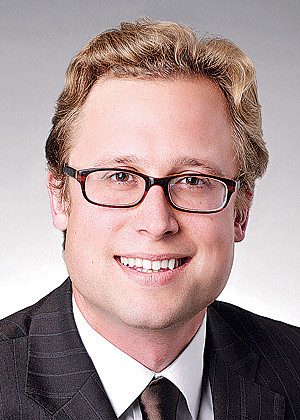
Dr. Brady G. Case has been named director of the Health Services Research Program at Bradley Hospital. In this position, Case will work on identifying and remediating gaps in care for youth with mental health and substance-abuse disorders. He earned his M.D. from Harvard Medical School and is a graduate of the Child and Adolescent Psychiatry Fellowship Program of Bradley Hospital and the Warren Alpert Medical School at Brown University.
PBN: What can you tell us about the recent four-year grant you received from the American Academy of Child and Adolescent Psychiatry?
CASE: The grant is funded by the National Institute on Drug Abuse and is intended to promote training and research on substance-use disorders in young people. We already know that adolescence is the period of peak risk for developing drug and alcohol-use problems, and that these problems contribute to motor vehicle accidents and suicide. … But as a field of medicine and as a country, we are struggling to impact these kids. One problem is that … the treatment of mental health and substance abuse has been artificially separated for historical and administrative reasons.
Rhode Island's Market Has Changed. Developers, Builders, Investors and Sellers Must Change With It.
By Emilio DiSpirito IV License Partner | Engel & Völkers Oceanside Leader | The DiSpirito…
Learn More
PBN: Will your work be focused specifically on Bradley Hospital, or will it have a larger scope?
CASE: My work will have both local and national components. Here at Bradley I’ll be working with a fantastic mentor, Dr. Anthony Spirito, on projects to study how we can roll out substance use treatments into community settings and refine how we can make them more appealing and more effective.
PBN: How will your research differ from previous studies of adolescent substance-use disorders?
CASE: Up to this point, much of the research on treatment has focused on developing the right therapy and assessing whether it works under controlled conditions. This is crucial, but once you’ve got a treatment that you think works, actually providing it the community becomes important. … The work I’m doing now is focusing on what predicts whether kids get treatment, which will hopefully give us some ideas about what we can do to more accurately identify the kids who aren’t getting needed help and more effectively reach them. •