In creating a tourist destination out of a construction project or an architectural gem, arguably one of the most important factors in drawing travelers is that they know and recognize the project – in short, that it’s unique.
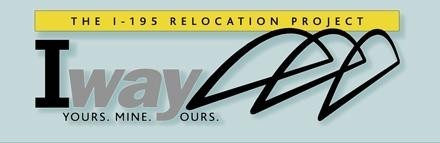
In the case of the $610 million project to move a section of Interstate 195 out of downtown Providence, the simplicity of referring to the state’s largest transportation project as the Iway was on the minds of the communications department at the R.I. Department of Transportation.
“I think any time you brand something it makes it easier for the public to be aware of,” said RIDOT Chief Public Affairs Officer Dana Alexander Nolfe. “So, therefore, it becomes more of a conversational, colloquial idea. So that instead of saying that thing you’re going to visit is ‘the new portion of I-195 that was part of the relocation project,’ use the term Iway and it becomes sort of an entity unto itself.”
When they made the decision to brand the project, there were many names bandied about – Alexander Nolfe wasn’t able to remember any of the alternatives. But the combination of “interstate” and “highway” stuck for its simplicity.
“We wanted something that we could build a brand on,” she added.
And there are a few elements of the project that could draw in tourists: the highly stylized green bridge that sits outside the Fox Point Hurricane Barrier, the approximately eight acres of new park space that will be created on the freed-up land and the eventual construction of new buildings on the remaining 32 acres of land.
At the Providence Warwick Conventions & Visitors Bureau, Vice President Kristen Adamo said those parks will become part of the package they use to sell Rhode Island. It will “expand” the tourism product that it can offer.
“That’s pretty unusual for a city with that thriving of a downtown to have that much real estate open up,” she said. “It’s really exciting for us, particularly with the construction of the Dynamo House and the Heritage Harbor Museum, that that will be another neighborhood that we’ll be able to tout to tourists.”
Aside from visitors coming to Providence simply to get a view of the new highway bridge or to relax in a new park, there should also be a better traffic flow along the state’s highways, which is something that tourists and groups coming to the state also will find appealing, Adamo said.
“Particularly, the drive market is going to be very important to us over the next year or two,” she said. “People can’t afford to take airplanes [anymore], and 25 percent of the U.S. population lives within 500 miles of Rhode Island.”
She added that PWCVB and RIDOT have been working “hand-in-hand” during the summer months to keep tourists updated on construction and traffic patterns.
And the Iway project isn’t the only big project that the state is tackling right now that could have a large effect on the tourism industry. Adamo said the Intermodal Train Station, a $267 million Warwick project expected to be completed in 2010, will have “the biggest” impact, she said.
“Seamlessly” connecting a train station to the airport will be a boost to the tourism industry, she added.
Of course architectural and development-based tourism isn’t a new idea in Providence. The Providence Preservation Society for decades has offered a group of tours of six Providence neighborhoods. Those tours – which vary from waterfront development to a look at what downtown once was to the evolution of College Hill – are mostly geared toward students and young people, said Education Coordinator Kathleen McAreavey.
“So our focus is the architecture of the buildings and the idea of preserving buildings, preserving a landscape,” McAreavey said. “So the best way to tell that story is to integrate that history and the people who lived in those buildings.”
Architectural tourism is, at its core, a way to change people’s views about their own environments, she added.
“It helps to you appreciate, going back to your town, and looking at the buildings in a different way,” she said. “Maybe appreciate your surroundings a little bit better and also, hopefully, being inquisitive about the stories associated with the buildings in your little corner of the world.
“In the whole scheme of things, it’s really about community,” she said.
The PPS tours, dubbed Heritage Tours, are focused on a time when architecture and preservation weren’t thought of as they are today. Now, however, groups have to be more proactive in establishing their brands, RIDOT’s Alexander Nolfe said.
For the Iway, “we wanted to brand it ourselves before it was branded by someone else,” Alexander Nolfe said. “So it allowed us to control the naming and the image that we wanted to portray.”
There’s even a symbol that was created that uses the design of the bridge to reinforce the project. Much of the work was done in-house, but the RIDOT did hire Duffy & Shanley Inc. as consultants.
And it’s not an idea that’s unique to Rhode Island. Branding a big project to make it more recognizable has been a way to create a sense of distinction for some time, she said.
“It’s definitely been around for a while – many states have done this in the past,” she said. “Look to our neighbor, Massachusetts, with the Big Dig.” •