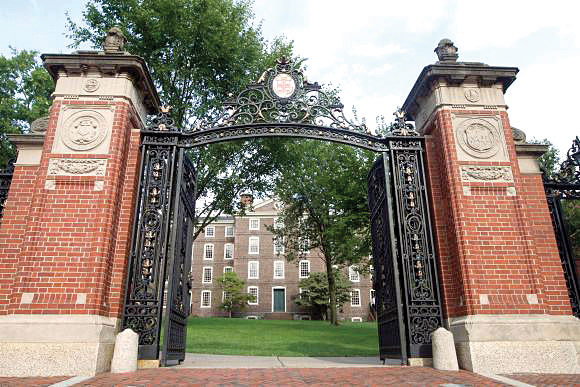
PROVIDENCE – Brown University has divested 90% of its endowment investments in fossil fuel companies, with plans to eventually exit its positions in fossil fuel companies, the university announced Wednesday.
The university said the decision aligns with its goal of reducing its greenhouse gas emissions and work to increase Rhode Island’s climate resilience.
Selling Luxury Real Estate Requires More Than Exposure
By Emilio DiSpirito IV License Partner | Private Office Advisor Engel & Völkers Oceanside www.DiSpiritoteam.com…
Learn More
The remaining investments in fossil fuel companies will be liquidated as soon as it is possible, the university said. The investments reflect 1% of the school’s portfolio.
The move as also framed as a prudent investment strategy.
“The decision to halt investments in fossil fuel extraction companies reflects the view that, as the world shifts to sustainable energy sources, investments in fossil fuels carry too much long-term financial risk,” Brown President Christina H. Paxson said in a letter to the Brown community. “We do not plan to make new investments in fossil fuel companies unless and until they make significant progress in converting themselves into providers of sustainable energy.”
As of June 2019, the value of Brown’s endowment stood at $4.2 billion.
Paxson’s letter also provided updates on the school’s other previously announced efforts to address climate change.
The school previously set a goal of being net zero for emissions by 2040 with a 75% reduction by 2020.
Paxson noted that the school made progress on two green-energy projects that are expected to offset the school’s energy use, including the construction of two wind turbines in Texas, expected to be operation by spring, and a solar farm in North Kingstown that is expected to produce power for the school by 2022.
Paxson also said that the school has made progress on efforts to shift its central heating plant from natural gas to a sustainable power source – with the eventual goal of having it powered by a source of sustainable electricity.
In addition to this conversion, the school is also considering two interim options to reduce its heating plant impact by either converting the plant to burn recycled biofuel or offsetting natural-gas use by investing in a renewable natural-gas project. Paxson said the school will decide which potential short-term option it will pursue by the end of 2020.
“Climate change may be the single most pressing problem that society faces today,” Paxson said. “The scientific evidence of the enormity of this threat has become increasingly clear over time — without a rapid transition away from fossil fuels on a global scale, it will become impossible to avert disastrous consequences for humans and the natural environment worldwide.”
Brown also intends to use its remaining investments to pressure companies to reduce their carbon footprint, the school said.
“Just as Brown is taking concrete actions to reduce our campus carbon footprint, a growing number of businesses around the world are creating plans to reduce their own emissions of greenhouse gases,” said Paxson. “Brown will use its leverage as an investor to actively encourage these efforts.”
Chris Bergenheim is the PBN web editor. You may reach him at Bergenheim@PBN.com.