As a cook in one of the Brown University dining halls, Steve Derderian knows good produce.
“The quality of some of the stuff is unbelievable,” he said, surveying onions, green beans and radishes provided by the Brown Market Shares Program.
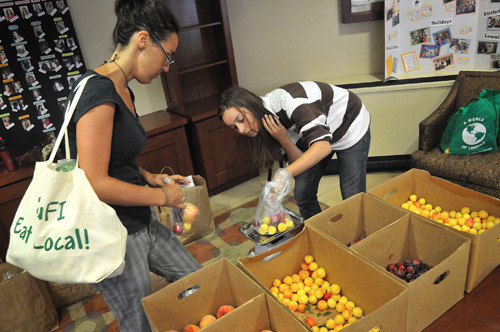
Every Thursday, Brown students and staff carry tote bags to Brown Street in Providence to pick up their weekly shares in the community-supported agriculture program, which provides the Brown community with fresh produce at wholesale costs and local farms with a much-appreciated, steady steam of income.
After paying a fixed price for the season, shareholders receive between 15 to 20 pounds of locally grown, seasonal produce each week, along with one loaf of bread from Seven Stars Bakery and occasional local treats, such as granola from the Providence Granola Project or a jar of salsa from Poblano Farm.
Derderian has purchased shares from the program for more than three years and says the variety is unmatched by other produce programs he’s seen.
While many universities have on-campus farms, Brown Market Shares coordinators believe their program is unique in being student-run, drawing from multiple farms and including subsidized pricing.
The program was begun by Brown students as a small produce-delivery system in 2005 and has expanded rapidly as more students and farms became involved. Three of the program’s six student coordinators – sophomores Eliza Cohen and Anna Rotman and junior Leah Douglas – are coordinating and improving the program this summer, supported by a fellowship from Brown’s Swearer Center for Public Service.
Brown’s program is offering a six-week summer option for the first time this year for 149 subscribers, about 70 percent of whom are undergraduates. The summer program is “the biggest we’ve ever been,” even with only half as many coordinators and volunteers as during the academic year, Cohen said.
The program sets the prices for each season, limits overhead costs to around $1 per person, per week and spends the rest of the money purchasing food. The coordinators spend around $20 on each share each week, Cohen said.
The program receives no funding from Brown besides the coordinators’ summer fellowship. During the year, the program’s coordinators are unpaid.
Douglas estimated that 250 people contributed money toward this summer’s 149 shares, and between 450 and 500 regularly eat from the shares.
One-fourth of each season’s shares are subsidized by those who pay full price. Subsidized shareholders get the same amount of produce each week as those who pay full price. A volunteer Portuguese translator helps the program coordinators advertise the availability of the program and subsidies to university staff.
While the program publishes income guidelines for subsidized shares, shareholders select their payment levels on an honor system.
The subsidized shares support Brown Market Shares’ belief in equity of access for consumers, one of the three prongs of the program’s mission, Cohen said. The market shares expand access by bringing cheap, local and seasonal produce to campus.
“Part of the cost of food is ensuring that everyone in the community has access to the highest quality nutrition,” Cohen said.
Brown Market Shares purchases produce directly from three farms and orders the rest of its produce through Farm Fresh Rhode Island’s Market Mobile, which delivers from farms to wholesale markets such as restaurants, groceries and schools.
Many of the farms that deliver to Brown Market Shares also run their own share programs, but farmers tell the Brown coordinators they prefer not having to oversee the logistics and distribution, Rotman said.
Some farmers have told Brown Market Shares that the program’s economic support allowed them to plant more, Cohen said.
“Our business is big enough that it’s being felt by, especially, the really small farms,” she said. For “one of our egg farmers, our purchase happens to be the one that turns her from being in the red to being in the black.”
The last prong of the program’s mission is raising awareness of food issues on campus and inspiring campus-based activism. The program coordinators organize field trips to farms and provide recipes for shareholders to “create a culture of people who are eating locally,” Cohen said.
Brown Market Shares hopes to add more shareholders in the fall, which Douglas said is the best season, with summer apples, beets, tomatoes and carrots all available.
“We’re looking this summer to kind of create an exportable model, at least for Rhode Island,” Rotman said. “I don’t think we’re inventing anything, but we’re crafting something.” •