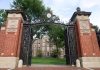
As a grade school student Jonathan Mooney would be directed to that “special” room down the hall from the other classrooms where his neighbors and friends were being taught. The boy with dyslexia lost his self-esteem as well as his motivation to do well in school, something that didn’t return until high school. Today the 21-year-old Los Angeles native is a student at Brown University, where he and other students are working to prevent children with learning disabilities from throwing away vital learning years.
Mooney and fellow Brown student David Cole, 23, of Hanover, New Hampshire are the founders of Project Eye-to-Eye, a mentoring program in which college students with learning disabilities work with elementary school children with the same problem.
Rhode Island's Market Has Changed. Developers, Builders, Investors and Sellers Must Change With It.
By Emilio DiSpirito IV License Partner | Engel & Völkers Oceanside Leader | The DiSpirito…
Learn More
“Self-esteem is a critical area for a child with a learning disability,” Mooney said. “I know it is was hard for me to feel good about myself when I was reading at a first grade level when I was 12-years-old.”
Cole, who has attention deficit hyperactivity disorder, and Mooney sparked up a friendship during their orientation at Brown as well as an interest in changing flaws in the way children like them are taught.
“Essentially you have bright kids who have gaps in their performance, but are treated like kids that our mentally retarded or mentally defected,” said Mooney. He said that usually happens when students are isolated from their peers, like he was as a child. Then on the other hand, students with these problems are put in a regular classroom but are taught at an inappropriate pace, Mooney said. Through the Howard R. Swearer Center for Public Service at Brown
University the students received funding for a program that they hope will provide techniques for students that will help them keep up in class.
Mooney and Cole recruited five other Brown students with learning disabilities and began work last month at the Vartan Gregorian Elementary School at Fox Point. The five recruits spend from 3 1/2 to 4
1/2 hours in the classrooms with a child they were paired off with. Mooney said an example of a lesson taught to the elementary school students would be on note taking, which is a major obstacle for a student with dyslexia.
“We want to give them a note taking map, which essentially starts with an index card that has the ten steps to taking good notes: taking the date, title page, etc.,” said Mooney. “The idea is that in time this map will become instinctive to the students and a guide in helping them overcome their problems.”
Maureen Kenner, special education teacher at the Gregorian School, said the Brown students bring a perspective that most teachers could not.
“The Brown students have walked in the students’ shoes,” said Kenner. “They too have experienced the frustration as a child: confusion, boredom and the inability to get a project done.
“The mentors bring a grown up perspective so that our kids can see themselves in the students,” she added.
The Brown students also see a little of themselves in their new friends.
“When the teacher writes something on the board this little girl tries writing it down, but it is completely different. I did that a lot in school,” said Aimee Pickett, a Brown sophomore with dyslexia. Pickett said fortunately the girl she is mentoring doesn’t seem phased by her dyslexia.
“Her self-esteem is really high. She hasn’t hit the mental (impacts) of dyslexia,” she said.
Keeping that child’s confidence level high and raising others’ is the second goal of Eye-to-Eye. The Brown students work with their child after school hours on a fun project that builds off skills not necessarily related to academics.
“That part of the project is geared toward the student’s strengths. If the student is a really good drawer they will work on a drawing project. We want to really validate that skill to make them feel good about that,” Mooney said.
While the program is just a month old, the benefits are enough for Mooney and Cole to expand next semester to another school as well as create chapters of Eye-to-Eye at other colleges. Harvard and Columbia University plan to offer the program as soon as next year.
“It is important for us to make sure this program lives beyond our stay at Brown. We think the benefits to the students could be great into the future,” Mooney said.
Kenner said her students are offering an important lesson to their mentors as well.
“I think they are providing a healthy outlet for the Brown University students. The younger children are bringing a breath of fresh air during their stressful semester of studies, filled with term papers and tests,” she explained.
A Friday afternoon math lesson summed up the benefits to all involved in the project. Brown student David Flink was working with two boys on a math problem that they had struggled with the day before.
“I was a little frustrated the way the lesson was going the previous day, but David was able to focus them and take them step by step through it,” Kenner explained.
“At the end of the day both kids literally jumped out of their seats and said ‘I got it, I got it.’ The whole class clapped,” she said. “David made a difference in their life that day and that hour. It may seem small but there are a lot of those catch-their-breath moments.”