Delays at the Statehouse in passing midyear changes to the 2010 state budget have created big question marks for municipalities drawing up their own spending plans.
Daniel Beardsley, director of the Rhode Island League of Cities and Towns, said local leaders throughout the state were uncertain, as of last week, how much aid they could expect from the cash-strapped state.
Most questions have centered on the more than $32 million in car-tax reimbursements to cities and towns due in the fourth quarter of fiscal 2010. After Gov. Donald L. Carcieri initially proposed withholding the full amount as part of his plan to close a projected $220 million deficit for 2010, legislators voted to withhold $16 million instead.
But because the House and Senate continued to be at odds over other parts of the supplement budget, the final outcome remained up in the air last week.
The reimbursements could be cut in half or wiped out entirely “depending on which rumors one listens to,” Beardsley said.
The ambiguity presents problems for local communities that are fine-tuning tax-and-spending plans for the coming fiscal year, particularly the 16 towns that have to lay out a budget proposal for their residents for town-wide votes at a financial town meeting, Beardsley said.
He has heard that some municipalities are developing contingency plans to deal with various outcomes at the Statehouse.
“It’s just not a good time to be trying to set municipal fiscal policy for the next year,” Beardsley said.
To relieve some of the pressure, the legislators recently approved a provision allowing cities and towns an extra 90 days to make budgetary decisions. But some local officials have said their municipal charters prohibit such a delay.
The uncertainty at the Statehouse has been the result of a rare budget dispute between the House and Senate over the best way to close the $220 million shortfall projected for the fiscal year ending June 30.
Both sides have yet to resolve the disagreement, at least not publicly. Meanwhile, other pressing matters have been caught up in the delay, and in recent weeks legislators have sought to address those issues apart from the budget.
For instance, just days before the $32.1 million in fourth-quarter, car-tax payments was supposed to be paid to cities and towns, the General Assembly approved legislation delaying those payments until June 15, as well as postponing payment to the state pension fund. The measures were quickly signed by Carcieri.
And last week, the House acted separately on an amendment in the supplemental budget that would drop the greyhound-racing requirement from Twin River’s operating agreement with the state.
When legislators failed to finalize the supplemental budget last month, the operators of the Lincoln slot parlor, UTGR Inc., feared it would have to resume racing on May 15 in order to meet the requirement of offering 125 days of racing annually.
Last year, UTGR filed for bankruptcy protection and sought to end racing because of the costs and declining interest. Twin River eventually reached an agreement with the Rhode Island Greyhound Owners Association, ending the association’s involvement at the facility.
But when the final step, getting legislative approval to drop the racing requirement from the state agreement, was delayed recently, Twin River scrambled to find kennels in New Hampshire and Massachusetts to provide racing, if need be, according to Twin River spokeswoman Patti Doyle.
The House Finance Committee approved the bill to drop racing, and as of May 5, had passed it to the full House for a vote. It will then move to the Senate.
Some observers of the General Assembly said last week that legislative leaders likely were waiting for the completion of the Revenue & Caseload Estimating Conference – due to end on May 10 – before taking action on the supplemental budget or the governor’s $7.51 billion 2011 budget plan.
State fiscal planners are expected to revise revenue projections for both fiscal 2010 and 2011 at the close of the conference.
As of March, Rhode Island had collected $45.3 million more than expected when budget officials revised forecasts last November. But those gains evaporated last month because the historic flooding delayed residents from filing income tax returns, leaving the state $14 million below projections as of April, according to figures released last week.
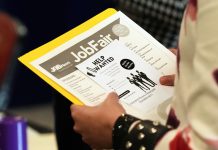
The delays in passing a supplemental budget also have opened up the General Assembly to some protests; namely some members of the business community who rallied at the Statehouse against a proposed $1 million cut to the popular Job Development Fund.
John Gregory, president of the Northern Rhode Island Chamber of Commerce, took part in the protest, but said last week that he did not know if it had swayed legislators.
Amy Kempe, Carcieri’s spokeswoman, said certain aspects of the budget will get more difficult to wring savings from as June 30, the end of the fiscal year, draws closer.
“That can certainly throw a monkey wrench into the system,” she said. •


No posts to display
Sign in
Welcome! Log into your account
Forgot your password? Get help
Privacy Policy
Password recovery
Recover your password
A password will be e-mailed to you.
- Featured Event -