Every now and then, drivers spot Rhode Island license plates that don’t have the typical blue wave. Some have a pink ribbon, a sports logo, images of their favorite lighthouses and even a shark.
But those special plates go beyond improving a vehicle’s looks. They drive home a major purpose to spotlight causes that local organizations are addressing daily.
Since the charity plates were first introduced more than a decade ago, 17 different designs have received approval for production from the R.I. Division of Motor Vehicles.
Local nonprofit leaders describe the plates as a win-win scenario for organizations that can use a portion of the revenue generated from license plate fees to further provide services and advance their missions, as well as for motorists who want to support local worthy causes.
The charities range from organizations that maintain local, historic lighthouses and local environmental conservation groups to the charitable foundations of professional sports teams.
These plates can be preordered from the nonprofit or charity of choice for a cost of around $42.50, and about $20 will be given to the nonprofit or charity, while the state receives the balance for production costs.
But for organizations looking to take advantage of the fundraiser, they first need General Assembly approval and then must persuade at least 600 drivers to preorder the special plate in order for production to start.
Some nonprofits meet those requirements in a matter of days. Others take much longer.
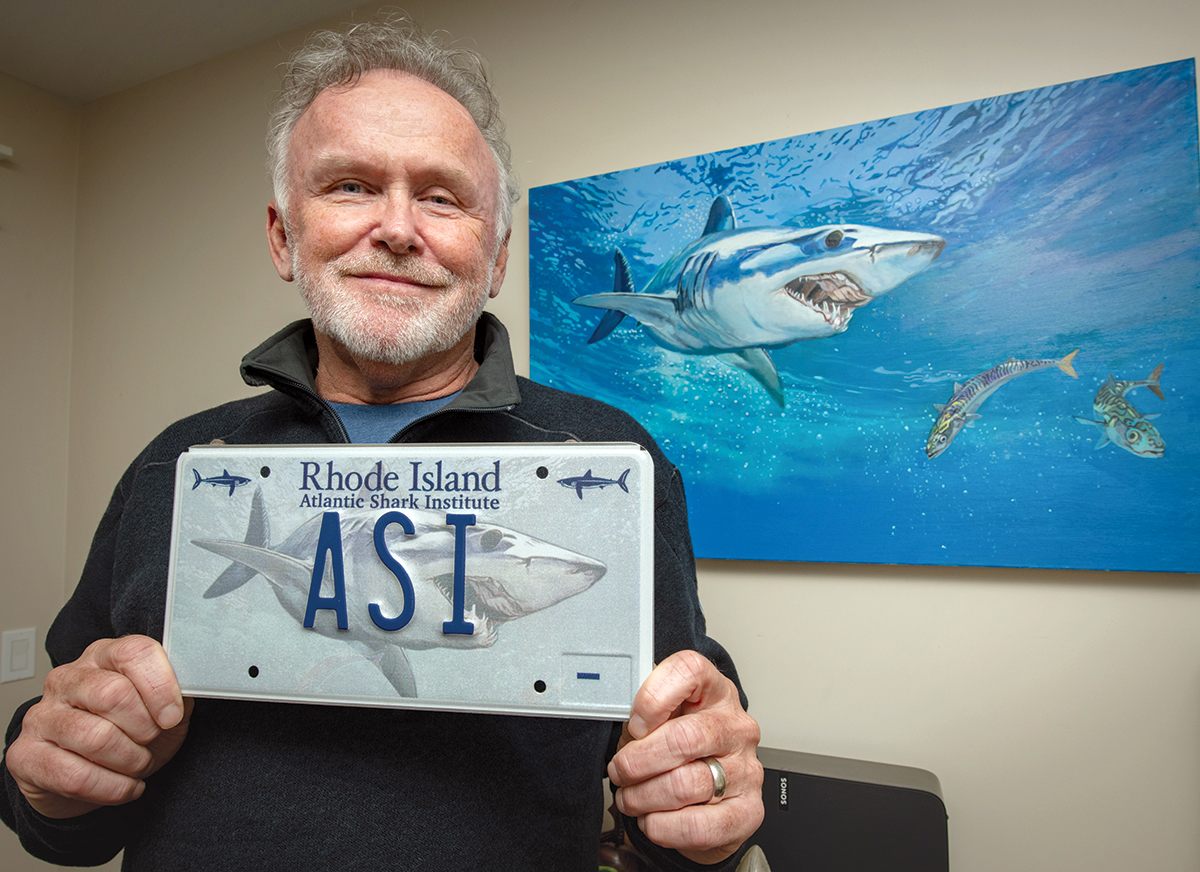
For example, South Kingstown-based Atlantic Shark Institute, a shark research organization using cutting-edge techniques and methodologies to study shark species, sought a license plate in April 2023 with a mako shark emblazoned across it.
It took less than a day for the organization to meet its preorder requirement. To date, 6,631 Rhode Island vehicles sport the Atlantic Shark Institute plate. The revenue generated by the plate – $235,500 and counting, according to DMV data – has allowed the organization to continue operating and further its mission of maintaining ocean health in the state.
“People just love it,” said Jon Dodd, the institute’s executive director. “This is one of those things where we spent a lot of time and effort, money, went to the Statehouse multiple times, met with committees, and so forth. In the end, it worked out. Each dollar is attached in some way to somebody who decided to do something on behalf of the work that we do.”
For the institute, that support has meant expanding the number of acoustic receivers in the ocean, which allows volunteers and scientists with the institute to map areas critical to their mission with greater detail. Each receiver, Dodd says, costs around $5,000.
“We have a much greater breadth of acoustic detection data as a result of these things,” Dodd said. “We can really map what’s going on in much greater detail, which is critically important when we try to think about and see what’s going on, and what changes are taking place when we go to tag sharks. It is good for ocean health.”
Other organizations have used those funds to maintain their service offerings free to the community. The Gloria Gemma Breast Cancer Resource Foundation in Pawtucket, which has seen 1,449 orders of its signature pink-ribbon plate since it went into production in 2012, has used the revenue from the program to cover its no-cost assistance programs for the community in Rhode Island.
Carol Donnelly, the foundation’s development and communications manager, says the plates do more than just provide the foundation with vital revenue; they also sometimes act as reminders for women to schedule regular checkups for their long-term health.
“One of the components to who we are is providing awareness, and if somebody’s driving behind somebody who’s got a pink license plate, it might remind them, ‘Oh, I need to schedule my mammogram,’ ” Donnelly said. “For some women, it is kind of a badge of honor that they’re survivors.”
Other foundations and nonprofits see the plates as a symbol that allows them to keep centuries-old cultural traditions alive.
Judy Hoffman, chairperson for the Gaspee Days Committee’s license plate work group, says the funds from the organization’s license plate, which depicts the burning of the British revenue schooner HMS Gaspee in 1772, help pay for the organization’s festival in Warwick every June.
The Gaspee Days Parade, which took place on June 14 this year, is one of the items that the funds from the plates help pay for.
“This parade is a very beloved parade, and the costs go up and up, and so the ongoing fees for the plates really help us support the parade and the other events,” Hoffman said. “So that was a motivator too, to try to find something fun that would leave us with some sustaining funds coming in.”