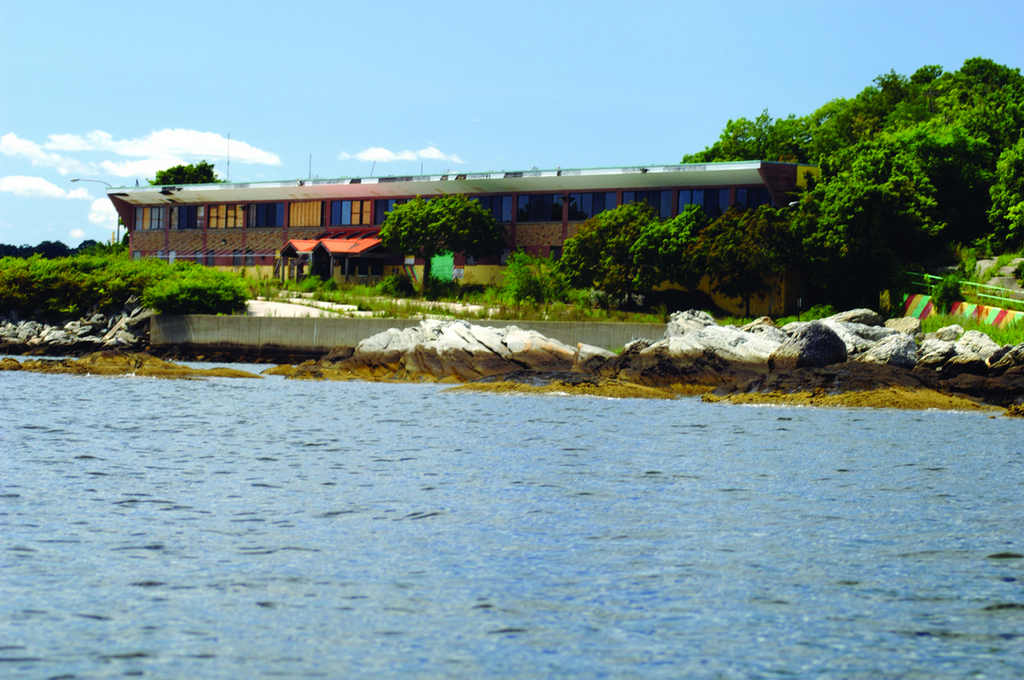
Unless Rhode Island takes a cue from Dubai and starts building new beachfront parcels along its shores, there is not going to be any more than 420 miles of coast in the state. Which is why Warwick city officials are looking to preserve public access to one of those miles.
The city is poised to sign a purchase and sale agreement, as soon as this Wednesday, for about 41 acres of coastal property, part of the 126-acre parcel that formerly housed Rocky Point Park.
“It will be the last one, I think, in our lifetime” that a city or the state could purchase, said W. Michael Sullivan, director of the R.I. Department of Environmental Management.
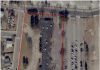
If the sale is approved, the DEM would have a conservation easement on the property, a stretch along about a mile of the eastern shore of Warwick Neck. The acreage follows the shore, with a larger setback in the south, near Aldrich Avenue. The northern boundary is Rocky Beach Road.
“The citizens of Rhode Island would own a mile-long stretch along Narragansett Bay that we don’t own right now,” said Sullivan. “And it would have a 400-foot setback and as much as a 620-foot setback in other areas.”
The state currently owns and operates only about 12 miles of Rhode Island’s coastline, with easements on a few more miles, he said.
Likely the Warwick property would not change aside from low-impact development, which might include a walking trail, parking lots – an effort to keep cars off local roads – and the possible restoration of the decrepit pier that could be used for fishing.
Businesses in Warwick would be the real beneficiaries of the plan, because visitors would bring commerce into the city, said City Council President Joseph Solomon.
“I think it’s wonderful for the city,” he said. “I think one of our city’s greatest assets is our 39 to 40 miles of coastline, and it’s something that will attract tourists to the city.”
Solomon said the $4.4 million agreement will be discussed, and possibly agreed upon, at a special City Council meeting scheduled for Wednesday. Pending a due-diligence report by city officials, the city is slated to spend $800,000, along with $1.4 million from the state and $2.2 million in federal funding, secured through U.S. Sen. Jack Reed’s office.
The total property, including buildings at 1 Rocky Point Road, was assessed in 2007 at $18,954,400. After owners Moneta Capital Corp. filed for bankruptcy in 1995, the U.S. Small Business Administration was appointed in 2000 as overseer and still controls it. Sullivan said the city’s purchase would likely depend on whether the SBA, or a developer, had the option to develop the remainder of the parcel. Much of the former amusement park has been removed, with the bulk of what was left being taken out in May.
The city councilors have already voiced approval for the 41-acre deal.
“I have heard nothing in the city anywhere that anybody’s disagreeing too much with the idea of putting a conservation easement on the property,” said Sullivan.
But there’s not yet a deal to develop the other 85 acres, which has the potential to stymie the city’s deal with the SBA, Sullivan said.
“Much of it would depend on that agreement with the developers of this property,” he said.
Solomon speculated on the future of the entire parcel, saying that the city hasn’t yet found a developer who’s willing to work respectfully with the town to preserve the character of the area. He said the city isn’t opposed to the property’s development, although he’d personally like to see the land put into conservation.
“If it were up to me, I would like to see [the city have] ownership of the whole parcel and seek national park status from the federal government,” he said.
But, he said, that’s a conversation for the future. For now, the coastal acreage is a good start.
Sullivan agreed.
“The Constitution gives us all the right to walk just below the tide line, but this would give us the chance to walk above that line, and on the beach, too,” said Sullivan. •