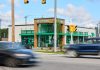
Sales remain strong, but margins are tighter than ever
Convenience stores are embracing new technologies and offering more services under one roof. More and more, owners of convenience stores are purchasing item scanners, collecting ATM fees and offering their gas customers the option to pay at the pump with a credit card. And as a result, the convenience store industry is booming, a new report indicates.
The percentage of convenience stores providing ATM services jumped to a record 77.4 percent nationally in 2001, up from 62.9 percent in 2000. Point-of-sale scanning is now available in 71 percent of convenience stores nationally, and 76 percent of all convenience stores that sell gasoline offer pay-at-the-pump as an option, according to a 2002 State of the Industry Report from the National Association of Convenience Stores.
Building a Strong Data Foundation in the Age of AI
Artificial intelligence (AI) has become a key priority in the boardroom and across management —…
Learn More
At East Side Food Mart, a chain of 22 convenience stores in the area, individual stores have been using scanners and offering pay-at-the-pump gas fill-ups for several years, said Tammy Denton, an East Side Food Mart store manager. The owners of the chain made the decision to use the new technologies soon after they became available, to make the stores faster and more convenient. The hope was that more convenient stores would attract more customers.
And apparently that has happened. Today, at East Side Food Mart on Post Road in Warwick, at least half of all gasoline customers pay at the pump, said Denton. She said she’s sure that the pay-at-the-pump option has increased volume at the pumps.
“I’m sure they look for the convenience of it, especially because we’re near the airport. We get a lot of people traveling, so they just run in and out. Obviously it makes it faster for them,” said Denton.
The use of such technology by convenience stores is apparently contributing to a growth in the entire industry. The convenience store industry outpaced overall growth of total retail sales in 2000, according to NACS’s report. The growth was due mainly to an increase in motor fuels sales volume and the number of convenience stores – up 3.9 percent to an all-time high of 124,5000 stores, according to the report. That rate of growth outpaced the 3.4 percent overall growth of total retail sales in the U.S., as reported by the U.S. Dept. of Commerce.
In addition, convenience stores continued to be the dominant retailer of gasoline in the nation, with a record 80 percent of stores now selling gas, NACS reported.
And use of new technologies contributed to a 5 percent increase in convenience store sales nationally last year, climbing to $283 billion despite a national recession, drop-off in consumer spending and increased competition, NACS said.
“Despite competition from other channels for the convenience customer, consumers continue to embrace the convenient one-stop shopping that the convenience store industry created,” said Lindsay Hutter, NACS senior vice president of communications.
But not everything is easy money for the convenience store industry. Despite the record sales, both the economic downturn and increasing competition last year contributed to ever-tighter margins in convenience stores, NACS reported. In-store gross profit margins dropped from 28.4 percent to 27.8 percent, drawing convenience store profit margins ever closer to those of the grocery industry, which has much larger sales volumes to support lower margins. Additionally, gasoline profit margins shrank to 9.2 percent – the lowest in 10 years. Motor fuel sales at convenience stores totaled $171 billion.
And not everyone who owns a convenience store is jumping at the high-tech gizmos. Despite the lure of scanners and pay-at-the-pump systems, many independent owners of a single convenience store are passing for now because the cost of purchasing the systems is too high in a sluggish economy. And some owners just prefer doing things the old fashioned way.
At Sunrise Market, a small independent convenient store on Smith Street in Providence, the proprietor recently considered buying a scanner, then decided not to.
”I considered it, but for the amount of money it costs it would take me a while to recoup the investment,” said the proprietor, who asked that his name not be used. “And besides, it’s like anything else. Computers were supposed to cut down on paper shuffling, but it turned out to be just the opposite. With a scanner, you have to key in every item that comes into the store, put their code number into the system. I’m not going to go out and spend four or five thousand just to have that hassle. I’m gonna do it the old fashioned way, I guess.”