What a difference a few years have made for doulas in Rhode Island.
Doulas provide physical and emotional support to expectant mothers, before, during and after birth, but it was care that was once considered a luxury reserved for those who could afford it.
Rhode Island's Market Has Changed. Developers, Builders, Investors and Sellers Must Change With It.
By Emilio DiSpirito IV License Partner | Engel & Völkers Oceanside Leader | The DiSpirito…
Learn More
That luxury label is no longer the case in Rhode Island, and it shows.
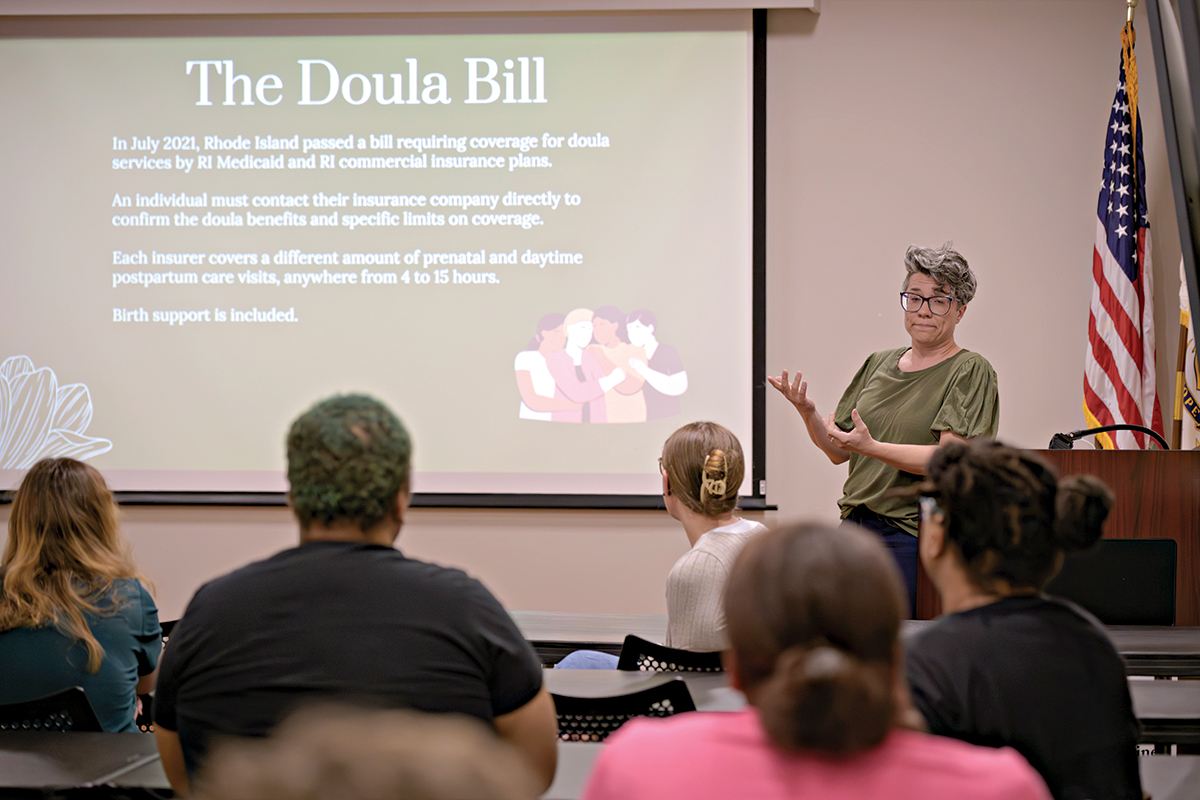
In 2021, the state became one of the first in the nation to reimburse doulas through Medicaid and require state-regulated private insurers to do so. That has meant a spike in the usage of doula services and the number of doulas operating in the state, said Rachelle Friesen, co-president of the nonprofit Doulas of Rhode Island.
“I believe when I joined the Doulas of Rhode Island, there were probably less than 50 of us, and I think now we have about 90 members,” Friesen said.
More than 30 states now reimburse doulas through Medicaid or are in the process of implementing such coverage, according to the nonprofit National Health Law Program. Private insurers are doing the same, with industry giant UnitedHealthcare launching a new benefit this year. Without insurance, costs vary widely but can exceed $2,000.
Mounting research shows these trained, non-medical professionals can significantly improve the health of moms and babies. Not only do they provide physical and emotional support during pregnancy, birth and the postpartum period, but they also advocate for patients and help them navigate the health system.
Expanding doula care, many health care leaders say, is a relatively inexpensive way to help reduce maternal mortality, which kills Black women at a rate of three to four times higher than white women.
National research comparing two groups of socially disadvantaged mothers found that those who used doulas were four times less likely to have a baby with low birth weight, two times less likely to have a birth complication and much more likely to start breastfeeding. Another study published last year found that Medicaid recipients with doulas had a 47% lower risk of C-sections and a 29% lower risk of preterm birth and were 46% more likely to go to a postpartum checkup.
In Rhode Island, the changes are plentiful since the 2021 legislation was approved requiring coverage of doula services in state-regulated private insurance plans, alongside Medicaid coverage.
Early reimbursement levels from insurers were around $1,500 per pregnancy. About a year later, Blue Cross & Blue Shield of Rhode Island – the state’s largest health insurer – expanded benefits to about $2,400, increasing access to prenatal, birth and postpartum doula support.
Friesen said a large percentage of expectant mothers who are now turning to the Doulas of Rhode Island are covered by Medicaid.
“We have a lot of doulas who are registered and certified with the state to take Medicaid patients,” she said. “And that had never been the case before. Prior to 2022, these were patients who were in most need of support, resources and care.”
Doulas do not work for hospitals or larger health care organizations – they’re self-employed. Thus, billing became one of the main challenges in integrating doulas into the state Medicaid and private insurance systems. A group dealing with this issue is the Rhode Island Birth Worker Cooperative Inc., founded by several doulas in 2021.
The group works to help doulas with the administrative side of their businesses, including billing.
Because of the insurance coverage, many Rhode Island doulas are now booked with clients and support their families solely through their income earned as a doula.
Still, many expectant mothers remain unaware that doulas exist. A lot of providers don’t recommend doulas to their patients or even mention them as an option, doulas say.
Michaela Carroll, a health policy associate at Rhode Island Kids Count Inc., says the advocacy nonprofit is helping with a state initiative to expand awareness of doulas.
“Health care professionals,” she said, need to “know they can refer their patients to doula care.’’
Prior to 2021, doulas relied on word of mouth to advertise their businesses, but now some private insurers send out pamphlets detailing all the maternity services, including those provided by doulas, that expectant mothers have available to them.
Freisen cited a case where a teenage mother of color expecting her second child needed coaching and an advocate. The woman felt the hospital staff looked down on her during the birth of her first child because they viewed her as a teenager, not adequately prepared for motherhood.
Before the young woman gave birth a second time, one of Friesen’s colleagues helped her process her feelings and make sure all of her emotional needs were being met.
“Having a person in the room who could be a real cheerleader and a constant source of encouragement and positivity absolutely changed who they were as a parent at home, and she went home with a second baby in a much more confident state,’’ Freisen said. “And that can be life changing.”
With reports from The Associated Press.
(Correction: An earlier version of this story gave an incorrect last name for Michaela Carroll.)