One recent June day Cranston Economic Development Director Larry DiBoni met with two people regarding a revolving loan fund, learned a new city purchasing program, prepared for a City Council Finance Committee meeting and touched base with organizers of a program that buys electricity in bulk for local companies. Somewhere in there, he found time to down a protein shake. And it was only 2 p.m.
Economic-development directors keep a frenzied pace. As Providence prepares to hire its first economic director in recent memory, he or she stands to face a barrage of responsibilities and issues in the capital city.
“It’s very difficult because of what’s going on in the world today,” DiBoni said. “It’s not just the state; it’s not just the city. It’s the world.”
The world fell into a recession in 2008 and struck Providence particularly hard. Development dried up. Unemployment soared, as did office vacancy rates. Lenders moved into foreclosure on homes with frightening regularity. The city budget deficit widened and new Mayor Angel Taveras characterized Providence’s financial situation as a “Category 5 hurricane.”
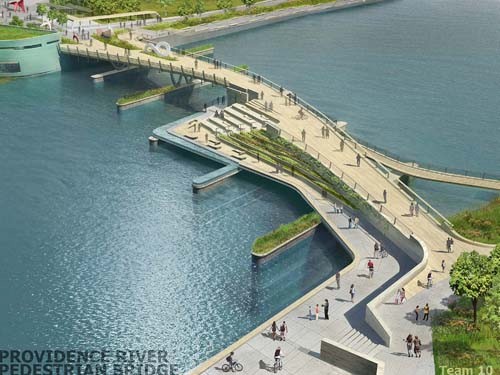
The city also has opportunity, including the redevelopment of 20 acres of land freed up by the relocation of Interstate 195 to the south. Brown University plans to open its new medical school in the former Jewelry District, which many hope will catapult development of a life-sciences research hub. A planned pedestrian bridge will link the district to College Hill and open the potential to create synergies between the two areas.
There are also tax credits, loan programs, grants and job-training programs. Then there are the city’s theaters, restaurants and convention center that may serve to lure businesses to the city.
Perhaps nowhere more than in working with the city’s colleges and hospitals, said Cianci, who served more than four years in prison for racketeering conspiracy and now works as a radio talk-show host.
As private development has withered, colleges and hospitals are moving forward with expansion plans. But as nonprofits, they are exempt from property taxes. As the city’s budget deficits have grown, so has the tension between the nonprofits and the city.
For an economic-development director, finding a balance will likely prove a daunting task. And one complicated by strife over whether the state or the city will control what rises from the former I-195 land.
Still it would be wrong for a director to focus solely on the I-195 land or downtown, said Greater Providence Chamber of Commerce President Laurie White. A director must recognize the city comes as a package and focus on all neighborhoods.
“We’re talking about the South Side and the West Side and other parts of the city that may not get as much glamour,” she said.
Presumably, the director will become the city’s chief cheerleader and lure new businesses to the capital city while ensuring ones already here stay and grow. But White said a director is more than someone with a broad smile and firm handshake.
“It’s someone who can negotiate a deal and has the authority to bring it to a close,” she said. Cheerleading only goes so far.”
White has been urging Taveras to hire someone focused solely on economic development since before the mayor took office. She co-chaired a transition team that called for such an appointment.
The job of economic development is now handled primarily by planning Director Tom Deller. Besides overseeing planning, Deller is the executive director of the Providence Economic Development Partnership and of the Providence Redevelopment Agency.
Letting one person focus exclusively on economic development just makes sense, Cianci said.
“The planner is the visionary,” Cianci said. “It’s up to the economic-development director to get the people interested.”
To get people interested, an economic director will need to corral city departments under one vision. The director then needs to turn the vision into a brand for the city and sell it to businesses, the public and the City Council.
“The mayor’s got to be the person who’s ahead of it but basically it’s the economic- development director who’s working day to day, who has the vision and the fire in belly,” Cianci said.
As of July 7, Taveras was still seeking a director. Mayoral spokesman David Ortiz said a search committee had completed its work and Taveras was interviewing candidates. There was no timeline on when he planned to make a selection.
When he does, business leaders hope the new director dives in headfirst.
“You can’t wait till tomorrow and you can’t wait until you have all the finite pieces together in place because the rest of the world is waiting to eat your lunch,” White said. •