NORTH KINGSTOWN – After a six-month pause in federal procurement, Rhode Island-based humanitarian aid agency Edesia Inc. received a major order from the U.S. State Department, the nonprofit announced Wednesday.
The order placed Tuesday includes 11,285 metric tons of its Ready-to-Use Therapeutic Food, Plumpy’Nut paste, that is enough to treat 818,000 severely malnourished children across Nigeria, Kenya, Ethiopia, and other countries in East and West Africa, said Edesia President Navyn Salem.
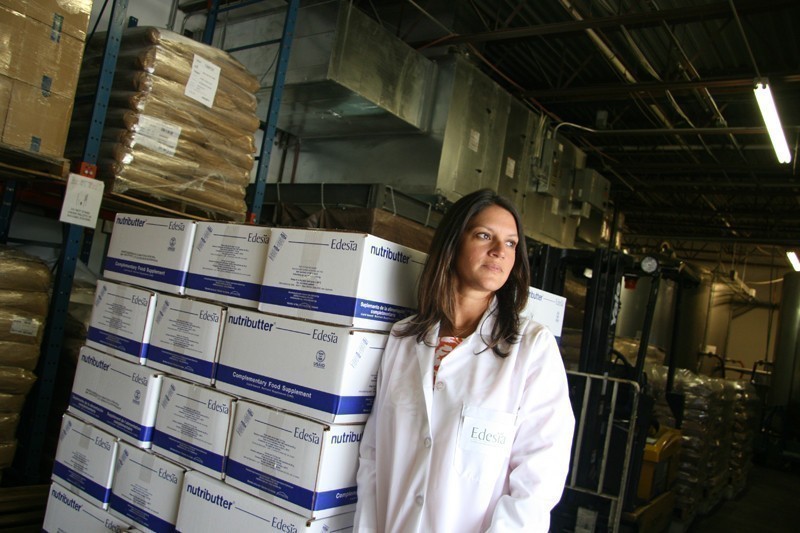
In addition, 185,000 boxes of the lifesaving food product that had been sitting idle in Edesia’s Rhode Island warehouse are now being prepared to be shipped to Nigeria and the Central African Republic.
Salem said the new order allows Edesia to immediately scale up production and rehire team members of the 16 workers. Edesia laid off about 10% of its staff in March due to stalled USAID payments.
"Edesia is officially a survivor of all the cuts and transitions," Salem said. "It's been quite a journey over the past six months, and not a very fun one. While trying to respond to real crises we have been through unnecessary ones including, stop work orders, contract cancellations, forecast recessions, layoffs, shutdowns, cash flow emergencies due to broken payment systems, boxes stuck in warehouses and massive supply chain disruptions."
Edesia’s production of Plumpy’Nut came to a halt in late January after the U.S. State Department issued stop-work orders and USAID canceled key contracts – moves that were later reversed but created months of uncertainty.
With no new orders and delayed federal payments, the nonprofit was forced to pause manufacturing, resulting in a warehouse backlog of more than 185,000 boxes of Plumpy’Nut.
In May, Edesia launched a Mother’s Day donation drive to sustain its production of Plumpy’Nut in response to the USAID cuts and federal stop-work orders.
In July, it Edesia announced a new partnership with Ocean State Job Lot and World Vision, one of the world’s largest humanitarian relief agencies, to send life-saving nutrition to at least 9,000 children in South Sudan.
However, Salem said that even with renewed government support, "there is still a large gap that needs to be filled by Edesia’s new initiatives."
"We will not stop these efforts as we have all learned that it is critical to have our own supply chains as well as the partnership with the U.S. Government," Salem said. "There are many problems in the world we can't solve. Malnutrition is not one of them."
Matthew McNulty is a PBN staff writer. He can be reached at McNulty@PBN.com or on X at @MattMcNultyNYC.