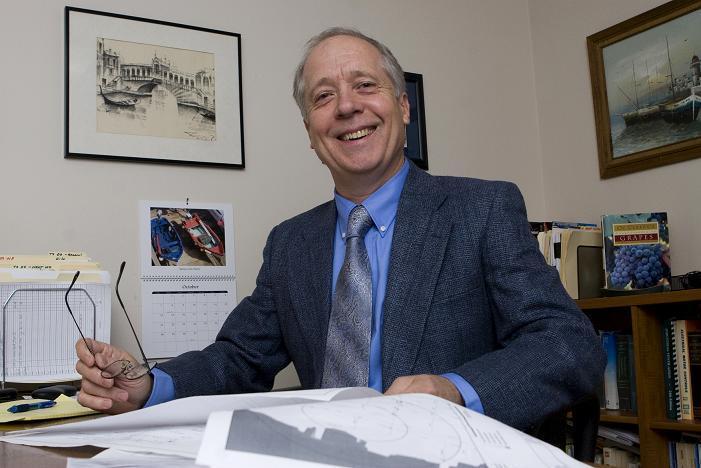
Al Snyder has always considered himself an environmentalist, so it was only natural for him to channel his engineering skills into protecting ecosystems.
A native of upstate New York, Snyder came to Rhode Island to work for a wastewater treatment company in Pawtucket. It was early in his career; after he earned a B.S. in chemical engineering at Clarkson University in Potsdam, N.Y., then worked for a pharmaceutical company in that area. He came to Rhode Island for the job and to live closer to the ocean.
In 1976, Snyder was given the option to relocate to Tulsa, Okla., where his Pawtucket employer was based, but his affection for Rhode Island was stronger than the job offer, so he veered off on his own and opened Environmental Resource Associates Inc.
Issues such as pollution and ozone depletion were not yet considered major concerns at the time, he said, and the two-person operation focused on wastewater cleanups.
“This was before there was such a thing as a Superfund site, before environmental controls were in place. We were the only company around with the word ‘Environmental’ in the name,” Snyder said.
(Superfund, the federal program designed to remediate the nation’s most hazardous polluted sites, was established through the Comprehensive Environmental Response, Compensation and Liability Act of 1980, following the discovery of toxic waste dumps such as Love Canal, near Buffalo, N.Y.)
“I recall looking at underground water samples from Superfund sites that were full of toxic waste,” Snyder said.
Finding such samples prompted Snyder to make good use of his chemical engineering degree and innovate. He said he conceptualized and designed one of the first “air strippers” – a technology in which volatile organic compounds are transferred from water, filtered and sent into the air.
“Back [in the 1970s] we had a tough time convincing clients they needed to do this stuff,” Snyder said. “Now industries and commerce have to meet government regulations that protect the environments, and they are being more proactive in prevention.”
Today, he noted, businesses and governments publicize plans to “go green” for good publicity and to meet legal and regulatory requirements. And that’s good business for his company.
“Industries are burdened with all of today’s environmental regulations,” he said, “but it gives us the opportunity to provide services that alleviate their compliance issues, like emissions and waste.”
ERA still works on wastewater treatment and systems design, but it also helps clients comply with a wide range of other environmental requirements involving air pollution, soil and groundwater contamination, and other issues.
For example, ERA helps companies with processes that emit vapors, dust or odors into the air to design systems that keep those emissions under the legal limits; the firm’s Web site boasts of having helped obtain the first “bubble permit” in Massachusetts – an alternative approach that allows a company to get around specific rules as long as the result is compliance with emissions caps.
ERA also helps clients assess surface soil and underground contamination when they are looking to buy a property, and correct such problems on their own properties. And it helps companies that have received notices of non-compliance or violation to correct the problems, recommending or engineering solutions, preparing the needed documents to show compliance, and helping the clients work with government agencies.
For instance, ERA provided various engineering, consulting, response and licensed-site-professional (LSP) services to Plymouth Rubber Co. in Canton, Mass, to help it resolve spills and comply with Massachusetts Contingency Plan regulations and other requirements.
Snyder said that as public awareness of the impact of pollution has grown, from toxins in the water to global warming, competition in his field has increased. But with more than 30 years’ experience in the field, he said, he is confident that his firm can still provide the best services.
To further promote itself, ERA this month launched a Web site, www.eraengineers.com. But Snyder isn’t looking to grow too much. He said he plans to keep his small, privately owned firm just the way it is. •
Company Profile: Environmental Resource Associates Inc.
Location: 54A Vermont Ave., Warwick
Owner: Alvin J. Snyder III, founder and president
Year founded: 1976
Employees: 5
Annual revenue: WND