The implosion of Bear Stearns & Co. underscores the recent debt and equity market disruptions caused by the subprime crisis. The historic default rate among subprime mortgages and other debt has sparked a loss of confidence in credit markets and a liquidity crunch. The fallout from the subprime crisis will not be limited to the likes of Bear Stearns but will directly affect bond issuers, investors, fiduciaries and businesspeople alike.
The Subprime Loan
The seeds of the subprime crisis were planted when mortgage lenders extended credit to consumers who lacked traditional qualifications. So-called “subprime” borrowers, typically individuals with lower income and/or a history of credit problems, obtained credit at higher-than-market interest rates. The higher interest rates, coupled with the borrowers’ lower income and history of credit problems, gave these subprime loans an above-average risk of default.
The Rise of Debt-Backed Securities
Mortgage lenders sold their loans to financial firms (sometimes called syndicators or security packagers) who bundled the mortgages and repackaged them as new securities, backed by the loans in the portfolio. The securities, typically called mortgage pass-through certificates or collateralized mortgage obligations (CMO), included a difficult-to-quantify exposure to subprime risk.
As subprime loans were written with more frequency, their representation within CMOs increased, which, in turn, increased the risk of the CMOs. But with no easy way to determine the percentage of subprime loans in a CMO, and with many CMOs’ ratings not accurately reflecting their exposure to risk, even sophisticated investors became exposed to significant risk of loss.
As CMOs gained familiarity in the market, syndicators began packaging non-real estate loans, automobile loans, student loans, and other types of debt into collateralized debt obligations (CDO), debt-backed securities and structured products. These securities have also been affected, either from their own exposure to default risk or from the market’s current uneasiness with debt-backed instruments.
The Subprime Crash
Subprime borrowers obtained loans they could not afford long-term, believing they would be able to refinance as the need arose. However, the necessary refinancing often did not materialize and mortgage delinquencies grew to their highest level in more than twenty years. This caused a cascade effect within the mortgage industry – as borrowers defaulted, lenders were less able to refinance loans, which in turn led to more defaults.
The Fallout
As the underlying loans in a CMO default (that is, as the collateral disappears), the CMO’s inherent value diminishes. This loss of value is often accompanied by a corresponding drop in the CMO’s rating. Because the market as a whole currently lacks confidence in CMOs, investors are unable to sell even those CMOs that retain their inherent value. Institutional investors with substantial CMO holdings may find their own creditworthiness in doubt.
A follow-on impact of the subprime crisis is that credit is becoming harder to obtain in a market where so many lenders are seeing their own liquidity dry up as they post substantial reserves against losses. Some banks lack capital to make new loans and others are tightening their underwriting standards. Businesses that rely on a steady stream of easily accessible credit are feeling the effect of the credit crunch caused by the subprime crisis.
In addition to value and credit problems, there have been other significant downstream liquidity impacts as well. For example, bond insurers are in trouble because they insured CMOs that are defaulting at a higher rate than the insurers expected. While investment banks and bond insurers attempt to bail out failing securities, insurers may lack the capital to back all the defaulting CMOs they underwrote. These insurers may be unable to fulfill their contractual obligations and insured bonds are beginning to trade as though they lack insurance, even though the municipality or other bond issuer paid for insurance.
What Lies Ahead?
While many people may not realize it, most aspects of the global economy – from the mammoth Bear Stearns to the smallest individual investor – share a common connection with the subprime crisis. Investors (individually or through a pooled investment arrangement such as a pension plan, employee savings plans, Keogh plans, corporate-sponsored retirement plan, profit share plan, and managed money fund) need an expert eye to review and assess their holdings. Fiduciaries (such as trustees) have the added burden of understanding how the subprime crisis impacts their obligations.
Municipalities and other bond issuers must determine their rights and liabilities as unanticipated turmoil in credit markets affects their bond issues. Businesspeople shoulder all of these burdens plus the need for introductions to new sources of credit. Each of these groups will need experienced and resourceful counsel to navigate the myriad dangers, both existing and anticipated, that the subprime crisis holds in store. •
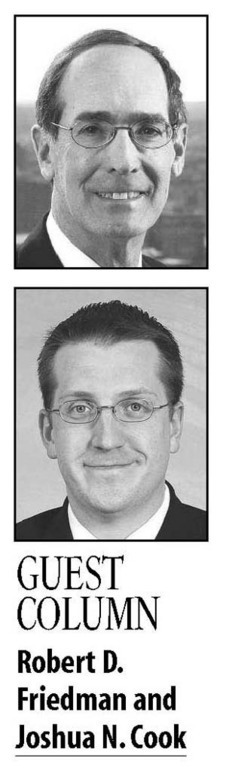
Robert D. Friedman and Joshua N. Cook are attorneys at Burns & Levinson LLP, a law firm with offices in Boston and Providence.