As Highlander Institute’s chief education officer, Shawn Rubin designs and manages the institute’s blended and personalized learning initiatives. He is a national thought leader around coaching and consulting approaches to personalized learning, and has been an integral driver of the statewide personalized learning demand that is growing in Rhode Island.
Rubin is the chief architect of the institute’s Fuse program, which trains early adopter educators from across the state to become change-management agents for personalized learning in districts and charters looking to accelerate this work.
A modernized health plan: Supporting cost management and the employee experience.
The Surest health plan came from a group of innovators wondering: What if health care…
Learn More
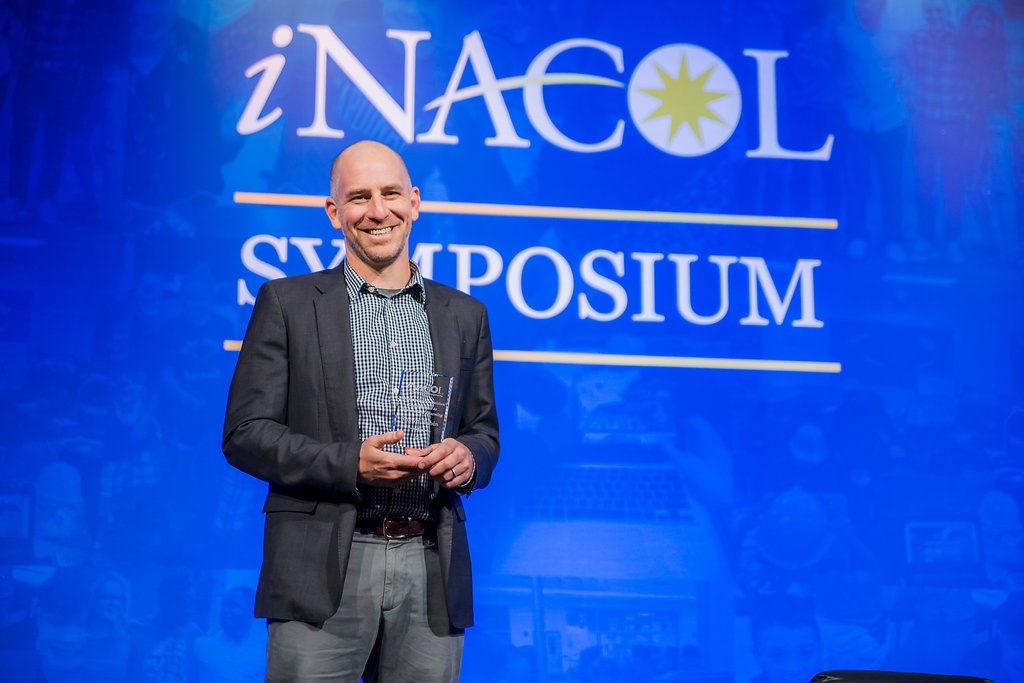
Rubin has received national recognition for his work at Highlander Institute. He won MassCue’s 2014 Pathfinder Award, was named a finalist for Nellie Mae Education Foundation’s 2015 Lawrence O’Toole Award and most recently received iNACOL’s Outstanding Individual Contribution to Personalized Learning Award for 2017.
PBN: How did you feel after receiving the Outstanding Individual Contribution to Personalized Learning Award from the International Association for K-12 Online Learning at its symposium in Orlando, Fla., in October?
RUBIN: I actually found out I was going to receive the award when my colleagues, who had secretly nominated me, surprised me at a staff meeting with a party, which included my 10-year-old son and Ken Wagner, the state’s commissioner of education. I cried in the middle of that celebration due to the gratitude I was feeling at having such an incredible community of collegial support.
After a party like that, the actual award ceremony in Orlando, which happened in a room of 5,000 people, felt incredibly humbling and reaffirming at the same time. I felt pride that the work we’re doing in Rhode Island would receive such prestigious, national recognition. It was a sign that we are on the right track with the work we’re doing, but it was also a reminder that with recognition comes expectation, and as an organization we must continue to push to make every seat in every classroom more student-centered and supportive of the unique needs and identities of every student we serve.
PBN: The award is presented to individuals who have advanced the field of “K-12 personalized, competency-based education.” What do you think are the biggest gains Highlander Institute, and yourself, have made for the field?
RUBIN: Words like “personalized” and “competency-based” education are confusing and buzzword-esque to most people, including educators. I think Highlander Institute brings a realness to this work by rooting these important tenets and concepts in the historical context and best practices of good teaching and instruction. We are an organization of classroom teachers who have each taken on leadership roles at some point in our careers.
As an organization, we believe all teachers want to do what’s best for students, but need clearly articulated processes and resources to make what has become an impossible job possible. When we work with a school or district, we listen, we ask questions. We help them identify their current pain points and set aspirational goals for what their classrooms or schools could look like to meet the needs of their students. We then look to national innovations that are getting good results, and we make matches. We provide eager teachers, schools and districts with new ideas and opportunities that they may not have otherwise found or considered. We then support these teachers and leaders through the difficult process of implementation because integrating new ideas into legacy systems is hard.
Most importantly, we always study the impact of each new intervention we offer to make sure that the behaviors and outcomes our stakeholders want are being realized over time, and if they aren’t then we work with them to tweak and iterate their new models until they get the results they’re looking for.
By listening to students and teachers and making their ideas the center of our work, we have become a known and trusted partner in schools across Rhode Island and we’re now starting to build this same reputation with our partners in other states [such as] New York, New Jersey, Nebraska, California and Massachusetts.
PBN: The award said you often look to transform educational systems from the ground up, would you please outline that process?
RUBIN: When we first started doing this work in 2012, Common Core State Standards were brand-new and teachers struggled to find high-quality content and assessments to support their instruction. We knew the best approach to turn the tides in Rhode Island from stand-and-deliver instruction to more-personalized models was to catalyze an army of teachers. We accomplished this by hosting gatherings with free beer, wine and food, leveraging Twitter and social media, and getting into as many classrooms as we could to see as many amazing entrepreneurial teachers as we could.
We believe that great teachers want to be recognized for the great work they’re doing and they want those great ideas to be shared with as many other teachers as possible. We see ourselves as the connective tissue for finding and spreading great ideas.
We’re also investing time and energy in advocating for more student voice in the design and day-to-day decision-making in schools because, in our 21st-century college-and-career market, students must develop greater agency in their learning.
PBN: What are the biggest successes the organization has celebrated in terms of championing the advancement of school systems in Rhode Island?
RUBIN: I think our biggest success so far is the size and energy of our statewide network. In 2014, the Fuse RI Fellowship brought together educators for a two-year program designed to advance knowledge and skills around change management, coaching and consulting leadership. We graduated 24 fellows in our first cohort, and almost four years later there are now 82 Fuse RI fellows spread across 44 districts and charters in Rhode Island. These fellows have supported district administrative teams in the planning and decision-making processes necessary for making the shift to new and more-personalized classroom practices.
The Fuse Fellowship has spun off additional Fuse programs to support classroom teachers and building principals. This program is grant-funded and free to districts and schools. Fuse fellows receive a stipend for their time and a certificate upon completion of the program.
Through Fuse RI, the Highlander Institute established a network of highly skilled leaders across the state who have continued to evolve the work independently, but also continue to network and share their ideas, events and breakthrough moments. The network effect of Fuse has allowed Highlander Institute to disseminate new ideas faster, support more teachers more efficiently and align the state around common goals [such as] sourcing free high-quality open curriculum and aligning all state reporting to common data standards.
The power of Fuse is on display at our annual Blended and Personalized Learning Conference when all 82 Rhode Island fellows gather to present, coach and share ideas with more than 1,200 educators from across the country. This year’s conference is April 5 to 7 at the Providence Convention Center.
The Fuse program has now started to spread beyond Rhode Island. A Fuse program is in its second year in the Syracuse City School District and similar programs are also in the works in the Diocese of Orange County, Calif., the Education Cooperative in Massachusetts, several districts in New Jersey and there are plans for a future partnership with KnowledgeWorks, which could bring the Fellowship to an additional three states.
PBN: What are the biggest remaining challenges facing the school system in Rhode Island today and how can the state overcome them?
RUBIN: Blended and personalized learning is still in the early stages of development. We have yet to create solutions that are scalable to all teachers in all classrooms across our state and country. We must continue to define clearly articulated competencies that students need to master and develop or source high-quality authentic software aligned to these competencies that enable teachers to engage individually or in small groups with their students in truly meaningful and personalized learning that advances their learning.
As we seek to increase the number of students who experience a learning environment that meets their needs and provides them with the personalized experiences that foster their growth, we will continue to build the network of teachers and to document, codify and share the best practices developed by these amazing pioneers that are redesigning the learning environment for the students of today.
Emily Gowdey-Backus is a staff writer for PBN. You can follow her on Twitter @FlashGowdey or contact her via email, gowdey-backus@pbn.com.