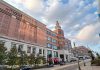
At the recent day-long showcase of life science technology companies sponsored by the Rhode Island Center for Innovation and Enterprise, it seemed that Providence crossed a threshold, emerging from a potential place to the actual home of a burgeoning life sciences industry. In additional to a walking tour of companies in the new life sciences district, a series of panel discussions and a poster session of more than 50 research projects at the new home of Brown’s Warren Alpert Medical School, there were 13 companies making a pitch for investors.
Providence Business News asked Andrew P. Mallon, director of research at Ardane Therapeutics to talk about the opportunities in Providence.
PBN: Ardane Therapeutics was one of 13 companies who made a pitch at the Life Sciences Technology Showcase at the R.I. Center for Innovation and Enterprise. What was the response?
MALLON: I was delighted by the response and enthusiasm for our product and business plan. As a result of the meeting I was able to make preliminary contacts with Alcon, the ophthalmic division of Novartis. It was also a great opportunity to get together with other colleagues developing their life science businesses. The intense demands of running a small biotech company makes it difficult to spend time in this manner.
Rhode Island's Market Has Changed. Developers, Builders, Investors and Sellers Must Change With It.
By Emilio DiSpirito IV License Partner | Engel & Völkers Oceanside Leader | The DiSpirito…
Learn More
PBN: You were showcasing a new, neuroprotective drug that prevents the loss of retinal ganglion cells for the treatment of glaucoma. What is the size of the market opportunity?
MALLON: Glaucoma is a $4.9 billion market in the U.S. alone, with a single blockbuster drug, Pfizer’s Xalatan, with sales of $1.6 billion dominating the market.
However the expiration of patent protection in March of Xalatan and other drugs has led to generic erosion in the market. There are approximately 2.2 million identified patients in the U.S. (78 million worldwide), although it is estimated that there are twice as many patients who have glaucoma but are unaware of their condition. This is because glaucoma is known as the “silent thief of sight.”
The disease destroys the cells of the eye without any symptom. It is only when the disease is sufficiently advanced that loss of vision occurs, heralding the disease.
As with many neurodegenerative diseases, glaucoma is a disease of aging. Ten percent of people over the age of 80 have glaucoma. By 2020, [it is projected that] there will be 3.3 million sufferers. The debilitation of blindness and the care costs involved demand that an effective treatment be urgently developed.
PBN: What makes Providence a good place for a startup drug development company such as Ardane Therapeutics?
MALLON: Well, that is an optimistically loaded question. As an entrepreneur I am usually focus on the problems that need fixed. Nevertheless, I think there are several programs in Rhode Island that have arisen to provide the right framework for drug development companies.
The R.I. Science and Technology Advisory Council grants (up to $200,000 for one year) are a key instrument to identifying projects that merit commercial development. Their popularity has grown, and I must admit I am an avid proponent of them.
I have helped and encouraged many academic colleagues to apply for these funds, perhaps at my own expense. Encouragingly, the popularity of these grants has accelerated but unfortunately has outstripped supply. These grants are instrumental in setting, often purely academic, researchers on a path to forming a company and creating jobs like I have done at Ardane.
The advice and networking available through the Rhode Island Center for Innovation and Entrepreneurship is also a key advantage. I myself have been contacted through this agency to provide help in writing business plans, forming companies and writing grants. At this stage, new companies need a lot of very good advice as they have a limited period of time to achieve developmental milestones to attract further investment.
The Slater Technology Fund provides the final great advantage in Rhode Island by expertly considering investment in a company based upon the fundamentals of the business as a whole. This combines investment in the company with a high level of due diligence to ensure that a return on this state investment is likely. This rigorous discipline helps to prepare companies for Series A venture capital investment opportunities and should serve as a bridge to that point.
Without [many] angel and institutional investors in Rhode Island that consider life science companies, there are gaps in funding opportunities that Rhode Island has wisely identified and sought to plug. This facilitation and stimulation of the formation of for-profit companies, especially from academic institutions, is key to stimulating recovery in Rhode Island.
PBN: Ardane Therapeutics was awarded a seed grant of $189,000 from STAC in 2009 enabling you to invest in production facilities. What kind of investment are you looking for now to grow the company?
MALLON: The 2009 investment from STAC was instrumental in allowing both the formation of the company and in shaping a commercial trajectory for what was up until then an academic pursuit, with no thoughts as to its commercialization. Indeed, I wrote this first grant within just a few months of joining this project at [Professor] John Marshall’s laboratory at Brown University and identified that the expensive production and optimization of lead compounds was a major bottleneck. It also led to the start of a strategic collaboration with the College of Pharmacy at URI.
Academic medical research is largely focused upon the discovery of new knowledge concerning the underlying biology of medicine. Translational science – developing treatments, is unusual and underappreciated within mainstream funding opportunities.
Ardane Therapeutics is developing a highly effective treatment for glaucoma. We are at the first stage of a three-step plan to submit an IND request to the FDA to start clinical trials. This first stage will confirm the best efficacy of our lead compounds in a chronic animal model of glaucoma that is designed to mimic the human disease as closely as possible. These compounds have already shown animal model efficacy in a more widely generalized eye cell death model. This stage will require $500,000.
The next two stages to clinical trials, another $3.2 million. I plan to raise this money from Series A venture capital investment. At the same time over the next year, I have $3.8 million in NIH SBIR grants either currently under review or in preparation. It is of great satisfaction to me that I was able to translate the initial STAC investment into a viable company and attract in a further $652,000 of out of state grant funding for this project. I hope that success in this manner will provide encouragement for more investment locally.
PBN: As Director of Research at Ardane Therapeutics, are you able to find the talent you need here in Rhode Island to grow the company?
MALLON: No, and that is a major problem often voiced along with the lack of other types of research infrastructure. Combined with the allure of the excellent environment in Massachusetts, it makes staying in Rhode Island difficult. Personally, I am eager to do so, and I believe it is possible given the close proximity to leverage those assets in Massachusetts to our mutual advantage in Rhode Island. At the same time, I think the creation of a thriving biotech community in Rhode Island is paramount.
Fortunately, I believe we, as a community, understand these problems and the benefit that can be derived from their solution.
At Ardane Therapeutics, my philosophy is that with well-motivated, intelligent people, I can provide the highly skilled training and experience to create a highly skilled biotech and business work force.