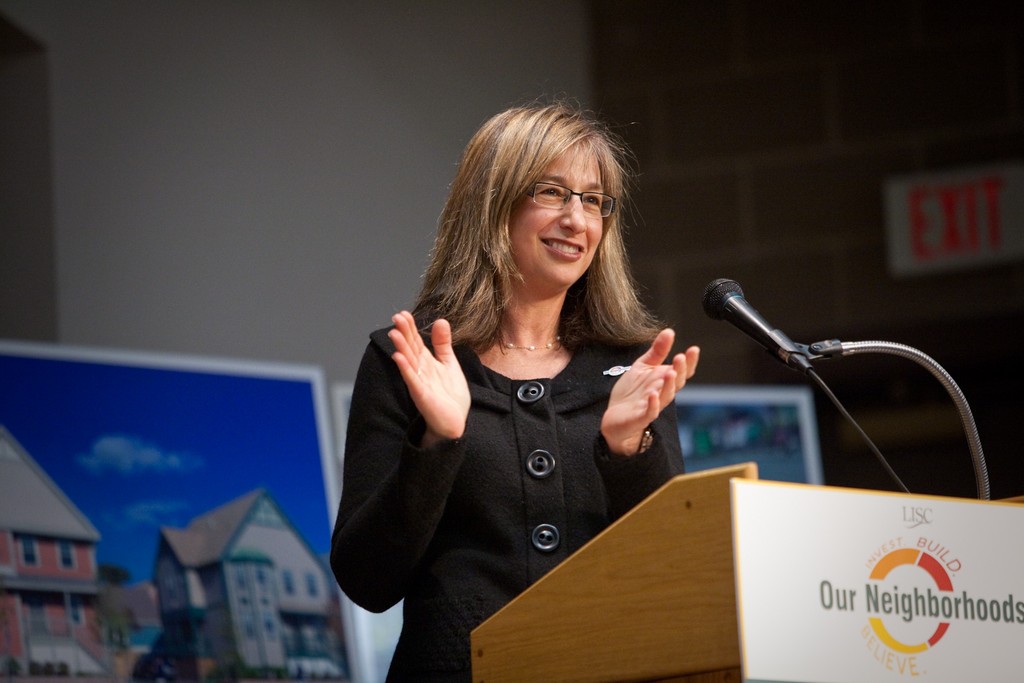
Since its inception 20 years ago, Barbara Fields has served as director of Rhode Island LISC – the Local Initiatives Support Corporation – the local branch of a national organization that invests in building communities and affordable housing. Fields has overseen investments of more than $280 million to support about $1 billion in development in Rhode Island communities during that time.
In the past two decades, LISC’s mission has evolved, moving beyond bricks and mortar to support investments in building strong, healthy communities – daycare, health clinics, assisted living facilities and nutrition programs – and neighborhood alliances with police and teens.
Rhode Island's Market Has Changed. Developers, Builders, Investors and Sellers Must Change With It.
By Emilio DiSpirito IV License Partner | Engel & Völkers Oceanside Leader | The DiSpirito…
Learn More
On Feb. 18, Fields was named regional administrator for New England at the U.S. Department of Housing and Urban Development. Providence Business News asked Fields to talk about how her work has changed the health of communities in Rhode Island.
PBN: In your work as director of Rhode Island LISC, you have broadened the vision of community development to include things beyond bricks and mortar: access to healthy food, support for day care, environmental clean up and access to health care. What prompted this change?
FIELDS: At LISC, our mission is to build strong healthy communities. For us, housing is just the beginning. The goal of LISC’s “Building Sustainable Communities” – a nationwide initiative – is to strategically and intentionally link key issues in the communities we serve with our investments. Good housing needs to be close to quality schools, safe streets, access to health care and commerce, with transportation that gets people to jobs. Our approach is holistic and comprehensive.
PBN: You have been very active in supporting the Clinica Esperanza/Hope Clinic in Providence. Why is that an important investment?
FIELDS: Several years ago, LISC was approached by the founders of Clinica Esperanza/Hope Clinic and asked whether we could support their relocating to space in Olneyville. The clinic was going to locate in a commercial building on Valley Street where LISC had made a $5 million New Markets Tax Credit investment.
Access to health care is one of the pillars of Our Neighborhoods – that means it was identified by neighborhood leaders as a community priority. Providing the clinic a home from where they could serve underinsured and uninsured residents was an easy connection for LISC. We were happy to help the clinic open its doors.
PBN: In the last year, you have entered into series of community contracts, bringing together residents, police, schools and local businesses in common purpose to improve the health and well being of local communities. How has it been working? What has made it successful?
FIELDS: In March 2010, LISC successfully rolled out “Our Neighbohoods” – a long-term strategy for investing in Rhode Island neighborhoods. We launched this program in two communities – Olneyville in Providence and Constitution Hill/Fairmount neighborhoods in Woonsocket. With more than 225 business, philanthropic and government leaders in attendance, neighborhood leaders presented their respective community contracts. These contracts reflected a broad-based agenda for investing in housing, public safety, community organizations, arts, job development and health care. It was a uniquely powerful moment.
We have spent the last year capitalizing on that energy and commitment. With projects such as Olney Village in Olneyville, where 14 foreclosed buildings were converted into housing for 39 families, a site for the local food pantry and a community garden, we have seen great progress.
The Dunn Park Mural project in Woonsocket, bringing RiverzEdge artists together with the Woonsocket Police Department to paint a mural and reduce vandalism, has also moved forward. This spring each community will hold a neighborhood celebration to highlight the accomplishments of the past year and lay out the priorities for next year.
PBN: LISC has been very successful in leveraging investments in building new, affordable housing in Rhode Island during the last 20 years. What are you most proud about in terms of accomplishments? What still needs to be done?
FIELDS: Among LISC’s proudest accomplishments is our collaborative work with local police departments – particularly in Providence, Pawtucket and Woonsocket. Had someone told me 20 years ago that we would develop innovative partnerships that would garner national recognition — we’ve helped our partners win a coveted MetLife Award for police-community work five times in five years — I would not have believed them. Today, we work hand-in-hand with patrol officers and police lieutenants as a matter of course. This work has allowed us to secure troubled properties and turn them into homes for families, and to develop youth programming that engages kids in community service. This has been a sea-change for us.
We have been so successful here in Rhode Island that we will be one of only eight LISC field offices (there are 30) to make a presentation at LISC’s 30th year celebration later this month in Washington, D.C. President Barack Obama is expected to be the keynote speaker and Sen. Jack Reed will be also be honored for his commitment to our work.
PBN: In this new era of health care reform, what do you see as the challenges for the underserved and unserved communities?
FIELDS: Government agencies, such as the R.I. Department of Health, often have access to key resources. LISC has access to community organizations working in the neighborhoods everyday. Combining these things allows us to provide greater access to health care for underserved residents.
In Woonsocket, we launched a health collaboration that includes Landmark Medical Center, Thundermist Health Center, Family Resources and NeighborWorks Blackstone Valley. Together they address issues such as how cutbacks in public transit have affected the ability of families to get to doctors appointments. That may seem mundane, but it is amazing how much progress can be realized by solving the simplest problems. By working together, groups have actually been able to help families achieve better health.