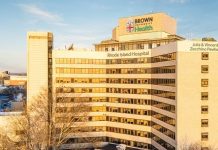
The brain is one of the great frontiers of science and medicine, and in recent years, Brown University and its clinical partners have made a big push to become leaders in this field, with a new Brown Institute for Brain Science and cutting-edge research going on at the hospitals.
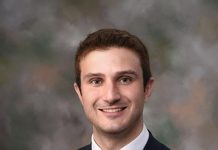
On June 1, Dr. Garth Rees Cosgrove, an expert in brain tumors and radiosurgery, joined the Warren Alpert Medical School as chair of a new neurosurgery department; he also became chief of neurosurgery at Rhode Island Hospital and The Miriam Hospital.
Cosgrove, who came to Providence from the prestigious Lahey Clinic in Burlington, Mass., and Tufts University, answered questions about Brown and Lifespan’s plans and ambitions and about the state of neurosurgery.
PBN: How much neurosurgery expertise do Lifespan and Brown have, and where do you hope to take them? Is the goal to compete with the Boston teaching hospitals?
COSGROVE: Brown has extraordinary talent and expertise in the neurosciences, and its partnership with Lifespan’s Department of Neurosurgery will further enhance both departments’ abilities to be leaders in the brain sciences. There is no question that we will be able to compete with the Boston teaching hospitals. I have spent many years at these very same Boston area hospitals, so I know what they are capable of. I also know what Lifespan and Brown physicians, surgeons and researchers are capable of, and I am confident that we will be at the forefront of neuroscience research and patient care.
Seifert Systems Invests in Energy Efficiency to Strengthen Operations
For manufacturers, energy is more than just another operating expense. It plays a critical role…
Learn More
PBN: One of your specialties is brain tumors, which remain particularly challenging even with all our modern tools. How much progress has been made in this field?
COSGROVE: Considerable progress has been made, but the cure of these difficult tumors remains elusive. Advances in treatment including aggressive surgery with cortical mapping and combination radiotherapy/chemotherapy have certainly improved survival, but future treatments will concentrate on molecular and genetic approaches. Radiosurgery will have an increasing role in the treatment of deep, inaccessible tumors of the brain and spine, especially in patients with multiple medical conditions that make open surgery too risky.
PBN: How much has neurosurgery progressed in other areas, such as treatment of epilepsy, Parkinson’s disease, and psychiatric disorders?
COSGROVE:The surgical treatment of epilepsy has made enormous strides in the past decade because of advances in neuro-imaging. We can now identify subtle brain lesions that are the cause of epilepsy in 40 to 50 percent of patients, and with modern neurosurgical techniques, remove these areas without causing any significant neurological deficits. These techniques can cure patients with lifelong, intractable epilepsy.
Equally important, deep brain stimulation and other methods of neuromodulation are transforming the field of Parkinson’s disease and psychiatric illness. The Warren Alpert Medical School is one of the leaders in the world at treating psychiatric disorders that are otherwise completely disabling and unresponsive to drugs and behavioral therapy, and we are on the threshold of making incredible discoveries about the human mind and its behavior.
PBN: You came from the Lahey Clinic, one of the most respected institutions in the region and beyond. What drew you to Brown and the Lifespan hospitals?
COSGROVE: Prior to Lahey Clinic, I taught at Harvard Medical School and worked in the Department of Neurosurgery at Massachusetts General Hospital. While both of these medical institutions are considered exemplary, I believe that the potential for making real progress in understanding how the brain functions both in the healthy and the diseased state is far greater in Providence. This is because the environment for collaboration in the neurosciences is much better at Brown than at almost any other institution in the country.
PBN: We recently interviewed the chair of Brown’s new department of cognitive, language and psychological sciences, and he talked about how explorations of the brain and the mind, of physiology and thinking/perception, are melding into one. Do you see that in your own clinical work and research?
COSGROVE: Studying the function of the human brain is far too complicated to be understood by any one individual, and the Brain Science Institute is a living example of the expert, dedicated multi-disciplinary team effort that is required to advance the field.
Wilder Penfield, the founder of the Montreal Neurological Institute, once said, “The problem of neurology is to understand man himself.” I believe we are on the threshold of real discovery at Brown and the Lifespan hospitals, and I am excited to be part of this dedicated team.