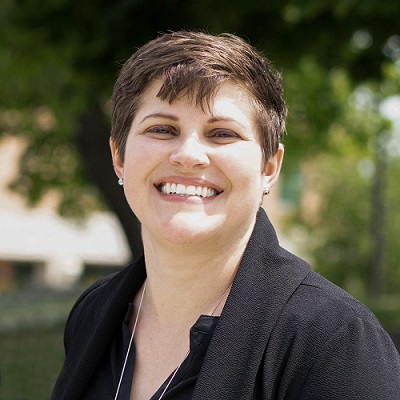
Elaine Stiles is the Public Humanities and Arts Collaborative faculty director and associate professor of historic preservation at Roger Williams University. The university recently launched the collaborative, where faculty and students work with community partners to foster inclusive narratives and make historically marginalized and erased populations more audible and visible.
With a National Endowment for the Humanities grant, RWU’s co-lab is commencing a public humanities and arts program and inaugural cohort of faculty fellows and community partner fellows this year. Stiles spoke with Providence Business News about the co-lab and what will be discussed with students.
Selling Luxury Real Estate Requires More Than Exposure
By Emilio DiSpirito IV License Partner | Private Office Advisor Engel & Völkers Oceanside www.DiSpiritoteam.com…
Learn More
PBN: What was the impetus in formulating this new public humanities and arts center and curriculum at RWU?
STILES: RWU created the co-lab to be an experimental space to explore the ways that humanities faculty and students can address and engage the public in some of the pressing problems and fundamental questions we face today as a society. Many of these problems and questions – particularly those related to racial and social inequity – are not easily quantifiable or definable. The humanities and arts excel at exploring and tackling these big questions about how we should live, what it means to be a citizen and how we should relate to each other.
The goal of the RWU co-lab is to foster interdisciplinary connections between faculty, students and members of the community to share inclusive narratives and histories and cultivate new knowledge. We believe this kind of publicly engaged humanities and arts work is essential to creating relevant, historically informed and culturally resonant responses to large-scale human problems.
PBN: How many students do you hope will enroll in the courses being offered by the co-lab?
STILES: The Public Humanities and Arts curriculum at RWU is designed to be woven into our existing curricula in humanities disciplines such as history, writing studies and rhetoric, visual arts, English literature studies, and communications, among others, as well as our general education curriculum.
So, while we anticipate students in a variety of majors that engage the public on “big ideas” or challenging societal problems will pursue a minor in public humanities and arts, we also operate from the position that publicly engaged humanities perspectives have important ideas to offer across the curriculum and these courses will be attractive and beneficial to students from many academic disciplines.
PBN: What kinds of matters regarding social equity and inclusive narratives will be discussed and shared with students through this initiative?
STILES: The narratives our curriculum and co-lab engage with are driven by the interests and expertise of our community partners and faculty. For example, our National Endowment for the Humanities-funded faculty fellows are developing courses that examine the Spanish-speaking Latino experience in Rhode Island, the ethics of cultural tourism development, the presence and contributions of enslaved people in our state’s history, the rhetoric of monuments and landscapes of public memory, and arts education and artistic practice for incarcerated persons.
The co-lab is developing locally focused research projects that engage with national and global issues related to marginalized and erased communities such as housing and housing insecurity and the social and cultural impacts of climate change. We are focused on fostering publicly centered research and programming that tell a new set of defining narratives and representations for our region.
PBN: Given the political culture and polarization that exists currently in society, how vital is this program to help bring people’s ideas and thoughts together collectively?
STILES: The humanities – music, art, theater, literature, understanding and remembrance of the past – are important means of understanding our own experiences and perspectives of others. When we examine the history, values, cultures and beliefs of a society, we grow in ways that equip us to better tackle the big questions and problems we face as citizens and human beings.
The Public Humanities and Arts at RWU offers opportunities for students to learn from our community about their histories, heritage and cultures, equipping them to practice historically informed engagement on social problems. This kind of open dialogue and engagement with diverse perspectives and ideas is a core value of RWU. Our aim is to prepare future generations of professionals to engage equitably and effectively in these conversations in the public sphere, which is a critical space for engaging, negotiating and making change.
PBN: What kind of outreach is the co-lab planning to do beyond RWU?
STILES: Our new curriculum is rooted in community collaboration, and our 10 faculty fellows are already working with partners ranging from public arts nonprofits to formerly incarcerated artists to develop their courses.
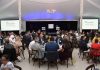
Last fall, the co-lab brought together more than 30 organizations, scholars, practitioners, artists and advocates who are working to make hidden stories and histories more visible in the New England region for a collaborative discussion on how we can work together to further these efforts. That event directly informed the co-lab’s research agenda and the development of the associated curriculum.
With support from the NEH, the co-lab is also sponsoring a regional symposium and event series in 2024 that will bring together scholars, community organizers, and public and private institutions engaging in public humanities projects that intersect with issues of race and racialization. These gatherings will create space for conversation and reflection on cooperative and interdisciplinary research opportunities, engaging the public humanities to foster racial equity, share current methods and design new directions.
James Bessette is the PBN special projects editor, and also covers the nonprofit and education sectors. You may reach him at Bessette@PBN.com. You may also follow him on Twitter at @James_Bessette.