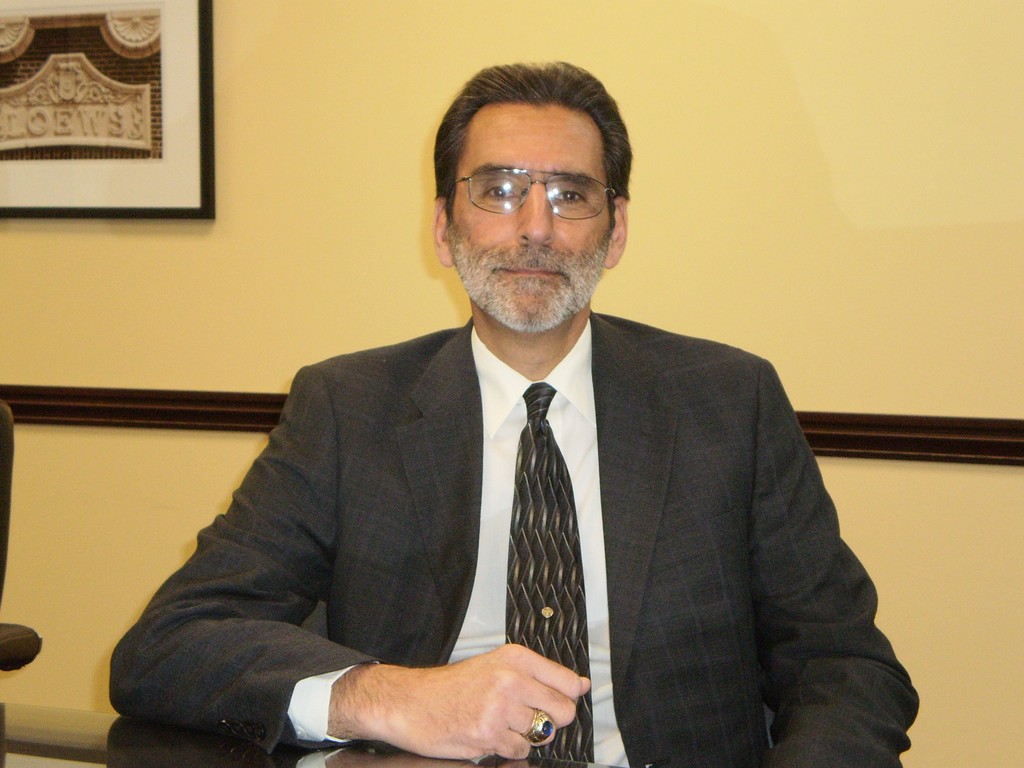
East Side Clinical Laboratory recently became the first data-sharing partner with the Rhode Island Quality Institute’s currentcare program.
Providence Business News asked Harold R. Caldarone, East Side’s senior vice president of marketing, to talk about the changes that health information technology, lab-on-a-chip technology, and health care reform will have on his laboratory’s future business prospects.
PBN: How has East Side Clinical Laboratory been able to maintain its independence in an era of consolidation?
CALDARONE: East Side Clinical Laboratory was actually acquired by Sonic Health care in December 2009, but a number of factors have enabled us to remain unique and successful. Sonic has a federated model that allows us to function autonomously and completely retain our local management and staff, with more than 50 locations throughout the area. East Side has been in business in Rhode Island for 62 years, so we have a thorough understanding of the needs of the local medical community. We have worked cooperatively with all of the major insurers in the market. We provide services to the long-term-care population not provided by any other lab in the area, as well as servicing a large portion of the federally qualified health centers in the state.
Beyond Cash Donations: How New Forms of Giving Are Transforming Not-for-Profit Accounting
Evolving Funding Landscape for Not-for-Profits Not-for-profit organizations are being asked to do more with less,…
Learn More
PBN: You recently became part of the Rhode Island Quality Institute’s “currentcare” initiative. Why is that important to your clients and patients?
CALDARONE: We’re proud to say that we are actually the first data-sharing partner to begin transmitting data to currentcare. Having been involved with this project since its inception, we believe that this will add tremendous value to our patients, clients and the health care system as a whole. It will allow physicians to access patients’ laboratory results online by logging on to the currentcare database, which will contain all of the patient’s laboratory results performed by East Side.
This is a critical initiative on a number of levels, particularly for patients seeing someone other than their primary care physicians, as well as emergency room patients and elderly patients in the long-term care population. Having access through currentcare will enable the caregivers in each situation to access both historical and recent lab test results. This will inevitably reduce the number of redundant tests being performed and thus significantly lower the cost of care.
PBN: Researchers at the University of Rhode Island are perfecting methods that will enable testing samples to be sent to labs via smart phone applications. How will this change laboratory practices?
CALDARONE: I believe you are referring to the very interesting lab-on-a-chip technology currently under development. It will enable many individuals, who would not otherwise avail themselves to much-needed testing, to be tested for a variety of diseases at the point-of-care. It will also be useful to patients who are required to monitor themselves for chronic conditions, such as diabetes. If they perfect the use of the cell phone for the transmission of results directly to a patient’s physician, it will reduce unnecessary visits and significantly save costs.
However, I don’t think it will have a noticeable impact on current laboratory practices in the short term. We could see a decrease in the number of routine monitoring procedures, but the bigger impact would occur if it became common practice for physicians to begin adopting this testing in their offices. It would depend upon the cost of the testing, the menu of tests available on the chip, as well as whether or not the health insurance plans reimburse for the testing, and for how much.
PBN: Health care costs only seem to go in one direction: up. How has East Side Clinical Laboratory sought to maintain and control the escalation of costs?
CALDARONE: Cost control has always been of primary concern to our company. While we’ve remained autonomous since our acquisition by Sonic Health care, our ability to take advantage of the buying power of such a large international corporation has been hugely beneficial. East Side has consciously made an effort to keep its fees affordable to all patients in need of testing. When compared to hospitals or other commercial laboratories, our fees are the lowest available in Southeast New England.
Let me to say a few words about reimbursements, deductibles and costs. As many are aware, most health insurance policies are now subject to ever-increasing deductible amounts. In fact, effective April 1, 2011, Blue Cross & Blue Shield of Rhode Island is no longer offering a policy without a deductible when sold to groups of 50 or less, which accounts for the majority of those insured in Rhode Island. What most people don’t realize is that where patients have testing performed has a direct impact on what they will pay out-of-pocket for their deductible. Most assume that it doesn’t matter since they have to meet the deductible before their insurance will pay.
Unfortunately, when a patient has laboratory testing performed and has not met their deductible, they are personally responsible for the cost of the testing under the terms of their health insurance policy. Because East Side is reimbursed at a significantly lower amount than other laboratories, the patient’s out-of-pocket cost is much lower, since the deductible amount to be paid by the patient is determined by what the insurer would have paid the lab for the services.
In short, using a lower cost provider like East Side may actually enable patients to never have to pay the full amount of their deductible. If everyone were to use the lowest cost providers when having services performed, it would lower the overall cost of health care for everyone, as insurers would be paying out less in reimbursements, their costs would be less, and they can minimize premium increases in future years. This holds true not just for laboratory services, but all ancillary services, such as radiology, therapy, out patient surgical procedures and others. If all consumers were educated to this fact, the savings to the health care system in general would number in the millions of dollars annually.
PBN: Where do you see the opportunities for growth as health care reform takes hold? With patient-centered medical homes, for instance?
CALDARONE: I think there will be opportunities for increases in testing volume simply due in large part to the addition of millions of currently uninsured individuals into the health care system. I’m sure many of these uninsured individuals have, for financial reasons, not seen a doctor in many years. Once they have coverage they will be more inclined to avail themselves of medical services. That alone will lead to more testing.
I’m sure as health care reform progresses, other opportunities will present themselves. It will be incumbent upon us to adapt to the coming changes and take advantage of all opportunities available to us.