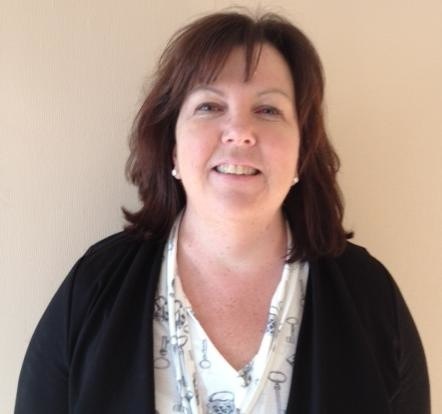
Joanne Quinn is the executive director for The Autism Project, a Johnston-based nonprofit that provides support and training for individuals diagnosed with an autism spectrum disorder and their families. The organization will hold its annual Imagine Walk Family Fun Day for Autism on Sunday, April 28, at Goddard Memorial State Park in Warwick.
Quinn spoke with PBN about autism in adults, what programming The Autism Project offers and what lies ahead in autism research.
Building a Strong Data Foundation in the Age of AI
Artificial intelligence (AI) has become a key priority in the boardroom and across management —…
Learn More
PBN: In 2000, the Centers for Disease Control and Prevention reported that 1 in 150 children nationally were diagnosed with autism spectrum disorder. Currently, it’s 1 in 59. What caused such a dramatic increase the last two decades?
QUINN: This is the million-dollar question, and I don’t have an answer.
PBN: The Autism Project recently had a panel discussion including young adults with autism focusing on the importance of genetic research. Why is genetic research vital in better understanding and diagnosing an ASD?
QUINN: The Autism Project hosted an event on April 2 … in recognition of International Autism Awareness Day. The event had two components. The first was a discussion/presentation by Dr. Daniel Moreno De Luca, who spoke about the current recommendations of several medical professional associations, including the American Academy of Pediatrics, for genetics to be part of best practices for the care of autistic people.
The genetic testing is recommended now because families can get information from the testing that can inform care for their family member and, for some, give information on whether there is a genetic component that explains the symptoms. For example, a genetic change can explain why a person may have language impairments based on information from people with a similar genetic change, such as SHANK3 deletions. If this is known, decisions can be better informed and family members and/or the individual can seek alternative modes of communication for perhaps better results since the genetic testing identified a mutation that is impacting a person’s ability to speak.
Also, genetic testing may give information on people’s predisposition for other health issues [such as] heart disease or diabetes. This information can alert physicians and it may give them the opportunity to adjust or choose better medications that won’t add to a person’s risk of disease.
PBN: In 2017, Drexel University published a report on autism and adulthood that says adulthood is the stage of life that is “least known about” as it pertains to autism research, policy and practice. How concerning is this?
QUINN: This is very true and it’s extremely concerning. Google research on adults with autism and there are very few publications. Each year, 10,000-plus adults with autism and widely varied abilities are entering the adult system of supports nationwide. This is a scary place because now families and individuals need to prove they need supports. Birth to 21 is an entitled system. Also, many states build systems of care and budgets based on data. There is so little data available, even for an exact number of people ages 21 and older with autism, it’s difficult to advocate for better programming and finance.
Many adults with autism require 24/7 care and supervision, and the programming and housing are not available nationwide. It is a goal to include all in the community versus sheltered workshops (and this is a good thing), but the finances for appropriate levels of well-trained staff are not available. Too many adults with autism spend their day walking the malls, Savers, etc. This is tragic after the thousands of dollars spent to educate individuals. Many skills are quickly lost when the individual leaves the educational setting for the mall. This is nationwide.
For our more verbal people, it is presumed that they don’t need support. Often their disability is not as visible, until it is. They too need specific supports and accommodations to be successful in an employment situation, to live alone and/or to navigate their community.
PBN: What new programs, if any, is The Autism Project offering that individuals with ASD and their families can look to for assistance?
QUINN: The Autism Project offers a Family Support Specialist program. We have five such specialists available to meet one-on-one with families to provide resources on Rhode Island services, Medicaid eligibility, strategies to use at home, training, summer camp and social skills groups registration and information, or to just listen and provide empathy based on their own experience raising a child with autism.
The organization offers many levels of training for families and the professionals who work with families and/or people with autism. It is our belief that the best first step is to truly understand the characteristics of autism thinking and how it impacts a person’s day. This is true for a nonverbal person and very verbal person with a diagnosis of autism. Understanding how many think and interpret language, or social, home, work environments, is key to understanding how to support an individual to be successful across settings.
Our training provides families and professionals with this information on autism thinking and strategies to help them help their person. How to look at a “behavior” as a means of communication. What is he trying to communicate? What doesn’t she understand? What skill do I need to teach him, so he is more successful? Asking for help, waiting, turn-taking, there are so many.
Direct programming includes social skills groups for 165 children each year for 25 weeks and a short summer session. Also, a summer camp for people ages 5 to older than 21 for 115 campers each year.
Our leadership group is a group of about eight young adults who have been a part of the organization for many years. They now do public speaking and panels for different groups, [such as] public presentations, college classrooms, professional trainings, etc. They are very honest, provide firsthand interpretations and thoughts on living with autism. They always get excellent evaluations.
PBN: Where do you see autism research five years from now? Closer to finding the disorder’s root cause?
QUINN: It is my hope that the researchers look at biological factors of autism too – gastro, immune, etc. It is my personal belief that autism is a whole-body disorder and there are many contributing factors that impact a person’s ability to be their best. For example, my son has celiac disease. We didn’t know it until eighth grade. After diagnosis and change of diet, he was less explosive and better able to control his emotions. Prior to this, his behavior was often written off as “part of his autism.” No, his stomach hurt and he had constant diarrhea and he couldn’t tell me. Once it was identified and treated, he was more successful. Did it cure his autism? No, but it made him healthier and more prepared to learn and to gain skills for a more independent life. This is true for so many others.
I also hope that the research on promising interventions for all ages gets ramped up. There are so many dedicated people working to identify interventions that support autistic children and adults. How are they different? Are they different? If we get research behind them, more people will get more-targeted supports so they can live a better life. There is not one intervention for everyone. Each person’s autism impacts them uniquely – good and not so good – and we owe it to them to research how to identify what treatment or support will provide them with skills to live their best life.
James Bessette is a PBN staff writer. Email him at Research@PBN.com.