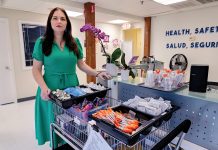
Kelly Brunette is a registered nurse and the patient flow director at Kent County Memorial Hospital. She discusses Kent’s “tele-sitter” program, which was implemented last year for use with patients who need constant monitoring.
Tele-sitting, done via electronic devices set up in patients’ rooms, helps the hospital’s staff keep an eye on patients who are at risk of falling, detaching medical equipment or leaving the hospital without being properly discharged. Certified nursing assistants monitor the tele-sitting devices, which play a live feed from patients’ rooms on monitors in a specially designated area in the hospital.
For Leaders Who Don't Have Time to Get Sick
Top performers guard their calendars, delegate relentlessly and optimize every hour of the day. Health,…
Learn More
PBN: When did Kent Hospital begin using its tele-sitter program, and why?
BRUNETTE: Kent Hospital began using the tele-sitter program in August of 2019. As a community health care facility, we recognized an increase in the population within the hospital who just needed that extra set of eyes to assist in providing them the safest environment possible during their stay.
Having a constant nursing assistant in a room with all of these patients is unrealistic in any health care facility, however we were introduced to the tele-sitter program and it was exactly what we were looking for. It allows us to monitor up to 12 patients at one time, providing them with an additional safety measure and comfort.
PBN: What types of patients are helped the most by this program?
BRUNETTE: The types of patients that most benefit from this program are those that do not meet the level of care needing an in-person nursing assistant by their side at all times but can still benefit from an extra set of eyes. These are our lower-risk fall patients, confused but re-directable patients, or confused emotional patients who need the comfort of having someone available to check in on them at any moment.
PBN: Which units are the devices used in?
BRUNETTE: The devices are used on all of our units, including in the emergency department.
PBN: The devices in patients’ rooms allow certified nursing assistants to hear patients if they are talking, and to speak to them as well. Are there any examples on how this monitoring has benefited patients?
BRUNETTE: There are too many to even list! Every morning a report populates to let us know how many patients’ falls were prevented and how many medical devices were maintained the previous day. We have had numbers up into the 50s for these preventions just in one day! Fall prevention improves patient outcomes, and maintaining medical devices allows us to provide the needed care to our patients (ex., maintain IV sites to allow for IV fluids and needed antibiotics, maintaining the use of oxygen nasal cannulas, which provide the additional oxygenation some patients need).
Besides the benefited medical successes, the tele-sitter program has also helped to provide the patients with a more comforting and personalized environment while they are hospitalized. Being in the hospital can be extremely stressful to a confused patient. In an ideal world, all of these patients would have a certified nursing assistant to sit with for the day to provide safety and comfort. However, that is not realistic. Having someone to speak to on the other end of the camera and knowing there is an extra person that is watching at all times is very comforting to a confused patient.
We had one situation happen a couple weeks ago with one of our confused patients. The patient was awake in the middle of the night, confused and yelling out to the tele-sitter camera “Alexa, play Roy Orbison.” Amanda Fitzgerald, our certified nursing assistant monitoring the patient, had clicked in to listen to make sure all was well in the room and heard the patient’s request. She looked up a song by Roy Orbison and played [it] over the microphone and it comforted the patient back to sleep.
PBN: Have you had any reaction from patients to the program?
BRUNETTE: Besides the personalized conversation, due to the population the program serves, we have not had specific reaction from the patients regarding the program. However, we have had a lot of positive reaction from family members of these patients. It provides them comfort in knowing that someone is watching over their family member at all times. We have even had family members request a tele-sitter camera for their loved one.
Elizabeth Graham is a PBN contributing writer.