
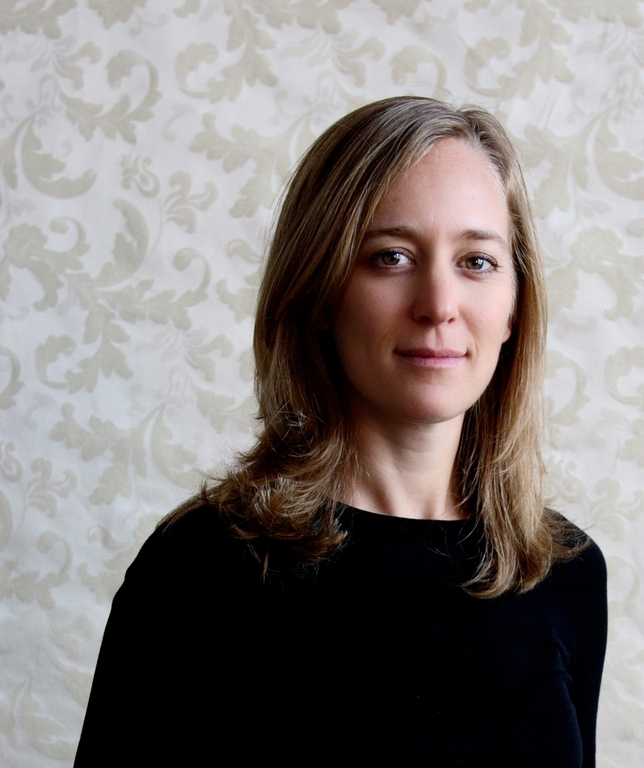
Maia Small owns Thurlow Small Architecture in Pawtucket. The firm has been charged with assembling a team to undertake a Downtown Design Plan. Small, a Pawtucket resident herself, recently took some time to discuss the plan and its importance to the city.
PBN: Can you tell us a little about the goals of the Pawtucket Downtown Design Plan?
SMALL: The Pawtucket Downtown Design Plan is a multilayered project initiated by the city of Pawtucket, in partnership with the Pawtucket Foundation, and funded by R.I. Statewide Planning, to improve traffic planning, parking, signage, public space and zoning to help make downtown Pawtucket a better place to live, work and visit.
This plan, which is really more a set of projects that will be funded in different ways and on different timelines, is less about what “it” is, and more about what it affords, as it will provide the groundwork for private development, support for partnership projects already under way, and improvements for people who live here now. So, the short answer is that the simple goal of project is to improve the way the built environment of the city works.
Our design goals for the project are to foster connection, clarity and sustainable development – to suggest projects that will allow the city to grow organically and work with the urban instincts resident here. Inevitably, we would be proud to see projects that look like they have always been here, yet allow the city to function as a contemporary place. And finally, my personal goal is that it must get built. I’m not interested in just creating reports or abstract ideas.
Seifert Systems Invests in Energy Efficiency to Strengthen Operations
For manufacturers, energy is more than just another operating expense. It plays a critical role…
Learn More
PBN: I understand looking at the way people move around downtown is a very important component. Why is that?
SMALL: Everyone gets lost in Pawtucket, even those of us who live here! This disfunctionality isn’t from neglect; it’s from decades of small decisions to help minor discomforts. The result is a network of one-way streets that disconnects our center from the important urban fabric around it – North Providence, Providence and Central Falls.
What is natural for people in moving through unfamiliar urban areas just doesn’t work here anymore – for example, moving downhill to get to a “center,” seeing something and being able to move there directly, or finding parking just after you get to where you are going. Those intuitions about a place encourage our inhabitation of it and the development of local economies and social ecologies.
Habits of the 20th century, when so much of our infrastructure was built, prioritized the car so that our city streets sometimes act more like highways with too much pavement, big round corners for right turns, and missing crosswalks.
Ever tried to cross a highway? If we want to create a vibrant downtown, cars, pedestrians and bikes all belong and have their place. This doesn’t require big design moves; it’s just about recognizing and shifting logics, finding resources and leveraging existing efforts. As for why this is so important, I think Los Lobos captured it best on their latest record – “On Main Street, on easy street, it’s when I feel like I’m home.”
PBN: How will the new Interstate 95 bridge affect your plan? Downtown?
SMALL: The I-95 Bridge is a gateway to Rhode Island, and we are its guardian. The impression of the state is made right at our feet. The community was thrilled that the R.I. Department of Transportation opened the process and that, after a great partnership, the new bridge will be a beacon over the Blackstone.
The downside in this process, however, has been some of the tough abuse of our downtown streets as freight traffic has been lumbering through day and night. Our hope is to seize on the chance to “repair” this with a bigger vision. If we have to rebuild our infrastructure, why not make it better than it was before? As well, we have two other significant transit improvements in development – the first RIPTA rapid bus line and a new Mass. Bay Transit Authority commuter rail stop. We need to improve the fabric of urban spaces that link these together; they don’t work, if you can’t get to them.
It’s also nice to remember that Pawtucket has a good history of impacting as entry – it was when Alexander Hamilton saw Slater Mill as he came across the Blackstone River into downtown, then the divide between Massachusetts and Rhode Island, which he imagined and reshaped his vision of America. That’s a lot to live up to.
PBN: There are a number of companies and organizations partnering with you to undertake the plan. Why not go it alone?
SMALL: Rhode Island is a “who you know” kind of place – and there have been unhealthy and exclusive consequences – but it also offers the rich potential to help small companies authentically network into larger capabilities. The more these networks are open and inclusive, the more powerful they are.
We know that what we do best is to come up with ideas about how things can go together to create new systems. It’s why we are called Thurlow Small Architecture – really with a small “a.” We think architecture isn’t just about how things look, but also about how they work – and not just buildings, but cities, environments and landscapes. So we bring specific expertise together to help us do each project well. And we are happy that Rhode Island has lots of it.
Also, with any project, but urban work in particular, it takes complex aligned efforts to get anything done. It is simply impossible to do this alone; you need community involvement, city, state and federal agencies and cheerleaders, nonprofit voices, political will and consultant professionals who offer ideas and flexibility. We see great momentum here and are glad to be part it.
PBN: What does this contract mean for Thurlow Small Architecture as a firm?
SMALL: We are a small company, but we make no small plans. Since we arrived seven years ago, we have partnered with people and agencies in building, transit, traffic, bicycle advocacy, housing and urban development initiatives in Providence and Pawtucket, both as paid professionals and volunteers. For us, this is an extension of those efforts with an opportunity to get both focus and agency access so that it has a high chance of being built.
It is also a rare and ideal opportunity to get to work on a project both as a professional – to exercise our expertise – and be a part of the community at the same time. Some people know us as just a local firm, but we have practiced and published more outside of Rhode Island than in it.
Over the past two years, we’ve participated in projects in extreme infrastructure building environments, like China and India, or highly multi-modal ones, like the Netherlands, where old and new work beautifully together. Rhode Island needs revitalized infrastructure, and it’s fantastic to work on the place we know and love best.












What a great, inspiration article! There really is Momentum in Pawtucket..