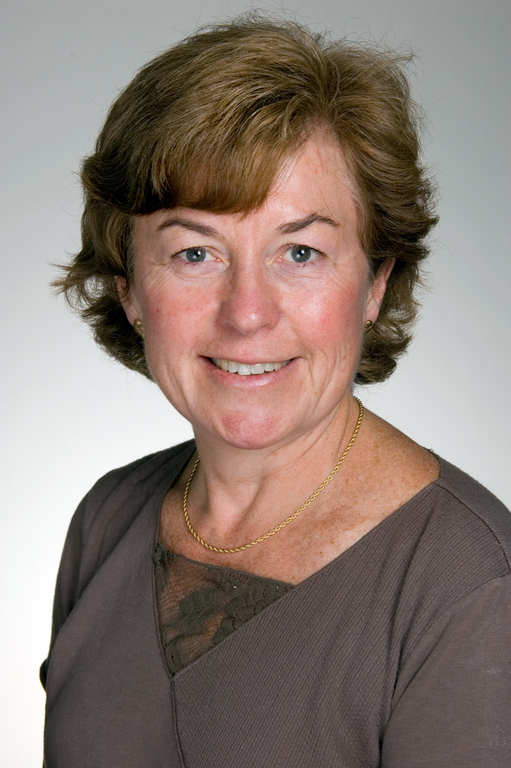
Surviving breast cancer is not a final victory. Cancers can and do recur, and a growing body of research links body weight – and extra weight around the middle in particular – to higher risks of recurrence. Thus for years, the National Cancer Institute has recommended that survivors adopt a very low-fat diet to shed extra pounds.
Mary Flynn, a research dietitian at The Miriam Hospital, set out to find a more satisfying, long-term viable alternative for women. In the June issue of the Journal of Women’s Health, she reports the results of a pilot study she conducted at The Miriam, using two 1,500-calorie diets, one following NCI guidelines, another her preference: a Mediterranean-style diet with plenty of fruit, vegetables and extra-virgin olive oil.
Eighty percent of women who started with Flynn’s diet lost more than 5 percent of their baseline weight, versus 31 percent who started with the NCI diet. And after trying both diets, most women chose to stick with Flynn’s less-conventional approach, saying they found the food more appetizing, accessible and affordable.
Flynn answered questions about her research.
PBN: How important is a healthy weight to prevent breast (and other?) cancer recurrence?
FLYNN: Being overweight or gaining weight after diagnosis is probably the greatest risk factor for recurrence of breast cancer. I say “probably” as there may be some other factor not yet recognized, but to date, weight is the greatest risk factor, especially at the waist. My guess is that the health risk is due to the increase in blood insulin that comes with higher body fat in the middle: Higher levels of insulin, even if they are still in the normal range, have been related to an increase in several cancers, including breast cancer. … Also, too much fat can make tumors hard to find, and overweight people tend to avoid health care, so cancer may be found at a later stage.
Seifert Systems Invests in Energy Efficiency to Strengthen Operations
For manufacturers, energy is more than just another operating expense. It plays a critical role…
Learn More
PBN: How closely does The Miriam work with cancer patients to help them change their diets?
FLYNN: I am very fortunate that Susan Korber, the oncology clinic manager, currently pays part of my salary to see our oncology patients (at no charge to the patient or their insurance); some of those hours are for general oncology; two are devoted to a weight loss program I have for women who have gained weight during breast cancer treatment.
I start by telling [patients] that there are foods [that] will improve our health, others that would make us less healthy, and some foods are what I call “neutral.” I do not tell patients that changing their diet will definitely change their risk of future cancer. I don’t think we will ever be able to say that. But I think there are clearly foods that can increase and decrease risk based upon how they change risk factors for cancer. For example, extra-virgin olive oil has been related to decreasing the risk of a number of cancers, including breast cancer. Vegetable oils (soybean, safflower, corn) are mainly polyunsaturated fats, which increase oxidation; excessive oxidation is related to an increase risk of cancer. So, if a patient at least minimizes (preferably eliminates) vegetable oils and replaces extra-virgin olive oil for their oil intake, this should change their risk of recurrence.
PBN: What led you to do this study?
FLYNN: I have never been a fan of low-fat diets. I have the advantage of having always worked in research, so I constantly read studies, publications and piece together the evidence for any dietary treatment of disease. My concerns with low-fat diets for women with breast cancer are that low-fat diets have never been shown to lead to long-term weight management; they increase blood insulin levels, which can drive cancers; and they do not allow for absorption of carotenoids from dark vegetables, which need to get into the body to fight cancer.
About 10 years ago I started testing my theory that you could eat a diet that was composed primarily of foods that would improve your health, and it would lead to better weight management than lower-fat diets. Extra-virgin olive oil is crucial to the diet; it is loaded with phytonutrients; it has some particularly interesting ones that will decrease cancer risk; it can make insulin work better, which lowers blood insulin and glucose levels; it can decrease inflammation; it contains squalene, which in test tubes and animal models is a tumor inhibitor. The health benefits start at two tablespoons a day. I recommend one tablespoon of olive oil per cup of vegetables.
I chose to test the diet at a moderate to high amount of olive oil for several reasons. … I thought that besides improving health, the higher olive oil content would help decrease hunger (fat in a meal decreases hunger between meals). And my diet emphasizes foods that will improve your health and minimizes/ eliminates foods that make us less healthy. I initially compared the diet to a standard lower-fat diet for weight loss in people with heart disease and healthy, overweight people. To my surprise, what I consistently heard from the people assigned to my diet was that they were not hungry and were losing weight.
PBN: Why do you think your diet is easier for women to stick with?
FLYNN: I was surprised that the women overwhelmingly liked my diet. The weekly conversation was not what one expects in a weight loss program – enthusiasm, offering of recipes, happy, etc. I would expect research protocol compliance, but would not be alarmed with subdued indifference. But my diet brought out real pleasure and happiness, which is extremely rare but gratifying.
I think most diet plans and people’s perception is for short-term use. People change their eating in anticipation of summer clothing, a class reunion, weddings, etc. This is where fad diets become popular, and then people go back to what they were eating, and the weight comes back. My goal is to get people eating a diet that they can pretty much maintain at least five days a week. For most people, that is enough to control their weight. I also find that most people report feeling better on my diet, and when they eat a meal that is not part of my plan, they just don’t feel as well. So some people stay on the diet just to feel better.
PBN: What are you hoping will come of this? Do you have follow-up studies or projects planned?
FLYNN: I am hoping my diet provides a new way for people to manage their weight. The study I completed/ published involved [only] 28 women; however, the majority embraced the diet wholeheartedly. That is not something one usually experiences with diet counseling. What I hear consistently is: I love the food; the recipes are so easy; I am not hungry; this diet is so inexpensive. I have a diet manual/cookbook coming out in October (“The Pink Ribbon Diet”) based on the study results. The diet can be used by anyone who wants to lose weight. I am hoping that this book allows women who have been diagnosed with breast cancer to enjoy food, find cooking fun and rewarding, and lead to better weight management and health.