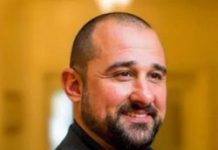
Michele A. Danish, clinical-pharmacy manager at Our Lady of Fatima Hospital, has been named pharmacist of the year by the Rhode Island Society of Health-System Pharmacists, following in the footsteps of Michael Sipala, director of pharmacy at Fatima, last year’s winner.
Danish, who holds a doctorate in pharmacy, has worked at Fatima since 1992. She has authored numerous professional articles and taught and trained many pharmacy students. This year, she was also named a fellow by the American Society of Health-System Pharmacists.
Danish spoke with Providence Business News about practicing pharmacy in a hospital setting.
PBN: What drew you to working within a hospital in particular?
DANISH: I enjoy the teamwork atmosphere of the hospital setting – both the opportunity to interact with other pharmacists and other health professionals.
Your Business Has Gone Global. Has Your Insurance?
A decade ago, “doing business internationally” was mostly a large-company concern. Today, a manufacturer in…
Learn More
PBN: How is pharmacy within a hospital different from working, say, at CVS/pharmacy?
DANISH: Most hospital pharmacists work in an acute-care setting. They are very involved in monitoring how the medications affect the patient; a clinical pharmacist working in a hospital has the opportunity to monitor patients’ laboratory values and clinical responses and follow patients’ responses to all their medications. Because the pharmacist is working side by side with the other health professionals, he/she can make recommendations to the providers to optimize the patient’s medication regimen. But one of the challenges to the hospital setting is the lack of opportunity to follow a patient after they are discharged. A pharmacist in the community … has the opportunity to develop a long-term relationship with a patient and also provide counseling about non-prescription medications.
PBN: Medication errors are a very big issue in health care across the country. What are some of the things you do to prevent medication errors?
DANISH: Our hospital has a medication-safety team with nurses, pharmacists, the risk manager and an administration representative. We review all the reported medication errors and analyze whether changes could minimize future occurrences. This is done in a non-punitive fashion. In addition, we take a proactive approach regarding high-risk medications such as [the anticoagulant] heparin and make sure we have multiple checks before dispensing and administering the drug to minimize the risk of an error occurring.
PBN: You’ve worked on pharmacokinetic-dosing services and a consult service for pain management and anticoagulation. What do those services entail and why do they matter?
DANISH: As part of the pharmacokinetic dosing service, pharmacists monitor all hospitalized patients that have been prescribed a narrow therapeutic index drug. These are medications where the therapeutic levels of the drug do not differ significantly from the toxic levels of the drug. It is very important to maintain the patient within the therapeutic range. The pharmacist checks the ordered doses and dosing intervals and orders drug blood levels when needed. The physician also has the option of having the pharmacist determine the initial dose and dosing interval. In either circumstance, an optimal dose and dosing interval is calculated based on the patient’s weight, age, kidney and liver function and diagnosis. For patients receiving anticoagulants, the pharmacist monitors blood clotting times, alerts providers about potential drug interactions and is also part of a multidisciplinary patient education team that has been very well received.
PBN: What do you enjoy about teaching? Are there specific things you aim to teach students?
DANISH: I love teaching. I spend a significant amount of time teaching not only pharmacy students, but practicing pharmacists, nurses and allied health care professionals. I try to impart concepts, not just specific facts. I want the students to be problem solvers, to understand the meaning of professionalism and also understand that health care is constantly evolving. I have two favorite sayings that I have adopted and share with my students: the plural of anecdote is not data, and an optimal patient outcome is always your priority.
St. Joseph Health Services of Rhode Island – a Providence-based health care system that is associated with but not financed by the Roman Catholic Diocese of Providence – includes the St. Joseph Hospital for Specialty Care, Our Lady of Fatima Hospital, the St. Joseph Living Center, the St. Joseph School of Nursing and the Southern New England Rehabilitation Center. The health system and its divisions are JCAHO-accredited. Additional information is available at www.SaintJosephRI.com.