How we decide and make judgments is one of the hot topics in current cognitive science, with researchers exploring the underlying brain processes, how we make on-the-spot choices and why some people have great gut instincts while others agonize for days and get poorer results.
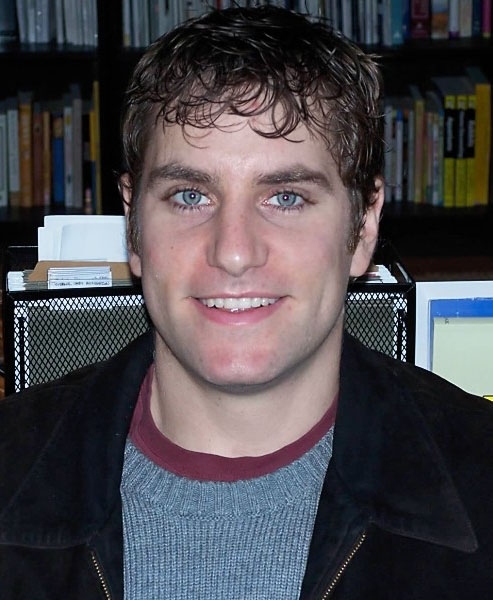
Philip Fernbach, a cognitive and linguistic sciences graduate student at Brown University, has been looking at a related question: Why people are so often myopic in making decisions and judgments, failing to consider alternatives to the theory they have in mind.
In a paper published in the March issue of Psychological Science, Fernbach and two co-authors describe experiments that compared predictive and diagnostic thinking – from cause to expected effects, and from effects to the cause. They found the latter was far likelier to result in accurate judgments.
Their conclusions: Not only should we pursue diagnostic reasoning more often, but we should persist with it. So, for example, before deciding someone has a disease, a doctor should examine whether the symptoms really fit, and whether there are any alternatives, and he should continue to reassess the diagnosis throughout the course of treatment.
Fernbach answered questions about the research, which was supported by a National Science Foundation grant.
PBN: What is the fundamental question you looked at?
FERNBACH: When people make all kinds of judgments, they draw on their knowledge about the world. It turns out that which information they draw on can, to a large extent, be determined by what is most easily accessible or available. For instance, if asked right now, many people will judge the likelihood of an earthquake to be higher than they would have two months ago or than they will two months from now, because the earthquakes in Haiti and in Chile are so front and center in their minds.
We looked specifically at how this kind of “myopia” affects prediction about the future (like when a doctor makes a prognosis, or an analyst predicts stock performance after a product recall) and diagnostic reasoning (like when a doctor diagnoses a disease based on symptoms, or an executive tries to explain a decline in sales).
Rhode Island's Market Has Changed. Developers, Builders, Investors and Sellers Must Change With It.
By Emilio DiSpirito IV License Partner | Engel & Völkers Oceanside Leader | The DiSpirito…
Learn More
PBN: Tell us about your experiments. What did you do, and what did you find?
FERNBACH: We did experiments with mental health professionals through collaboration with the [Massachusetts General Hospital] Psychiatry Academy, and with Brown students. Both populations showed the same pattern. When making predictions, people thought quite narrowly only considering a single cause. When making diagnoses, they thought more broadly, considering alternatives.
PBN: How did your findings fit with what we already knew about this subject?
FERNBACH: We concluded that reasoning forward from cause to effect (prediction) and reasoning backward from effect to cause (diagnosis) lead people to engage in different kinds of thinking. The results were surprising, because current theories do not predict the differences we found.
PBN: How could these insights be applied, and in what settings could you see them being applied effectively?
FERNBACH: These findings have implications for anyone engaged in a profession that requires making inferences based on evidence. This is a broad swath of society. Auto mechanics have to diagnose engine failures; judges make predictions about the likelihood of recidivism; financial analysts try to predict market performance, and so on.
The findings are also relevant to how we think about the future in our everyday lives. For instance, the myopia that people evidence in prediction implies that negative outcomes will make people overly pessimistic about the future. Positive ones will have the opposite effect. Broader thinking may be a key to remaining level-headed through ups and downs.
PBN: Why does this question interest you? Why is it important?
FERNBACH: There are two ways to think about why this kind of work is so important. First, the cognitive shortcuts that people use do lead to systematic kinds of errors. Understanding these thought processes will help people to make better decisions, avoid being persuaded by bad arguments and, overall, help us to build a better society.
On the other side of the ledger, one thing that any person who studies cognition will tell you is that while people might be error-prone, they have some remarkable abilities. Computers can’t yet come close to the kind of “common sense” reasoning that we do quite easily. Understanding thought processes will help us move toward the goal of building truly smart technologies.