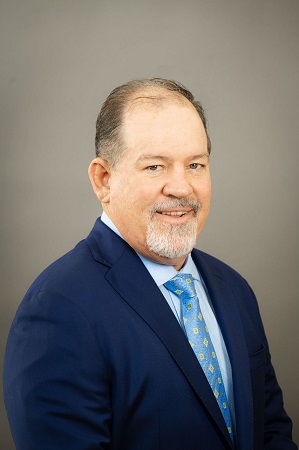
Richard Cavanagh recently joined Newman Dignan Sheerar Inc., a Providence investment and wealth management firm, as a senior investment adviser. He has more than 35 years of experience in financial services and a bachelor’s degree from Harvard University.
PBN: What do you see as the biggest challenges for investors/investment advisers right now?
ISO 9001:2026: A Practical Opportunity to Build for What’s Next
For Rhode Island manufacturers, ISO 9001 has been much more than a certificate on the…
Learn More
CAVANAGH: Clearly the current economic and geopolitical crosswinds have moved the U.S. and global economies to a precarious trail. We have not seen an environment like this in 40 years.
Whether the U.S. economy meets the classic definition of recession or not, we appear to be facing a period of slow growth and at the same time we are battling wealth-destroying inflation levels. The prospect for a period of stagflation – persistent inflation with weak GDP [gross domestic product] growth – is strong. However, the strength in the U.S. labor market is encouraging, and we may yet avoid a prolonged period of economic headwinds.
Investing in this environment is very challenging and requires patience and prudence to avoid suffering unnecessary losses by taking unnecessary risk or becoming emotional. We encourage investors to make use of investment advisers who are fiduciaries and can aid their clients by setting appropriate investment policy and adhering to it.
PBN: How has the aftermath of the pandemic affected your industry and the advice you give to clients?
CAVANAGH: The pandemic is instructive in that it clearly demonstrates the resiliency of markets and that there are rogue risks that can emerge when least expected. Investing is all about understanding and managing risks. Investors are “seasoned” when they have gained a deeper understanding of what “risk” is and their individual ability to tolerate it. The pandemic is an example of a rogue risk that is outside of the cyclical risks of investing in economies that ebb and flow and it tests the constitutions of the most-seasoned investors – a classic “black swan.” It also demonstrates how resilient markets and the humans that comprise them are.
The U.S. stock market has seen and conquered periods of war, depression, inflation, stagflation, civil strife and pandemics, and will likely continue to do so. However, the amazing recovery the U.S. economy and the stock market made from the impacts of the COVID-19 pandemic involved pulling future growth forward through fiscal and monetary stimulus. In the aftermath, we advise clients to manage their expectations while considering this reality, stay the course set by their investment policy and to guard against emotional swings derived from recent results. The experiences of the first half of 2022 are part of that reality.
PBN: Does investing in cryptocurrency come up as a topic among your clients? What generally do you recommend for those interested in investing in digital assets?
CAVANAGH: Clients do bring it up occasionally, but not as much as it shows up in social conversations where nonclients are just curious about it. I have yet to meet a noninvestment person who professes to fully understand it, and most investment professionals will admit they do not fully understand it. That is a first hint on whether one should “invest” in something – do you understand it and can you explain it?
We also counsel everyone to not be misled by the “currency” moniker. These assets do not act like currencies and, for most of them, any inherent value is dubious. It comes under the adage: If it walks like a duck and quacks like a duck. … The cryptocurrencies act like risk assets; they do not act like currencies – except for currencies that are collapsing. As fiduciaries, we are not comfortable advising clients to acquire these unregulated assets. There are some cryptos that have practical-use cases for the blockchain technology and those come the closest to meeting our requirements for an investment thesis versus simple speculation.
Our advice on any speculation is to only involve an amount you are willing to lose. This was our stance before the recent implosion in those markets and it will remain there until we see a trustable value proposition.
PBN: You have worked for both institutional and individual clients. How does that experience inform your new role and what are the differences between those lines of work?
CAVANAGH: In this role, I will still be handling both individual and institutional accounts. They are different in several ways. Institutional investors are far less emotional than individual investors. Emotion affects decision-making and is the nemesis of investors.
With the typical institutional relationship, the adviser is working with a board or a committee. While those members are fully engaged and conscientious about their responsibilities, it is not their money. Furthermore, the time horizon is usually perpetual, and the institutions’ stewards are often well-informed and experienced investors.
Nearly always the investments are not subject to taxes and there is usually a very thorough investment policy and disbursements are well planned. Taken together, these factors create an investing environment that is very different from working with individuals and families where we often have multiple accounts with varied tax constraints, estate and tax planning opportunities and considerations, shifting income and liquidity needs, and, understandably, a tendency to be emotional about near-term results.
Moreover, individual investors are generally less informed and experienced than institutional investors, which is a central reason why they are trusting us to manage their investments. Developing an understanding relationship with our clients and coaching them through the difficult periods during a long investment journey is a large portion of our work.
PBN: What do you see as the biggest trends to look out for in wealth management and investing?
CAVANAGH: While not totally new, there is still a growing trend for noninvestment professionals to confuse trading with investing – but now it is easier than ever for them to trade their savings without professional guidance. Technology has advanced so much during my career, it is easy to forget how simple things were compared to where we are and where we are headed. Until the internet became mainstream in the mid-1990s, investors would either call their broker for a midday quote or wait until a newspaper could show them the price where their securities last traded. Suddenly, anyone could get that information in real time on a PC, then on a smartphone, and now it can be traded from the phone in between meetings or hammer swings.
This access is not only available on platforms like Robinhood but also on many 401(k) platforms and from major custodians like Charles Schwab and Fidelity. For too many, this is more like a day at the casino than it is a day in the office managing a properly allocated and diversified portfolio. It has added to the volatility in the markets and there is not a doubt in my mind that it has, in the aggregate, hurt more individuals than it has helped, both in head count and net results.
There are very, very few people who have demonstrated a prowess in using trading to outperform long-term market results. Typically, these traders have a disciplined methodology and have real-time access to myriad data sources as they manage their positions. Invariably, they have trades that backfire and cause significant losses, and they must outlast those setbacks. An amateur with a phone is not too likely to build wealth and is very likely to hurt themselves.
Nancy Lavin is a PBN staff writer. Contact her at Lavin@PBN.com.