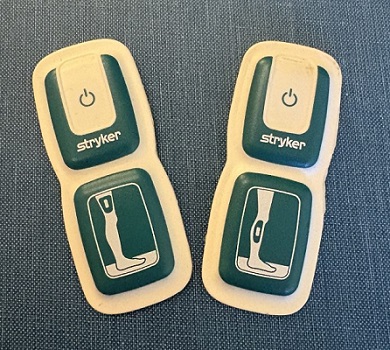
Ryan Chapman, assistant professor of kinesiology at the University of Rhode Island’s College of Health Sciences, is working on new orthopedic technologies. He recently assessed the state of technology use for patient monitoring after a joint replacement with Janie Astephen Wilson, a professor at Dalhousie University in Canada. Their peer-reviewed article was published in the Journal of Orthopaedic Research. Chapman spoke with Providence Business News about developing orthopedic technologies.
PBN: Why did you become interested in assessing technology use to monitor patients after joint replacement?
CHAPMAN: When I started my doctoral training in 2014 at Dartmouth College under the mentorship of Douglas Van Citters, I was a member of an orthopedics research laboratory that was largely focused on the success of the implant materials. However, discussions with our orthopedic surgeon collaborators revealed a significant gap in postoperative information available to the clinical teams regarding postoperative recovery and function.
For me, this was critical because collecting data in a lab or clinical setting can be useful, but it may not tell the entire recovery picture. Getting data from patients out in the real world provides a more holistic picture of patient function because that's largely where recovery occurs, not in the well-controlled lab/clinic settings. As a result, we embarked on a mission to develop, validate and deploy remote patient monitoring sensors to improve data access for clinicians, provide personalized care pathways and improve patient outcomes.
PBN: How could more-consistent protocols allow for greater use of the technologies, and what would those protocols look like?
CHAPMAN: This is really two problems contained in one. The first problem is inconsistent research protocols. Without consistent research protocols using remote patient monitoring, it becomes very difficult to compare different technologies to evaluate which sensors and/or platforms provide the highest value to the health care system and facilitate the best patient outcomes.
A more consistent research protocol could potentially require similar gold-standard assessment techniques, similar tasks for patients to complete (e.g., walking on a treadmill), and similar outcome measures such as range of motion or clinical scoring scales.
The second problem is consistency with at-home protocols patients are required to complete. Often, the complexity of these protocols makes it challenging for patients to properly use these sensor systems. Simplifying these protocols and making them an easier part of their daily routine would increase the likelihood of using these remote monitoring systems.
PBN: Why might patients not comply with using the sensor properly?
CHAPMAN: There are likely multiple reasons for noncompliance with these sensor systems. Some potential reasons include but are not limited to complexity of physically applying the sensors to their body (e.g., with straps or adhesives), irritation of the skin or discomfort where the sensors are worn, feeling like the sensors are too bulky or can't be worn discretely, or simply forgetting to put them on each day.
PBN: How were scientists able to solve the issue of plastic from the technology breaking down in patients?
CHAPMAN: In the 1960s and 1970s, conventional ultra-high molecular weight polyethylene was utilized in joint replacements, however the major limitation of this type of UHMWPE was high wear rates. In the 1990s, manufacturing changes were made when it was discovered that irradiating UHMWPE in air with a gamma radiation source improved wear resistance. Unfortunately, this processing technique also created free radicals that led to plastic that was brittle and prone to fatigue failure. Subsequently, companies began irradiating UHMWPE in gamma-barrier packaging to reduce free radical development. Additional changes that began in the 2000s included creating highly cross-linked UHMWPE by remelting the irradiated UHMWPE to get rid of free radicals. More recently, further reduction of the oxidation in UHMWPE includes antioxidant additives to the plastic, including Vitamin E.
PBN: What is the first step to broadening access to these technologies?
CHAPMAN: Our health care system in the United States is cumbersome and largely inaccessible for many people. This has occurred for several reasons, one of which is insurance. Many of these technologies are not currently covered by insurance, which means they would need to be purchased out of pocket or with some type of health savings account. However, for many people, this is cost prohibitive and likely to prevent them from purchasing and utilizing such equipment.
Until insurers are willing to reimburse for these devices, it is unlikely many people will be willing and/or able to purchase them for the specific reason of monitoring how their joints are doing after a joint replacement surgery. Unfortunately, the reason why insurers have not reimbursed for these technologies is also multifactorial. For example, until several years ago, the insurance code for evaluating a patient's gait (i.e., how they walk) specifically stated "video-based gait assessment." However, most of the technologies being developed at the time could evaluate patient gait but weren't done using videos.
Additionally, for many of the devices, we have not reached the break-even point for technology cost and value in terms of improving patient outcomes and health care value. Accordingly, companies need to charge a price that is equal to or less than the value it adds to the health care system in terms of reduced health care spending, improved patient outcomes, or both. Until this happens, it's unlikely that insurers will be willing to pay for such technology.
Katie Castellani is a PBN staff writer. You may contact her at Castellani@PBN.com.