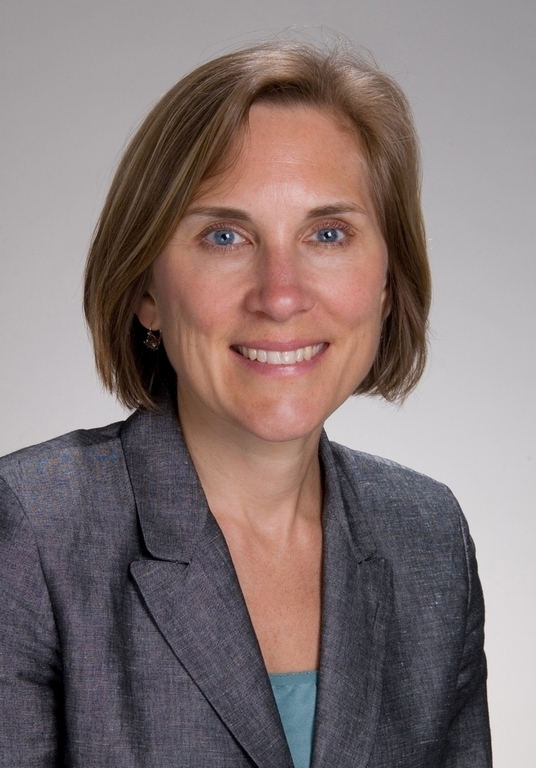
The heart of a hospital is its doctors and nurses – they are the ones who save lives and care for patients. But behind the scenes, it takes serious management, budgeting and logistical expertise to keep a hospital running. That is the job of people like Susan Simundson.
For nearly 20 years, Simundson has been director of clinical management at Rhode Island Hospital – and since 1998, she has filled the same role at The Miriam Hospital as well. Earlier this spring, Simundson and Ann Daniels, director of surgical business affairs at the Miriam, were named fellows of the American College of Health Care Executives, the highest credential in their field. Simundson answered questions about her job and the business challenges hospitals face.
PBN: What is your background, and how did you get into health care administration?
SIMUNDSON: I worked for a temporary staffing agency during summer break in college and was assigned to do data entry in the business office of United and Children’s Hospital in St. Paul, Minn. My mother was a nurse, so I was familiar with the clinical side of health care, but until then I hadn’t appreciated the business and financial aspects. I was an economics and chemistry major, and interested in health care economics and health policy, so a professor encouraged me to apply to health administration graduate programs. I first came to Rhode Island Hospital while a student in the University of Minnesota master’s program, and have worked here since I graduated in 1989.
Beyond Cash Donations: How New Forms of Giving Are Transforming Not-for-Profit Accounting
Evolving Funding Landscape for Not-for-Profits Not-for-profit organizations are being asked to do more with less,…
Learn More
PBN: You have a pretty broad set of responsibilities. How do you fit within the organization?
SIMUNDSON: I work within the Medical Business Affairs division, which includes all physician-related functions. The hospital has contractual as well as employment relationships with physicians to teach and supervise residents, to provide administrative and medical director services, and in some areas, to provide patient care. I’m responsible for budgeting, physician contracting, and program planning related to those functions for seven physician departments (mostly surgical subspecialties) at Rhode Island Hospital.
Another aspect of my job, at both Rhode Island Hospital and The Miriam Hospital, includes providing volume, quality, clinical utilization and profitability data from Lifespan’s billing system for use in management and physician decision-making.
PBN: One of your key roles, it seems to me, is to help keep the hospitals solvent. How big of a challenge is that, especially in the current economy?
SIMUNDSON: In my 20 years in the field, hospitals have always been in the position of striving to provide quality, safe care and a positive patient experience in the context of limited financial (and often human) resources. The situation is even more precarious now.
Our patient volume has been pretty strong this year, but we have seen some declines in elective procedures that we hear patients are postponing or canceling because of losing their health insurance or a concern that if they take time off of work for the surgery, they may lose their job. We anticipate reductions in Medicaid reimbursement locally, as well as Medicare reimbursement from the federal government. The uncertainty of what our revenue will be for next year makes the budgeting process difficult.
We also rely on interest earned on our investments, and the decline in the stock market has had a big impact on our cash flow and caused us to slow down our capital spending in the first half of the year. We believe it’s very important to maintain and improve our patient care and research facilities and hope to be able to start capital projects in these areas soon.
PBN: What do you gain from being involved with ACHE?
SIMUNDSON: ACHE is structured so that all members have a local chapter to facilitate member involvement. I’ve been on the ACHE-Rhode Island chapter board with Ann Daniels from The Miriam Hospital for several years, developing networking and educational activities. We are planning a series of “CEO rounds” where ACHE members and prospective members are invited to hospitals throughout the state to hear perspectives of different CEOs talk about the key issues and plans at their institutions. We are also co-sponsoring a “legislative boot camp” with the Hospital Association of Rhode Island. We recently held part one, and part two is scheduled for May 28. (More information at rhodeisland.ache.org)
ACHE nationally provides many opportunities for continuing professional education, including conferences as well as webinars and publications. I have enjoyed meeting professionals from other parts of the country and sharing ideas with them.
PBN: What is the value of becoming a fellow of ACHE?
SIMUNDSON: To me, becoming a fellow is an acknowledgement that I have achieved a certain level of experience and expertise in the field, but also a recognition that there is always more to learn and that I’m committed to pursuing that education. Using ACHE resources to stay informed about local and national health care issues will help me in my career. I learned from teachers and mentors who were ACHE fellows when I was a student and early in my career; I hope to offer that same opportunity to new people entering the field today.