Brown University is investing $42 million to transform the Metcalf laboratories into a cutting-edge research and teaching facility for its new Department of Cognitive, Linguistic and Psychological Sciences, an 81,000-square-foot space with classrooms, labs and meeting space.
As part of its Plan for Academic Enrichment, Brown is also hiring seven new faculty members for the department, specializing in cognitive and behavioral neuroscience; development, perception and action; language and linguistics; personality and social psychology, and cognition.
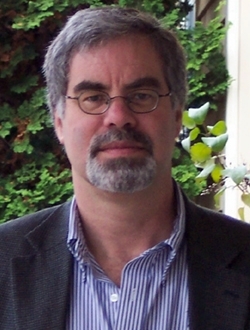
William Heindel, the department chair and a cognitive neuroscientist with research interests in human memory, attention and perception, answered questions about the new program and the Metcalf renovation.
PBN: What is the focus of this new department? It seems to pull together a broad range of approaches to the mind.
HEINDEL: The focus of the new department is the study of mind, brain, behavior and language, including perception, categorization, thinking, reasoning, problem-solving, learning, memory, attention, action, emotion, personality, speech, language processing, linguistic structure and communication.
The department will look at how these functions are organized, what representative and computational parts support them, where they are found in the brain, how the functions have evolved, and how they shape both individual and societal behavior. How we will do this involves a complex variety of approaches, including psychophysical and behavioral experiments, formal analysis, computational modeling, neuroimaging, and neuropsychological and neurophysiological studies.
Rhode Island's Market Has Changed. Developers, Builders, Investors and Sellers Must Change With It.
By Emilio DiSpirito IV License Partner | Engel & Völkers Oceanside Leader | The DiSpirito…
Learn More
PBN: How different is your approach from what was the norm, say, 10 or 15 years ago?
HEINDEL: Breakthroughs over the past few years are one of the reasons that we are combining the departments. We are now able to view mind and brain developments across a continuum, and advances in technology allow us to look at cognitive processes in a complex variety of ways. For example, we can compare various brain functions of humans and animals more easily, which allows us to research and examine brain and mind functions in greater depth and in ways that we are still discovering.
PBN: How did this department originate?
HEINDEL: The department was created through the merger of the Department of Cognitive and Linguistic Sciences and the Department of Psychology. It is part of a larger strategy to build a leading center for the multidisciplinary study of mind, brain, behavior and language. State-of-the-art research on these problems requires spanning several levels of analysis using a range of approaches and methodologies, and this department will create an environment in which this intellectual synthesis will flourish.
PBN: Tell us about the new facility. How will it enhance your research and teaching capabilities?
HEINDEL: Quite simply, this type of department needs the right building to be successful. This building will contain clusters of related research labs around shared meeting rooms and testing facilities, and provide both formal and informal interaction spaces for faculty and graduate students. The collaborative elements of the design will foster integration, interaction, growth and innovation for current and incoming students and faculty.
Specifically, the building will include an electroencephalography/event-related potential suite, an eye-tracking facility, an acoustic recording room, a virtual environment laboratory, and a planned transcranial magnetic stimulation facility. There will also be seminar, lecture and computer classrooms with state-of-the-art instructional technology for undergraduate and graduate teaching.
PBN: How will your new department interact with clinicians within Brown and beyond?
HEINDEL: The department will work directly with Brown’s Institute for Brain Science, as well as the Warren Alpert Medical School. Given both the collaborative work of the department and Brown’s commitment to community interaction, we expect there to be many exciting collaborations emerging.
To learn more about the new program, go to clips.brown.edu.