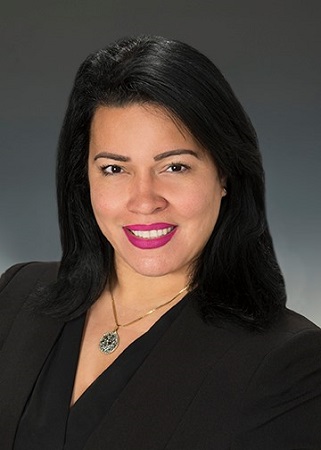
Yahaira “Jay” Placencia, senior vice president and private client advisor for Bank of America Corp., was recently appointed to Neighborhood Health Plan of Rhode Island’s board of directors. She discusses health care’s financial challenges, the importance of health equity and Neighborhood’s goals.
PBN: What drew you to Neighborhood Health Plan of Rhode Island?
ISO 9001:2026: A Practical Opportunity to Build for What’s Next
For Rhode Island manufacturers, ISO 9001 has been much more than a certificate on the…
Learn More
PLACENCIA: As someone who has always been deeply involved in the community, I had long admired Neighborhood for delivering on its mission to provide access to high-quality health care for our most marginalized populations. So, when the opportunity to serve on Neighborhood’s board of directors presented itself, the decision was an easy one to make. I recognized it as a way to extend my passion for giving back to my community while playing a role in ensuring that all Rhode Islanders – regardless of their economic status, ethnic background or ZIP code – have access to a basic human right: excellent health coverage.
As a Dominican American who has witnessed the health struggles of many, serving on the board makes me especially proud, as I see firsthand Neighborhood’s commitment to breaking down barriers to better health and stronger neighborhoods. This commitment spans the wide array of cultures and ethnicities in the state. We’re doing incredibly important work here. We’re making sure Neighborhood’s members have access to the resources they need to live healthy lives.
Additionally, I have seen how in sync Neighborhood’s leaders and staff are around supporting our members and network of providers. These folks are adept at navigating the complicated world of health care and, while doing so, finding innovative ways to improve the quality of care for members. I am learning every day and can’t wait to see the needle continue to move in a positive direction.
PBN: How do you see your background and experiences in banking advancing Neighborhood’s vision?
PLACENCIA: My 20-plus years of experience as a banker and nearly 30 years of civic involvement have given me tremendous perspective and expertise. I’m honored to be able to share my unique lens and skill set with Neighborhood to help drive its evolution in an ever-changing health care landscape.
While Neighborhood is a not-for-profit with an incredible mission, it is still a business that needs to have operational efficiencies, strategic planning and financial viability just like any other business. The major difference is that Neighborhood provides life-changing and lifesaving services for its members, making the pressure to succeed incredibly strong. As a board member, I can play a role in making sure Neighborhood remains viable and has the right capacity to provide the resources needed by our members and providers. For this reason, we need to plan for the “long game” of health care. We also need to consider our income streams in a very thoughtful way.
My background and experience have prepared me well for this opportunity. Helping with strategy, looking at financials, seeing best practices around community engagement, networking, and connecting all stakeholders – are all skills I have a passion for and that can provide value to Neighborhood.
I’d also add that my experience as a Latina community member is a perspective I am bringing to the table to help advance Neighborhood’s vision. It presents an opportunity to contribute important information about how health care affects my family and other people I love and interact with regularly.
PBN: What are some financial challenges unique to the health care landscape and how can they be addressed?
PLACENCIA: The simple answer is that the cost to provide health care keeps increasing at a pace that is unsustainable. At Neighborhood, we are doing our part to shield our members from this challenge by continuing to provide the resources and services they need. We strive to maintain a healthy balance between paying our provider network and keeping premiums at an affordable rate. This is the only way to ensure our members always have access to care.
It is my personal hope that we soon see a greater paradigm shift in health care, moving further and further away from reactive care and closer to preventative care. As a society, we need to do a better job taking care of ourselves and one another to prevent poor health outcomes, otherwise the numbers simply do not work. On this note, I am proud that the community knows and trusts Neighborhood. We are a familiar name and face in the community and, as such, have established a level of trust that allows Neighborhood to meet our vulnerable members where they are and provide important health education and support services that allow them to lead healthier lives.
Neighborhood is also known for being open to listening and to learning from what we hear and see. We know that our culture needs to shift from reactionary to proactive medical care to improve health outcomes and lower health care costs, but we are also acutely aware that the health of our vulnerable members is directly tied to social determinants of health such as income, housing and food security. We need to be patient, yet steady, and mindful of these determinants as we work to improve the quality of care and control the growth of health care costs.
Lastly, through the work I do in my professional career, I frequently hear about the struggles many small businesses are experiencing, especially in the aftermath of the pandemic. The good news for these businesses is that Neighborhood has a solution for alleviating one of their pain points – an affordable health plan. I’m very proud that Neighborhood offers a comprehensive, affordable product for small businesses through HealthSource RI, the state’s health insurance marketplace.
PBN: One of Neighborhood’s missions is to promote health equity. What does this look like in practice? How can Neighborhood continue to advocate for equity for its members and communities?
PLACENCIA: Neighborhood has long been an advocate of health equity. We were founded almost 30 years ago to serve 1,490 low-income moms and children in RIte Care and have continued through our growth to over 228,000 members to support this population, as well as other vulnerable populations. In fact, Neighborhood has an established track record of being a willing partner with the state to advocate on behalf of those who need health care coverage the most. Leveling the playing field is what Neighborhood leaders and staff work on daily. We frequently partner with our founders – Rhode Island’s community health centers – as well as with community agencies such as the Rhode Island Community Food Bank to implement programs that address food insecurity.
We have also made a significant investment in improving maternal health outcomes in Rhode Island, especially among … women [of color] who historically have far poorer maternal health outcomes than the community at large. And we have an amazing Health Equity Committee comprised of multidisciplinary staff who focus on three specific areas to create sustainable solutions to address societal concerns. The committee’s focus on behavioral health, childhood obesity and maternal health brings forward perspectives, stories and ideas that we are making actionable to advance health equity for our members and communities across Rhode Island.
Neighborhood continues its commitment to advancing health equity by making sure we are reaching out to our members and others in the communities we serve through our relationships with community health centers, charitable organizations and the state, and through our involvement in cultural festivals, health fairs and sponsorships. We are learning on a regular basis from our members. We conduct surveys and ask for feedback more than I’ve ever seen.
The end goal is to have a healthier Rhode Island overall. We get there by providing education, collaborating with all stakeholders to continue providing access to quality health care, and being present with our message every time we have the opportunity to do so. Our job is to take care of families for their entire lives. It behooves Neighborhood to always be present. I am proud to say that we are.
PBN: Are there any other issues that you are looking forward to addressing as a member of the board?
PLACENCIA: Absolutely! I’m excited about a number of initiatives the board is working on. First, just like any other business, Neighborhood needs to grow responsibly, expand its services and adapt to the changing needs of its customer base. What’s different for Neighborhood is that our customers include our members, our providers and our staff, and our work to achieve growth is done while keeping a close eye on the fluid nature of health care and staying within the regulatory stipulations we are given. Additionally, I have always thought about health as taking care of the whole person and was thrilled to learn early on that Neighborhood embraces this philosophy. I see potential here and look forward to evolving our work in this area.
I am also very excited about contributing to Neighborhood’s new five-year strategic plan, which we are actively working on following the successful closure of our previous plan. In particular, I am interested in the work we are doing to make capital investments and improvements, as well as our efforts to evolve operational efficiencies. It’s impressive to see the level of accountability at Neighborhood – across the company – that ensures meaningful investments in programs that will lead to improved quality of care and operational excellence for our members, providers and employees.
Last, our board and all of Neighborhood are laser focused on what’s happening with Medicaid redetermination. We have been doing everything we can over the past several months to ensure our members don’t lose their health insurance as the continuous eligibility period that was stood up during the pandemic comes to an end. We will continue to communicate with our members to be on the lookout for a notification letter from the state providing steps they’ll need to take to redetermine their eligibility.
Claudia Chiappa is a PBN staff writer. You may contact her at Chiappa@PBN.com.