The Town of Foster wants to develop parts of a three-mile stretch of land dominated by trees and wetlands along U.S. Route 6 – from the intersection with R.I. Route 94 to the Connecticut line – to attract new businesses.
“We’d like to attract a restaurant. We’d like to attract a bank,” said John Lewis, vice president of the Foster Town Council and co-leader of the economic-development initiative the town launched this past summer.
But first the town would like a commitment from Cox Communications or Verizon Communications that broadband Internet access will be available along the corridor, he said. Though town officials have spoken with the telecom providers in the past, the issue has always been that it’s too expensive to run the cables for so few customers. And the state has yet to mandate such coverage.
Plans for the business corridor are in a very preliminary stage, said Ann-Marie Ignasher, town planner for Foster and co-leader of the business-corridor initiative. After reassessing the zoning along Route 6, the town might consider changes to expand the existing commercial zoning in some areas, where it makes sense for future development.
“What we’re doing is what they call commercial nodes,” Ignasher said. The town may create as many as three commercial nodes, areas where multiple businesses can locate, separated by trees and landscape along Route 6.
“It has to fit in with the character of the town,” Lewis added. “What we don’t want is a strip mall like Bald Hill Road in Warwick.”
The next step is to set up meetings with landowners to discuss their thoughts and involvement, Ignasher said. Landowner involvement will be discussed at a Jan. 26 economic development workshop session in Foster.
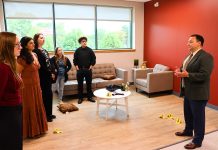
In the meantime, Lewis presented other parts of the economic-development initiative meant to support existing businesses at a recent Small Business Resource Seminar hosted by the R.I. Economic Development Corporation’s Every Company Counts.
The seminar – the first of its kind in Foster – drew 35 prospective and existing business owners. It was the best turnout since EDC started the seminars about a year ago, said Sherri Carrera, manager of small-business services for the agency.
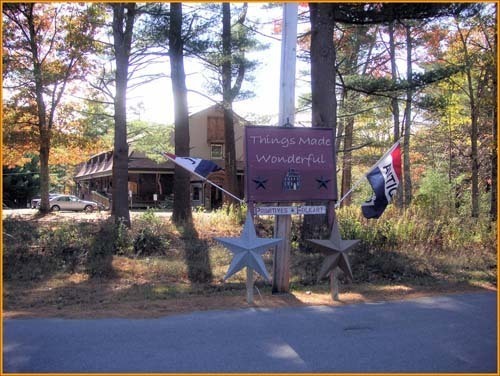
Efforts to support existing businesses in Foster include a new business directory on the town’s redesigned Web site, www.townoffoster.com, launched two weeks ago; and new signs available for business owners wanting to direct visitors to their location, at a cost of about $50 per sign, Lewis said.
Next, the town plans to offer marketing, business planning and finance workshops for business owners who need that kind of help.
The goals of the economic-development initiative are to attract new businesses and help existing businesses grow, because one of the priorities for the new town council, elected in December last year, was to improve roads and services, Lewis said.
“In order to get to that, we need a stable tax base,” he said.
Though there are about 137 businesses in the 51-square-mile town, a majority of them are home-based or farm-related businesses, Lewis said. That means some contribute to the tax base, but not as significantly as a restaurant or supermarket would.
There are also some concerns that, as the development of single-family homes in the town increases, the population could increase to a point where it creates a need for a paid fire and ambulance staff. The town currently relies on a volunteer fire department and ambulance corps, Lewis said.
Another reason for increasing the tax base is the $45 million bond approved by taxpayers for building a new middle school and renovating the existing high school shared by Glocester and Foster, Lewis said.
Though the town hasn’t had to raise residential property taxes to pay back the loan, there might be a need to do so in the future.
“It hasn’t been billed back to the towns,” Lewis said. “But it’s imminent.” •