The Pawtucket Foundation, organized by leaders in the local business and nonprofit sectors, advocates for projects in Pawtucket that will spark economic development, improve the image of the city and take advantage of its many resources and assets. Major sponsors include Bristol County Savings Bank, Citizens Bank, Collette Vacations, Pawtucket Credit Union and Narragansett Bay Insurance Co.
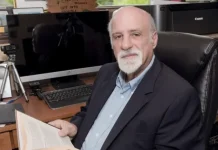
Thomas A. Mann Jr. came on board in July as the foundation’s executive director. A native of Tupelo, Miss., he majored in architecture at Mississippi State University where he also took part in the Reserve Officers Training Corps. After completing the ROTC program, and being commissioned as an Air Force officer, he served as a logistics planner on projects around the world. He returned to school after leaving the military, earning a master’s degree in city and regional planning at Rutgers University.
Mann recently sat down with Providence Business News to discuss the foundation’s projects.
PBN: You have said Pawtucket is a city with many resources and assets. What would those be?
MANN: We’re a densely populated community near the epicenter of the Providence metropolitan area. From a business perspective, that means we have people and labor. Geographically, we have the Blackstone River – a tourism corridor, an historic corridor birthplace of the Industrial Revolution – running straight through our downtown. We’re located right off Interstate 95, which means great access for businesses. We have industrial manufacturing businesses that are still thriving. And our downtown is completely walkable. It was built in the era before we came to rely on automobiles. You can go anywhere downtown in just five minutes.
Another big resource is the potential for commuter rail. The foundation has been pushing for that since our inception in 2001. Right now in this country we’re experiencing an energy crisis. Those cities where people are less reliant on cars are the ones that will be successful in the future.
Your Business Has Gone Global. Has Your Insurance?
A decade ago, “doing business internationally” was mostly a large-company concern. Today, a manufacturer in…
Learn More
PBN: Tell us more about this push for railway transit.
MANN: The Massachusetts Bay Transportation Authority (MBTA) has commuter trains going to Providence. We’re advocating for a stop in our city. Commuter rail is essential to Pawtucket’s … economic development. …When you have a commuter-rail stop, you increase the density of development in the area around it, which conserves land and helps the environment. Ideally that would be mixed-use development, with retail, offices and residences. You basically have all the essentials within five minutes of where you live.
PBN: How do the current economic problems gripping the state and the country affect the work you’re trying to do?
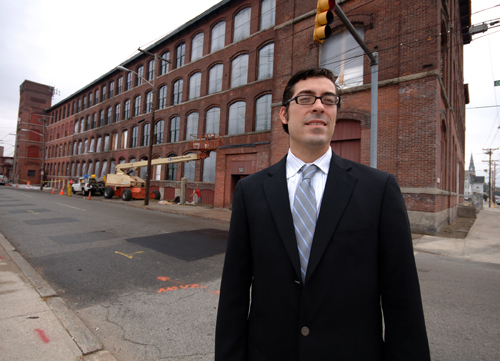
MANN: The economic crisis impacts future development because, obviously, when the money’s not flowing, it’s difficult for developers to come in and buy existing buildings in our town. But amazingly, in the middle of this crisis, we’ve got two major condominium projects – mill conversions – going on. Eventually they will result in several hundred housing units in and around downtown. That really drives demand for more services in the area.
PBN:: According to the foundation’s Web site, your organization sees potential for some changes along Roosevelt Avenue.
MANN: Yes. Across the street from City Hall there’s a large parking lot used for visitor parking and by city agencies. When Pawtucket was in its heyday that land was part of a vibrant retail corridor, until suburban sprawl and shopping malls destroyed downtown retail. But the cost of automobile transportation is now so high, both economically and environmentally, that retail will be moving back downtown, to open-air, quality-of-life centers.
For that reason, we’re developing a master plan for a large mixed-use development on that very parking lot – retail on the street level, with a mix of offices, residences and other uses above.
What makes this project exciting is that the city and the Pawtucket Redevelopment Agency already own that entire property. It creates a situation where a developer will find it easier to do the project because we already have consensus on the concept.
PBN: Other cities have set up districts that promote arts and restaurants, with the idea of attracting young people who want an urban experience, and sometimes it doesn’t work as well as expected.
MANN: Yes, it’s crucial that you have to have people living there. I think at least 50 dwelling units per acre within a five-minute walk of downtown is the right mix. If you can achieve that level of residential development, you’re going to have foot traffic at night. And there have to be choices. It can’t all be luxury condos. You’ll want to include students, young families, blue collar – a real mix.
Increased residential density combined with access to I-95 and a sophisticated mass-transit system, which means both commuter rail and bus service – those are the things that create market demand for a commercial district. You need those things for a downtown to be really successful.
PBN: You’re a newcomer to the region. Is there anything that has surprised you about Rhode Island?
MANN: One thing that has really impressed me is the momentum and genuine pride in the city. There are so many people – in business, in city government – who really want this city to continue to grow. There’s a tremendous synergy happening here right now. •
The Pawtucket Foundation – a partner in the Northern Rhode Island Tri-Communities Coalition – encourages economic development and reinvestment in Pawtucket and Central Falls and advocates for downtown, river and gateway improvements. For additional information, visit www.PawtucketFoundation.org.