A few months ago, Pawtucket Economic & Cultural Affairs Officer Herbert Weiss doubted he could match the money raised for the Pawtucket Arts Festival the previous year. The state’s economy was slowing, and he figured that municipal budgeting and corporate philanthropy would follow. So Weiss set the goal for corporate sponsorship at $73,000, 15 percent less than last year.
“Talk to any fundraiser and they’ll say that it’s a horrendous year for raising money, that they’re pulling their hair out,” he said. “There’s a lot of competition for the dollar.”
But by last week, Weiss had already raised enough in pledges to match the $86,000 raised in 2007.
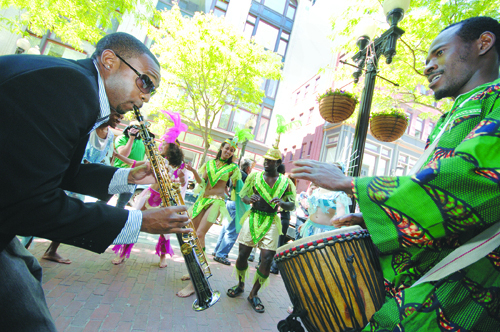
Other summer and fall festival organizers say they have increased fundraising efforts this year and even in the soft Rhode Island economy they are seeing results. Sound Session 2008 Sponsorship Manager Karina Wood said that $130,000 of the budgeted $150,000 for the weeklong downtown Providence block party had been raised by early last week. What’s been raised so far is equal to the entire 2007 budget, she said.
“We’re finding ourselves in a similar situation as [the Pawtucket festival], which is very interesting, because if you had spoken to me a month ago I would have said, ‘I think we’re heading into a recession, we’re getting a lot of “no” answers. I don’t think we’re going to make what we did last year,’ ” Wood said.
For Sound Session, being held July 6 to 12, the majority of the estimated $150,000 that will be raised this year will come from about 30 corporate sponsors – including Bank Rhode Island, Bacardi and media outlets CW28, Hot 106 and WBRU – and from municipal sources.
But even though fundraising has surpassed last year’s total, many sponsors have not given as much as they were able to last year, Wood said. Instead, it’s been spread out over a wider variety of sponsors.
The Providence Black Repertory Company is the event’s organizer and the City of Providence is a co-producer. The city handles media inquiries, sets up parade routes and works with vendors, said Michael Christofaro, marketing director for the city Department of Art, Culture & Tourism. “It seems that no matter what kind of economy we go through, entertainment is needed,” he said. “It’s the one industry I see that doesn’t have a recession.”
For the city’s trademark “WaterFire Providence,” this year is a bit “leaner” than previous years, although attendance was high at the first event on May 24, event creator Barnaby Evans said last week.
To bring in more money, organizers this year introduced the “WaterFire Ribbon of Light” program, which is an on-site $3 donation for which patrons are given a glowing blue necklace, Evans said.
Corporate sponsors, who are being “very careful,” account for much of the $1.7 million 2008 budget, he said. Although an 18-event season is planned for WaterFire, only 11 nights have been announced with sponsorship. “Most of our sponsors have remained there, but it’s taken longer for decisions to be made, and it has required more visits and more conversations about what their desire is and what the shared outcome should be,” he said.
Weiss said the relationships that he’s built with Pawtucket Arts Festival sponsors over nearly 10 years have helped bring in donations this year. “Fundraising is really all about relationships,” he said. “But you have to have a good product, too. You have to have something to sell.”
Begun in 1999, the initial Pawtucket festival cost $20,000. This year’s festival budget will be about $130,000 – with about $20,000 in municipal funding – along with about $100,000 of in-kind donations, Weiss said.
But it’s not just relationships with organizers that draw companies. Sponsors also are attracted to festivals as an easy way to target a specific audience.
Sound Session last year drew about 45,000 attendees – and the marketing material it distributed this year to potential sponsors charts those attendees’ ages, incomes and residences by putting them in categories that include “urban low-rise living,” “suburban old glories” and “town & country heartlanders.”
For that event, sponsorship ranges from $5,000 to $100,000. High-end sponsors get a laundry list of benefits, including stage-naming rights – complete with a 4-by-16-foot banner – and their logo on T-shirts and bus-shelter advertisements.
“Even in a slow economy … everyone needs to get their brand out in front of the consumer,” said Wood. “You could say that advertising through a festival sponsorship is a lot cheaper than advertising on TV.”
Sound Session didn’t attract a $100,000 sponsor this year, although that level would come with naming rights for the festival, for the one company per year that can take advantage of the offer. “That one is elusive,” Wood said, “but we’ll try again next year.”
To promote the weeklong event, Black Rep also creates guidebooks that are mailed to homes throughout southern New England. That guidebook is packed with advertisements for sponsors and last week it was sent out for a press run of 200,000 copies, Wood said.
One of the event’s sponsors is Bank Rhode Island, which also pledged to Pawtucket. The bank has aimed to maintain its annual giving this year, said William C. DeWitt, senior vice president of marketing and corporate communications. “Arts and cultural organizations are what make a city vibrant and strong,” he said in an e-mail.
Other festivals have not yet started their fundraising. In Woonsocket, this fall will mark the 30th anniversary for the Autumnfest festival and three-hour parade. Festival Chairman Paul Jacob said last week that he is planning a fundraising drive to bring in much of the approximately $200,000 needed to stage the festival.
The volunteer-organized Autumnfest, which draws marching bands and vendors from across New England, has grown steadily. During the three-day festival, between 50,000 and 100,000 will come to Woonsocket, Jacob said.
Festival planning is difficult, however, because costs vary and weather can affect the turnout. For Autumnfest, the cost of busing in and feeding marching bands falls under the purview of the planners. “I’m sure those will be going up with the way the economy is and the rising cost of fuel,” Jacob said.
It’s unclear whether this will be a difficult year for fundraising in Woonsocket, he added. “But we went through the [banking] crisis in Rhode Island in the early 1990s. The market was flat and nobody had any money – they couldn’t get access to it – but Autumnfest survived.”
In Pawtucket, Weiss isn’t done fundraising either. There are still 19 of the 119 sponsors that gave last year but haven’t yet this year.
“I still have a bundle of promo flyers, and I’m going to hit the streets for a day or two pretty soon,” Weiss said. •