PBN 2025 Manufacturing Awards
OVERALL EXCELLENCE AT A MIDSIZED MANUFACTURER: Groov-Pin Corp.
 The secret to success at Groov-Pin Corp., company leadership says, is simple: focus on the company’s employees and commitment to being the ideal partner.
ISO 9001:2026: A Practical Opportunity to Build for What’s Next
For Rhode Island manufacturers, ISO 9001 has been much more than a certificate on the…
Learn More
Groov-Pin CEO Scot Jones and Plant Manager Bryan Trout both attribute the company’s stability through uncertain times in manufacturing, like the COVID-19 pandemic, to the company’s deliberate approach to building a resilient workplace culture.
The Smithfield-based company, which opened its doors about 100 years ago, is known for producing fasteners, primarily grooved pins and Tap-Lok threaded inserts. Those products – alongside other custom screw machine parts – are used in a variety of industries, including automotive, aerospace and die casting.
“We have a very strong wellness program,” Trout said. “We’re always having events where the employees can take some time off the floor and do yoga or other activities. It brings everyone together and kind of resets their focus for the rest of the month.”
Trout said that exemplifies how committed the company is to its workforce, and therefore, to its clients, who reap the benefits of a strong workflow at the end of the process.
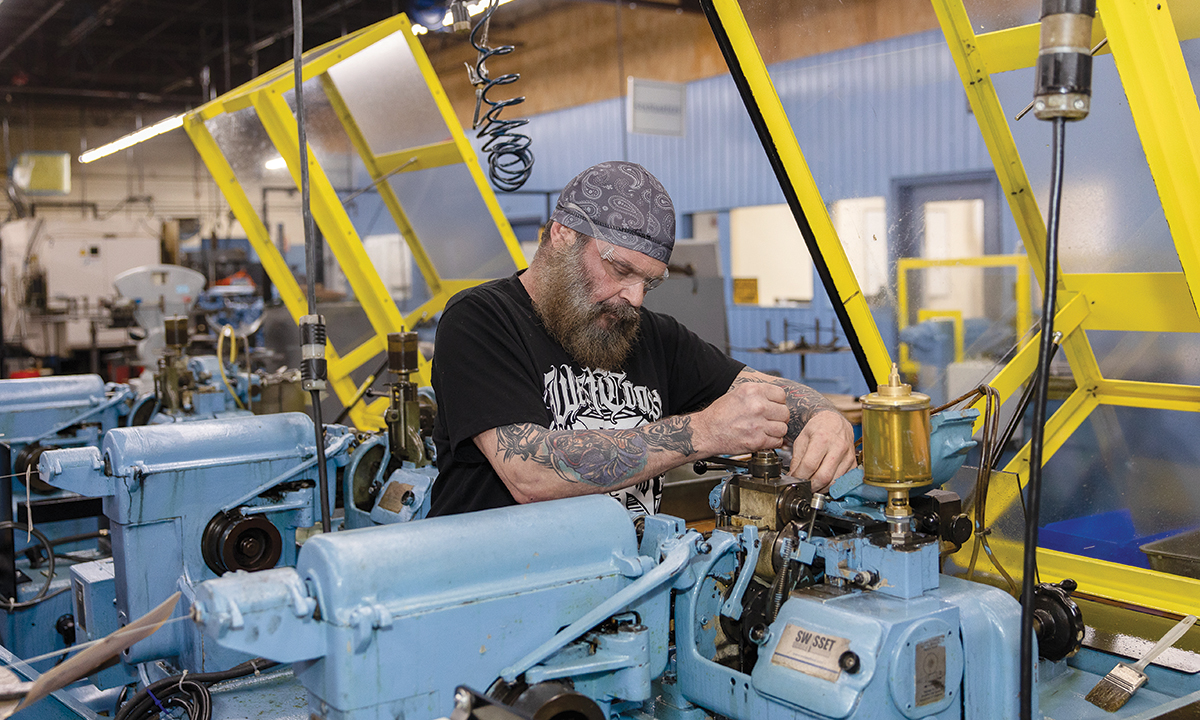
“We have high expectations for the guys on the floor, and we expect them to process work accordingly and follow blueprints and stuff, but we also see them and treat them as humans,” Trout said. “We bring the company together, and I think that really helps morale and helps us do better.”
Jones said those investments in the workforce and the overall culture at Groov-Pin ultimately help the company operate as a lean manufacturing site.
Lean manufacturing is a production method focused on maximum efficiency. It involves purging any activity out of every process that does not add value from the customer’s perspective. Companies like Groov-Pin enact this method aiming to increase productivity, lower costs and improve quality.
The method was adopted by the company in 2009 after executives at the time had visited China, Taiwan and Hong Kong in 2005 to determine how to compete with similar manufacturing firms.
“We’ve recognized that lean manufacturing is about continuous improvement, and in the beginning, there were some really profound changes that you can make that make progress go very quickly,” Jones said. “We have more-standardized ways of approaching change, and we develop systems to take care of the unexpected things from our customers. Those are the processes that we try to get better at. We want to be a better partner as time goes on.”
The company is constantly trying to find ways to become that better partner, Jones said. Part of that includes sustainability.
“We actively try to minimize the waste stream. We’re a closed system when it comes to our process water, and we recycle to the extent that we can,” Jones said. “We recycle packing materials and paper. We’ve tried to go – and made strides in going – paperless within our operation. We’ve done what we can as a sort of line manufacturing business to try to reduce our waste.”
As the company continues to look for new ways to innovate and refine its processes, that innovation tends to come from within, Trout said. An example of that is “lean day,” a day when the staff takes half of the day to clean, organize and improve the workspace.
“We address any things that maybe came up in the scramble at the end of the month to get stuff out. Things like ‘Hey, what if this was positioned here, maybe we move some stuff around to create a little bit more space?’ ” Trout said. “The consistency of having that on the calendar at the beginning of the month allows us to take a breath. It sort of gives our guys a reset, allows them to share some ideas and be heard.”
For Jones, the history of manufacturing is about the workers and the customer experience.
“The really important part of our business is the team and the ideas that they bring to bear on the problems that we have and how they take care of our customers,” Jones said. “That’s the real story of lean manufacturing and manufacturing in the United States. It’s really about the people doing the work.”